
Unbiased headlines. Facts, not spin.
Every story is an unbiased news briefing written from 110+ sources across the spectrum — sources linked so you can verify it yourself.
 economy
Notable (6/10)
August 12, 2026 at 05:06 AM
economy
Notable (6/10)
August 12, 2026 at 05:06 AM
California Bullet Train Could Run Out of Cash by December 2027, Inspector General Warns
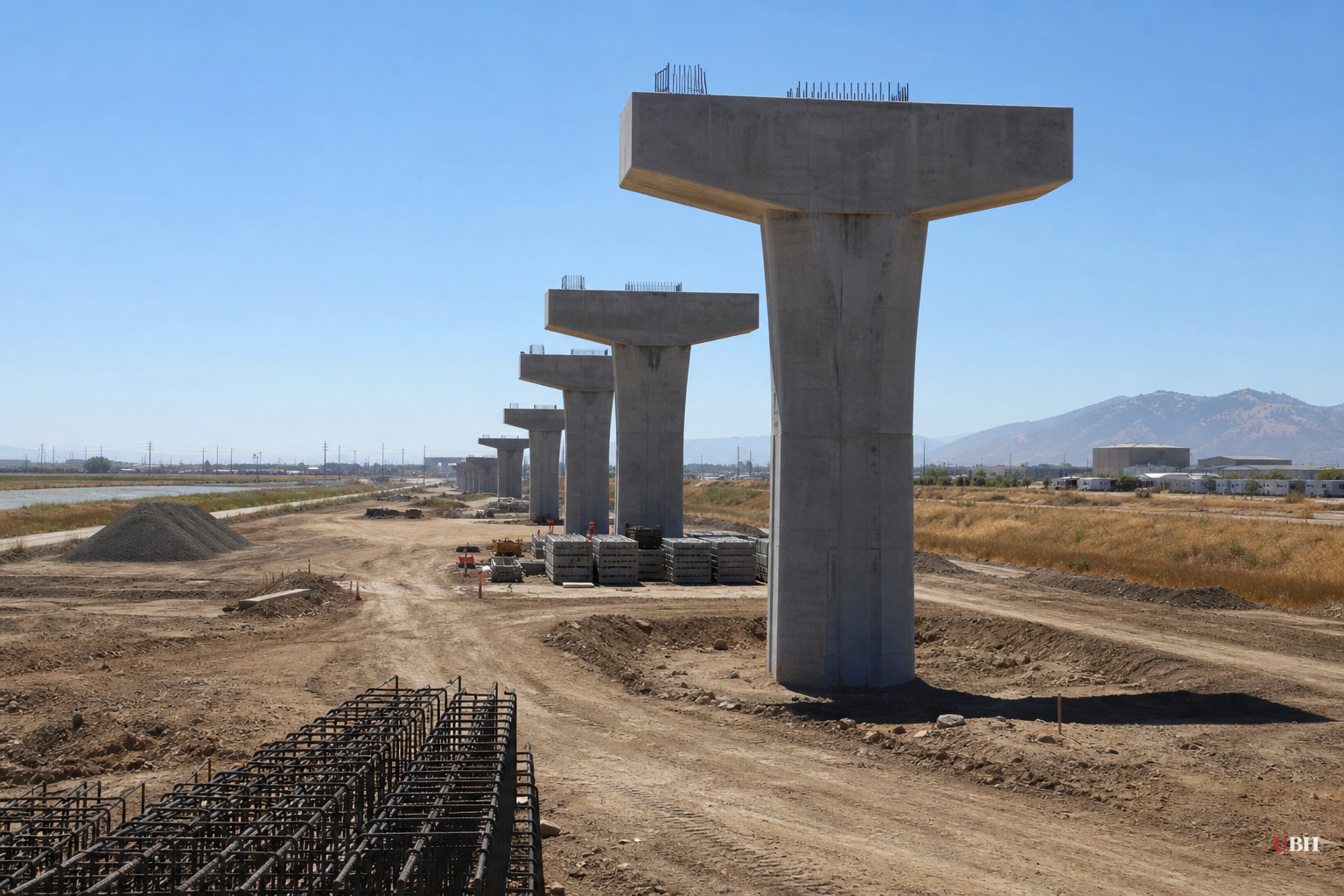
California's bullet train has a money problem.
Inspector General Benjamin Belnap's office released an updated review this week of the High-Speed Rail Authority's 2026 business plan. The finding: the authority "will exhaust its current funding resources as soon as December 2027 if it does not secure financing," according to the report, cited by CBS News, KCRA, and the New York Post.
The gap is $9.5 billion over five years. Closing it through borrowing could tack on another $3.6 billion to $6.6 billion in interest costs, according to the inspector general's office. None of that interest is included in the authority's official $35.7 billion cost estimate for the Merced-to-Bakersfield segment, per KCRA.
The State Has Already Spent $18 Billion
California has spent $18 billion on the project so far, according to KCRA. The first segment, Merced to Bakersfield, is projected to cost at least $36 billion. The original statewide vision, Los Angeles to San Francisco, now carries a price tag estimated between $126 billion and $231 billion.
That original vision was sold to voters in 2008 as a $33 billion project. It has never come close to that number since.
The project lost $4 billion in federal funding this year. It still hasn't landed the private investment authority officials have spent years chasing. California's state budget, passed this summer, included zero new money for the project, according to KCRA. And the roughly $1 billion a year the project was counting on from the state's greenhouse gas emissions fund is now in question because of rule changes affecting that fund.
Cuts Dressed Up as Savings
Belnap's report says some of the authority's recent "savings" aren't savings at all. They're cuts.
The preferred plan shrinks the Merced-to-Bakersfield route from 171 miles to 162 miles, moves the Merced station out of downtown, and temporarily stops trains north of downtown Bakersfield, according to the New York Post's reporting on the inspector general's findings.
"Ultimately, the major cost savings observed in the Merced and Bakersfield extensions are not due to increased efficiency — which we define as delivering equivalent scope for less cost — but are instead the result of planning to build less," the report states, as quoted by the Post.
Belnap also wrote that authority officials have "obscured basic facts about the project, hindering lawmakers' ability to provide effective oversight," according to the Post's reporting.
The Train Order Got Cut in Half
Separately, a CBS News California investigation found the authority repeatedly missed deadlines to buy the actual trains, deadlines written into its federal grant agreement and promised to a federal judge. The authority then dropped its lawsuit against the Trump administration weeks after missing its own revised deadline, according to CBS.
Days after that investigation published, the authority posted an Aug. 6 notice confirming no contract has been signed with any train manufacturer, according to CBS. The deal now on the table looks nothing like what was presented to the federal government and the court.
The order dropped from six trainsets to three, with options for 19 more that come with "no guarantee," CBS reported. Delivery is now pushed to no later than February 2030. The authority is considering a lease-purchase structure instead of buying the trains outright.
The notice also stripped out federal Buy America requirements for the initial trainsets, the rules requiring trains be assembled in the U.S. with American-made components. In a statement to CBS, the authority said it removed those provisions because it lost the federal grant tied to them, and that the change "reduces schedule risk" and keeps testing aligned with its construction schedule.
CBS asked the authority directly whether the trains will still be built in America. The authority's response didn't answer that question.
The Political Fight
State Sen. Tony Strickland, a Huntington Beach Republican who has called the project "the most wasteful government project in probably world history," told the New York Post the funding warning was "no surprise."
Strickland pointed to testimony from the nonpartisan Legislative Analyst's Office, which he said described the authority's public-private partnership plan as "risky" because it depends on uncommitted funding. "It's truly time to pull the plug on this wasteful government project," he told the Post.
Supporters of the project would counter that high-speed rail systems everywhere, from Japan's Shinkansen to France's TGV, required decades of sustained public investment before turning into functioning networks, and that walking away now would strand the $18 billion already spent. Belnap's report focuses narrowly on the financing gap and the authority's transparency, not on whether the project should exist at all.
The business plan also doesn't disclose that the Merced-to-Bakersfield segment could now be delayed until September 2034, instead of the previously stated 2032-2033 window, according to Belnap's findings as reported by KCRA. How much that delay will cost isn't clear yet either.
California's legislative session ends Aug. 31. Lawmakers and Gov. Gavin Newsom now have until then to decide whether to act on a financing strategy, or let the clock keep running toward a December 2027 cash-out date that the authority's own watchdog says its business plan doesn't adequately disclose.
Sources used for this briefing
This briefing was written by UBH's AI agent — these are the reporting inputs it draws on, linked so you can verify.


