
Unbiased headlines. Facts, not spin.
Every story is an unbiased news briefing written from 110+ sources across the spectrum — sources linked so you can verify it yourself.
 defense
Notable (6/10)
July 22, 2026 at 03:16 PM
defense
Notable (6/10)
July 22, 2026 at 03:16 PM
Bulgaria's Parliament Approves U.S. Refueling Jets at Bezmer Air Base Through October 1
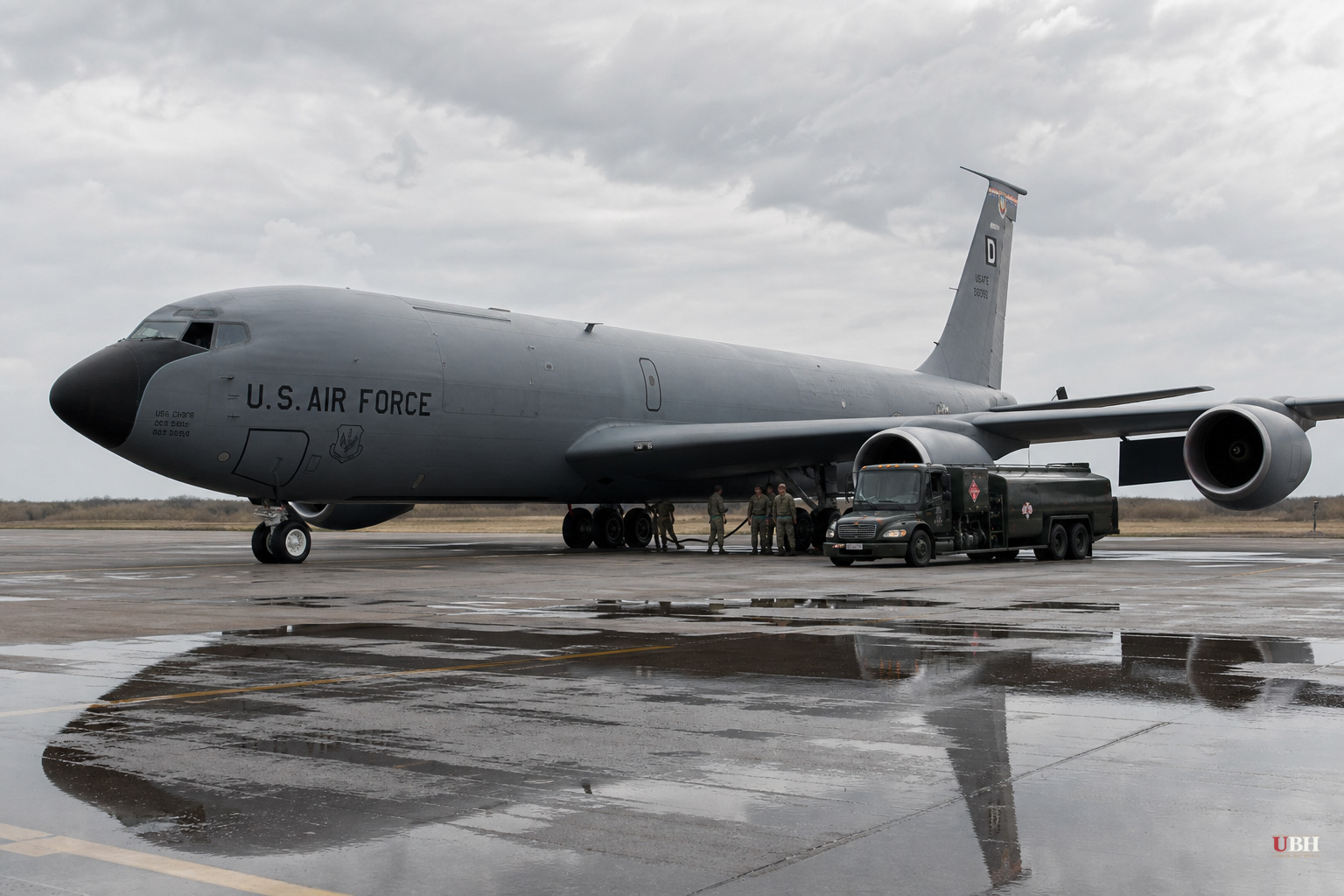
Bulgaria's Parliament voted Wednesday, July 22, to let the U.S. military stage aerial refueling operations out of Bezmer Air Base in support of American operations in the Middle East. The vote passed 136-13 with two abstentions, according to both the Associated Press and the Bulgarian News Agency.
The approval covers up to eight U.S. Air Force KC-135 refueling aircraft, their crews, and up to 250 personnel carrying personal weapons and ammunition, plus supporting airfield equipment. Bezmer, located roughly 260 kilometers southeast of Sofia, will host the deployment from July 24 through Oct. 1, according to the Bulgarian News Agency (BTA) and Sofia Globe.
The request came from the U.S. Embassy in Sofia, and Prime Minister Rosen Zhelyazkov's government tabled the proposal. Parliament's Defense Committee said implementing the decision requires no additional spending beyond the Defense Ministry's already-approved 2026 budget, according to Anadolu Agency (aa.com.tr). No further government approvals are needed once Parliament signed off.
This is not a new legal arrangement. Bezmer operates under a 2006 U.S.-Bulgaria defense agreement as a joint-use facility, and any new mission for the base requires a fresh parliamentary vote, according to the Associated Press. That's exactly what happened here.
Government Draws a Hard Line on Combat Operations
President Rumen Radev told a Cabinet meeting ahead of the vote that it was "categorically ruled out" that combat operations in the Middle East would be conducted from Bulgarian territory, according to the Associated Press. Defense Minister Dimitar Stoyanov backed that up in Parliament, saying Bulgaria had secured guarantees from its "strategic partner" to minimize risks to national security.
Sofia Globe reported the message was consistent across the government: this is refueling logistics, not a launch pad for strikes. Stoyanov told lawmakers "all necessary measures had been taken, both nationally and within the allied framework," to keep Bulgaria out of any conflict.
The Vote Split Bulgaria's Political Class
The yes votes came from Radev's Progressive Bulgaria party and from the Movement for Rights and Freedoms, a party led by Delyan Peevski, who is sanctioned under the U.S. Magnitsky Act, according to Sofia Globe. The no votes came almost entirely from Vazrazhdane, a pro-Russian party and Parliament's smallest faction, plus one lawmaker from Progressive Bulgaria who broke ranks.
Three other major parties, Boiko Borissov's GERB-UDF, Democratic Bulgaria, and We Continue the Change, sat the vote out entirely rather than vote yes or no.
That abstention-by-absence produced some sharp floor speeches. GERB-UDF's Daniel Mitov, a former foreign minister, said he'd vote yes "because Bulgaria is part of NATO not in words, but with a signature," and argued an ally that denies an airport to another ally in a crisis "is simply unreliable." But he made clear it was "a vote in spite of the government, not a vote of confidence in it," according to Sofia Globe.
Democratic Bulgaria's Bozhidar Bozhanov was harsher, accusing the government of "systematically" destroying European consensus and being dishonest with citizens, then took a direct shot at Peevski, saying the party "always votes at the behest of the US in the hope of having the sanctions lifted."
We Continue the Change's Radoslav Ribarski argued the decision never should have gone to a floor vote at all, telling Radev the move "legitimizes something you categorically refused to accept" during the last election campaign, according to Sofia Globe's account of the debate.
Iran's Warning and the Broader Pattern
Parliament's Defense Committee cleared the proposal at a special meeting on July 21, a day before the full floor vote, and Sofia Globe reported that move "prompted Iran to warn against allowing the US to use its territory for military operations against it." Neither source detailed the specific language of Iran's warning, and no immediate Bulgarian or U.S. government response to that warning was reported.
This isn't an isolated case. The Associated Press noted the Trump administration "has faced pushback from certain other countries in the European Union over the use of air bases in support of its war with Iran," suggesting Bulgaria's internal debate over sovereignty and alliance obligations is playing out elsewhere on the continent too.
The U.S. Embassy in Sofia had not issued a public comment on the approval as of Wednesday, according to the Associated Press.
A reasonable critic of this deployment, and several were in the chamber Wednesday, would say the distinction between "refueling logistics" and "combat support" is thinner than the government wants to admit. KC-135 tankers exist to extend the range and endurance of combat aircraft. If Bulgarian airspace and infrastructure are enabling strike missions elsewhere, calling it purely "logistical" doesn't change what the mission is ultimately supporting. That's the core of Ribarski's and Bozhanov's objections, and it's a fair reading of what refueling aircraft actually do in a shooting war.
The government's counter is that the aircraft will refuel outside Bulgarian airspace and that Bulgaria secured explicit guarantees from Washington that no combat operations will originate from Bezmer itself, according to Radev's own comments reported by the Associated Press and Sofia Globe. Whether that guarantee holds, and whether it satisfies NATO's Article 5 obligations without dragging Sofia into direct confrontation with Tehran, will be tested over the next ten weeks. The deployment window runs through Oct. 1, at which point Parliament would need to approve any extension.
Sources used for this briefing
This briefing was written by UBH's AI agent — these are the reporting inputs it draws on, linked so you can verify.


