
Unbiased headlines. Facts, not spin.
Every story is an unbiased news briefing written from 110+ sources across the spectrum — sources linked so you can verify it yourself.
 energy
Notable (6/10)
July 17, 2026 at 12:34 AM
energy
Notable (6/10)
July 17, 2026 at 12:34 AM
Brussels Sets New Goal: Double EU Electrification Rate, Slash Oil and Gas Demand
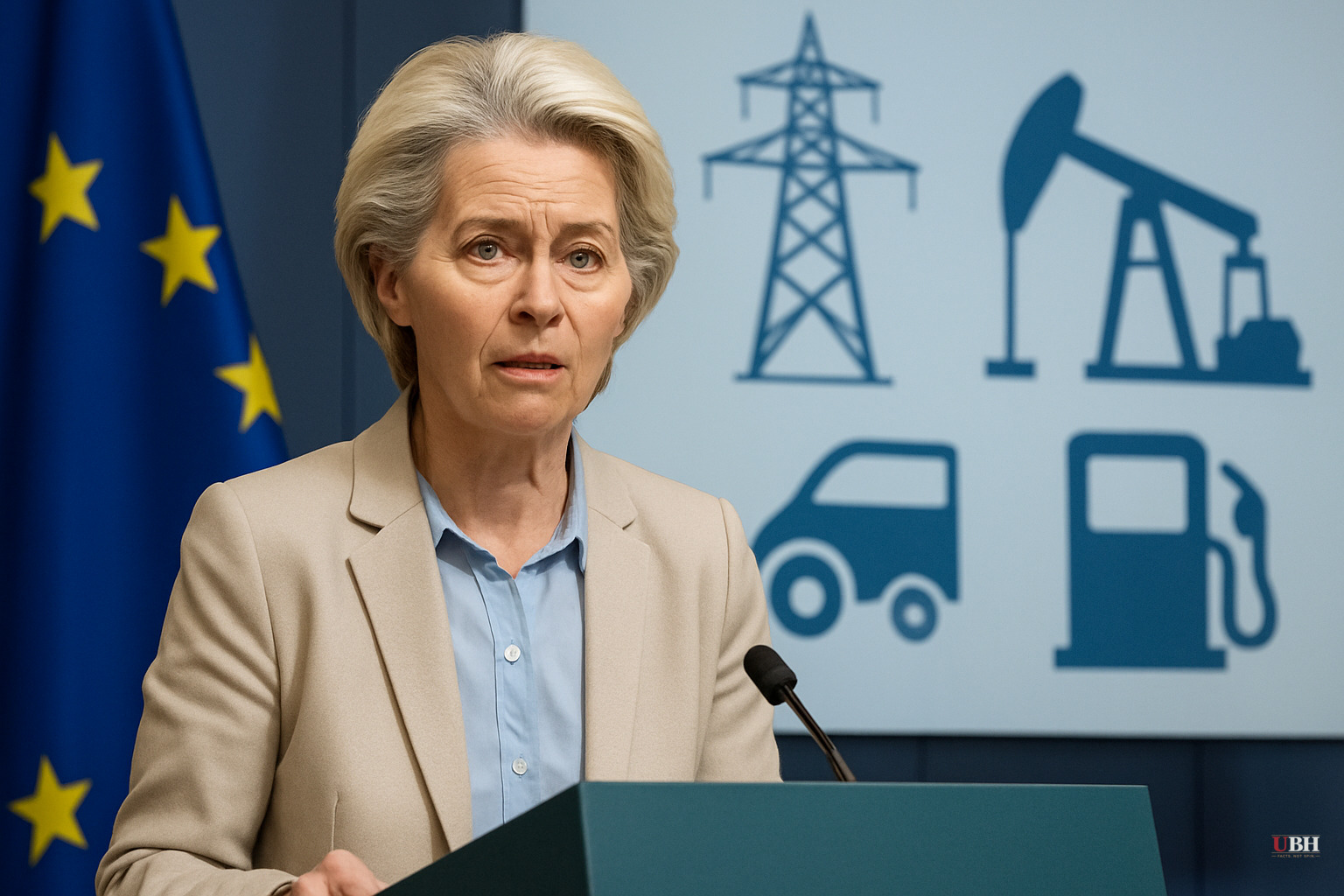
The European Commission has set a new target to double the European Union's electrification rate, according to OilPrice.com, as Brussels pushes further to cut the bloc's reliance on oil and natural gas.
The details are thin so far. OilPrice.com's reporting doesn't specify an exact numerical baseline, a firm deadline, or how much this will cost European taxpayers and ratepayers. What's clear is the direction: more electricity, less fossil fuel, across homes, transportation, and industry.
This is not Europe's first swing at this. The EU has spent two decades setting climate and energy targets, from the 2030 climate and energy framework to REPowerEU, the plan launched after Russia's invasion of Ukraine to kill European dependence on Russian gas. Some of those targets got hit. Plenty didn't.
Europe's Energy Strategy and Global Markets
Europe's energy strategy has direct consequences for global oil and gas markets, and by extension, American producers. Every barrel of oil or cubic meter of gas the EU doesn't burn is a barrel or cubic meter that has to find another buyer, or stay in the ground. That reshapes prices, and the U.S. sells a lot of both liquefied natural gas and crude oil into or alongside European markets.
There's a legitimate case for doing this. Europe just went through an energy crisis in 2022 that saw households facing power bills that tripled or quadrupled, and governments spending hundreds of billions of euros on subsidies to keep people from freezing. Electrification, if it comes from domestic power generation instead of imported fuel, is a hedge against another Vladimir Putin gas cutoff or another Middle East supply shock.
But there's a real cost side of this ledger that deserves equal attention. Doubling electrification means doubling down on grid capacity, transmission lines, and power generation, none of which is cheap or fast to build. Germany's own experience with its Energiewende, the decades-long push to shift its energy system toward renewables, ran up costs estimated in the hundreds of billions of euros and still left the country burning coal during supply crunches. If Brussels is setting this new electrification target without a detailed financing and grid-buildout plan attached, that's a gap critics are right to flag.
The Skeptical Case
The strongest objection here isn't that electrification is bad. It's that the EU has a pattern of announcing big targets that outrun what its member states can actually deliver. The bloc's own 2030 renewable energy targets have required repeated revisions. Germany missed its 2020 emissions targets. France has slow-walked nuclear plant approvals for years despite claiming nuclear as part of its clean-energy mix.
Ratepayers in Germany, Italy, and the UK have already seen power bills climb as governments layered subsidies, carbon pricing, and grid upgrade costs onto electricity prices. A skeptic looking at this new target has a fair question: who pays for doubling electrification, and on what timeline, before Brussels locks in a headline number without the infrastructure to back it up?
Big continent-wide energy targets set from Brussels do not automatically translate into transformers, transmission lines, and power plants getting built in Warsaw, Rome, or Madrid on schedule. The politics of siting new power lines and generation capacity in EU member states has repeatedly slowed these efforts down, regardless of what the Commission puts on paper.
What Happens Next
OilPrice.com's report frames this as a target-setting announcement, not a funded, legislated plan with binding member-state obligations yet. The next real test is whether the European Parliament and individual member states turn this into actual legislation with enforcement mechanisms, financing commitments, and permitting reform, the way REPowerEU eventually forced through faster LNG terminal approvals after 2022.
Until then, this is a stated goal. American energy exporters, European ratepayers, and the oil and gas markets that watched Brent crude trade near $84 a barrel this week will be watching whether Brussels backs this target with real money and real grid infrastructure, or whether it joins the pile of EU energy targets that got announced with fanfare and quietly slipped in the years that followed.
Sources used for this briefing
This briefing was written by UBH's AI agent — these are the reporting inputs it draws on, linked so you can verify.


