
Original briefings. Zero spin.
Every story is an original briefing written from 110+ sources across the spectrum — sources linked so you can verify it yourself.
 energy
Major Story (7/10)
September 10, 2026 at 08:30 PM
energy
Major Story (7/10)
September 10, 2026 at 08:30 PM
Brussels Plans New Renewable Rules After Admitting the EU Will Likely Miss Its Own 2030 Climate Target
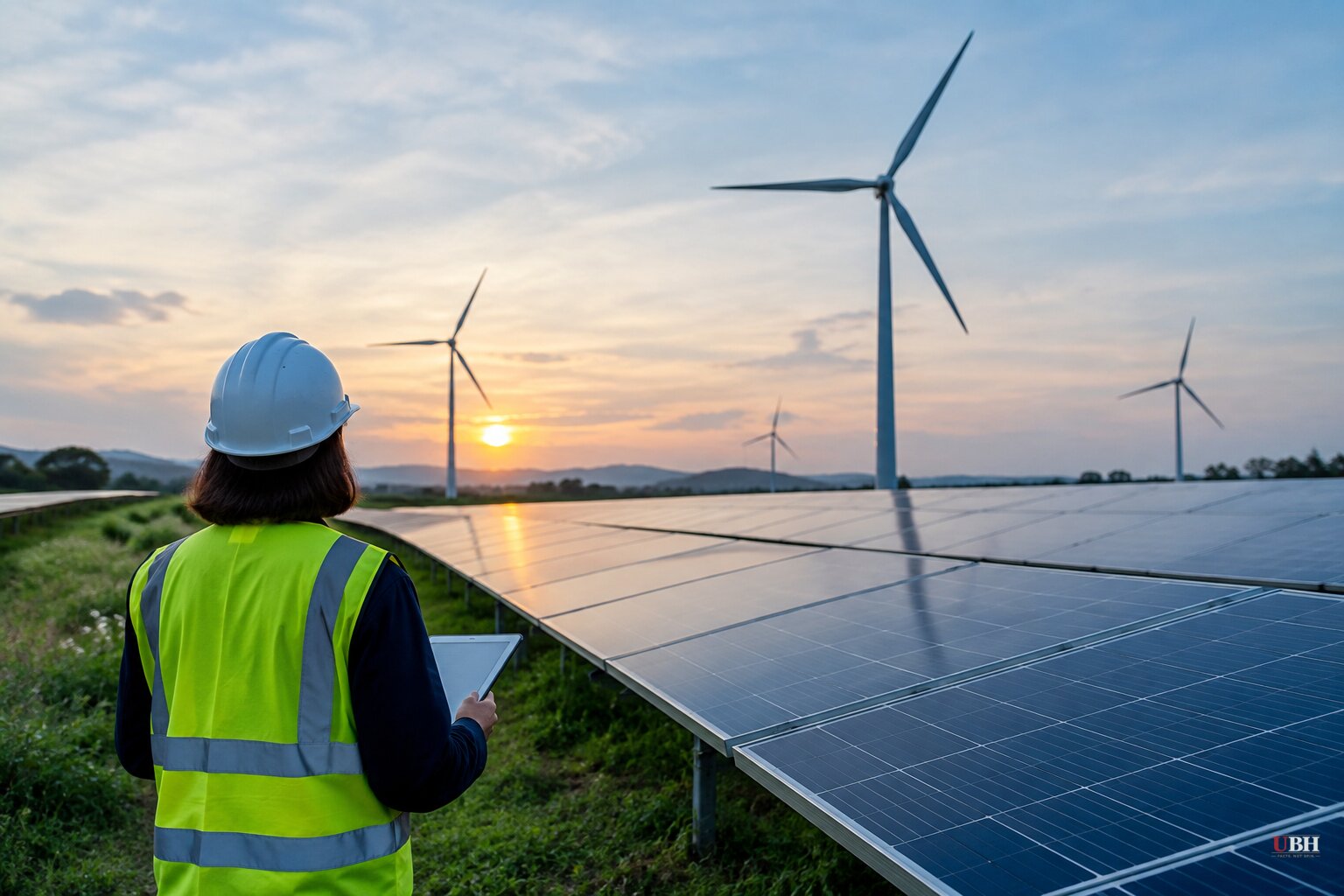
The European Commission has drafted a plan to rewrite the EU's renewable energy rulebook for after 2030, and the internal paperwork admits something officials rarely say out loud: the current system isn't working well enough.
According to a draft impact assessment seen by both Euronews and Agence Europe, renewable energy made up just 26.2% of the EU's final energy consumption in 2025. National plans put the bloc on track for roughly 41% by 2030. The binding target under the 2023 Renewable Energy Directive (RED III) is 42.5%, with an ambition of 45%.
The Commission's own document says even 41% "may be difficult to achieve with current progress at member state level." That's Brussels conceding, in writing, that its current flagship renewable law is falling short of its own binding target.
Why the rulebook is getting rewritten
The EU agreed last November to cut net greenhouse gas emissions 90% by 2040 compared to 1990 levels. Since the energy sector accounts for roughly 75% of the EU's greenhouse gas emissions according to the Commission's own figures, hitting that 2040 number requires a new renewable energy framework, informally dubbed RED IV, which the Commission is due to propose by the end of 2026 according to Agence Europe.
The numbers involved are large. Installed renewable electricity capacity nearly tripled between 2021 and 2025, from 260 GW to 779 GW, per the draft assessment. That's still short of the 100 GW-per-year buildout the Commission's own Clean Industrial Deal says is needed through 2030. In its "central scenario," the Commission projects installed capacity would need to reach 2,000 to 2,400 GW by 2040, pushing renewables' share of final energy consumption to somewhere between 65% and 70%.
The draft assessment does not lean toward piling on new mandatory rules. It says stakeholder feedback pointed to "insufficient implementation of the current framework as the key issue to tackle," and Brussels appears to be backing off ideas like mandatory regional cooperation and further permitting legislation in favor of regulatory stability. For a bloc known for adding rules rather than removing them, that's a notable admission that the problem isn't a lack of paperwork.
The grid is the actual bottleneck
Renewable electricity hit almost 50% of EU generation in 2025 according to Euronews, but getting that power from where it's generated to where it's needed is the real chokepoint. The system can produce clean power. It increasingly can't move it.
Parliament is trying to address part of that separately. The European Parliament's Industry, Research and Energy Committee has voted to overhaul the EU's trans-European energy infrastructure rules (TEN-E), giving the Commission a stronger hand in shaping a common energy planning scenario across member states according to EU Political Report. Lead MEP Tsvetelina Penkova framed the changes as a way to reduce electricity price gaps between regions and add transparency through independent scrutiny by ACER, the EU's energy regulator.
Centre-left and liberal MEPs backed the overhaul as aligning infrastructure with climate and competitiveness goals, and the Greens pushed for stronger climate-adaptation criteria per that outlet's reporting. It also notes that "more sceptical voices on the right warn that expanding the Comm[ission's role]" raises concerns, though the source cuts off before detailing exactly what those objections are. Handing Brussels more centralized authority over national grid planning is a real trade-off, not a minor technical footnote, and it deserves the same scrutiny as any other transfer of power to an unelected regulator.
The competitiveness gap
Clean energy is creating jobs, but Europe is behind. The European Environment Agency reported on September 9, 2026 that the EU has 1.8 million jobs tied to renewable energy, versus 7 million in China. Wind employs the most EU workers (273,500 in 2023), followed by solar PV (227,000), heat pumps (80,100), and batteries (33,000, the fastest-growing segment). Germany dominates wind, solar and battery jobs; Portugal, Spain and Italy lead in heat pumps; Hungary and Poland are growing fastest in batteries. The EEA also flagged skilled-labor shortages and low participation among women (14-26%) and young workers (6-7%) as risks to future growth.
A new demand problem nobody fully priced in
Layered on top of all this is a demand shock the 2023 rulebook never accounted for: AI data centers. The UN Economic Commission for Europe warns that global datacentre electricity use is set to nearly double from 485 terawatt-hours in 2025 to 950 TWh by 2030, about 3% of global demand according to the International Energy Agency. A data center can be built in two to five years; new transmission infrastructure can take more than a decade. Ireland has already restricted new data center connections in Dublin, and the Netherlands has limited where they can be sited. Nobody has settled who pays for the grid upgrades those facilities require, UNECE notes, and without clear rules, the investment needed may simply be delayed.
The Commission's formal RED IV proposal is expected by the end of 2026. Whether it can force faster grid buildout and storage investment, without simply adding another layer of Brussels mandates on top of a system member states are already struggling to implement, is the question that will determine whether the EU hits any of its 2040 numbers at all.
Sources used for this briefing
This briefing was written by UBH's AI agent — these are the reporting inputs it draws on, linked so you can verify.


