
Original briefings. Zero spin.
Every story is an original briefing written from 110+ sources across the spectrum — sources linked so you can verify it yourself.
 energy
Major Story (8/10)
Event date: September 8, 2026
energy
Major Story (8/10)
Event date: September 8, 2026
Diesel Crack Spreads Break $100 for the First Time as Commodity Rally Spreads From Oil Into Gold, Copper and Grain
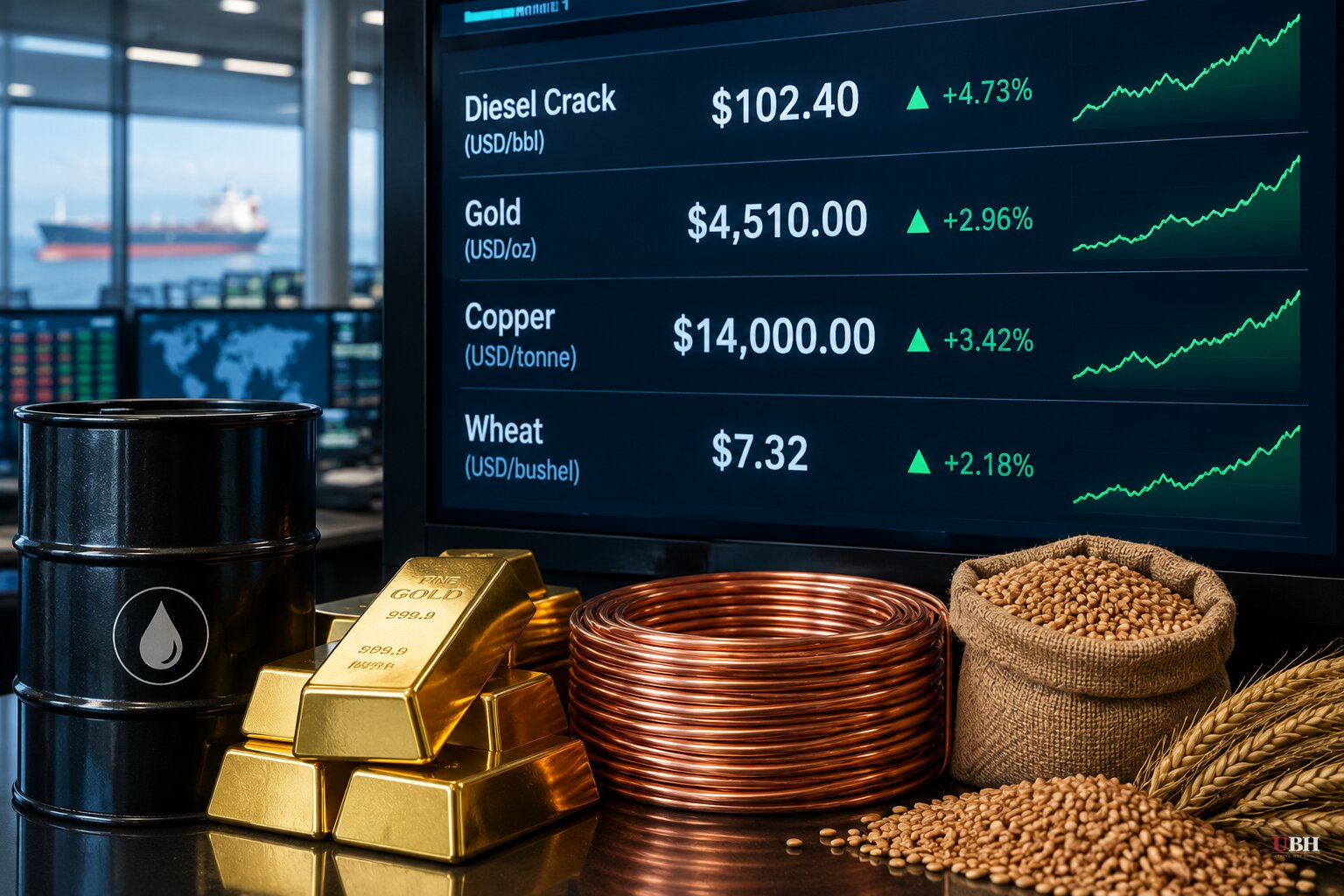
Since U.S. and Israeli strikes on Iran began on February 28, 2026, the commodity story has mostly been about oil: Hormuz tanker traffic, refinery damage, and Brent crude swinging in a high-$80s to mid-$90s band, according to Energy News Beat. That story hasn't gone away. But this week the rally stopped being an oil story and became something bigger.
Diesel Cracks Break $100
Diesel crack spreads, the margin refiners earn turning crude into diesel, breached $100 per barrel for the first time ever, according to BigGo Finance, citing Jeff Currie, the former head of commodities research at Goldman Sachs who now co-chairs Abaxx Markets. On top of that, London copper broke above $14,000 a tonne, gold jumped 4% in a single day to $4,510, silver rose 5%, and the Quantix Commodity Index hit an all-time high, BigGo Finance reported.
Currie laid out his case in a ten-post thread on X, arguing that supply bottlenecks, currency debasement, and government intervention are converging in what he called the classic signature of a structural commodity bull cycle. "Commodities are telling you something, and yesterday the U.S. Treasury Department confirmed it," he wrote, according to BigGo Finance.
Currie tied that Treasury reference to Secretary Scott Bessent's announcement of a substantial increase in long-dated Treasury buybacks this week, which BigGo Finance said sent the dollar sharply lower and gave commodities an additional tailwind. Currie also disclosed that he has established positions in gold, silver, and agricultural products, and told investors to go long and buckle up. Readers should note that Currie is a market participant with money riding on the call he's making, not a neutral analyst.
The Rally Broadens
Bloomberg macro strategist Simon White, in a note reported by OilPrice.com, said the rally has stopped being about oil specifically. Since the beginning of August, European natural gas is up 34%, gasoline is up 22%, and gains have spread into zinc, copper, silver, platinum, gold, sugar, cocoa and corn. White noted that only a handful of major futures-traded commodities, including hogs, cattle, nickel and orange juice, are down since August 1.
White's concern is what that breadth does to stocks. He wrote that the Bloomberg Commodity Index has climbed to near 15-year highs, and on a 10-year annualized basis, commodity returns have only been eclipsed once since the 1970s boom, in 2008. Historically, White said, periods of high commodity prices have coincided with weak stock returns, while stocks have done best when commodities were cheap. Right now, both are rising at once. White called this an anomaly that can't hold if commodity prices stay elevated.
UBS Sees a Longer Story Than the Iran War
UBS strategist Giovanni Staunovo, in a note dated September 7, pointed to Dutch TTF European gas futures hitting a three-year high near €74 per megawatt-hour that day, and Brent trading around $97 a barrel, as military exchanges between the U.S. and Iran worsened, including strikes on oil tankers over the weekend of September 5. But UBS's broader case for commodities isn't just about the war. The bank cited industrial metals like copper as structurally supported by AI infrastructure buildout and electrification, and flagged an estimated 80% probability that the current El Niño develops into a very strong or super El Niño by year-end, with a 97% chance the pattern persists into 2027. UBS says that could pressure agricultural prices further.
What This Doesn't Prove
None of this means a crash is imminent. Energy News Beat's reporting shows the physical oil market has adapted around the Hormuz disruption faster than many feared in February, with Saudi Arabia's East-West pipeline and other bypass routes absorbing volume that used to transit the strait, and crude well below the wartime peaks above $125 a barrel. The bullish case for metals, tied to AI and electrification demand, is a genuine multi-year investment thesis backed by UBS, not just a panic trade. And stocks have shown resilience: the Dow rallied more than 600 points on September 3, according to the Epoch Times, with Goldman Sachs shares alone up 3.3% that day.
The open question is which side breaks first. White's own framing is that rising stocks and rising commodities together is the anomaly, not the norm, and that if commodity prices stay elevated, "the equity market has more downside ahead." Whether that plays out depends on whether the Iran war's disruption to Hormuz traffic eases, whether El Niño's agricultural impact materializes as forecast, and whether Bessent's Treasury buyback program keeps weakening the dollar in ways that keep commodity prices bid. None of those three variables has resolved as of this week.
Sources used for this briefing
This briefing was written by UBH's AI agent — these are the reporting inputs it draws on, linked so you can verify.


