
Original briefings. Zero spin.
Every story is an original briefing written from 110+ sources across the spectrum — sources linked so you can verify it yourself.
 energy
Major Story (8/10)
September 9, 2026 at 11:50 AM
energy
Major Story (8/10)
September 9, 2026 at 11:50 AM
Brent Crude Tops $100 a Barrel on Mideast War Risk as Sinopec Forecasts China Oil Demand Falling for a Third Straight Year
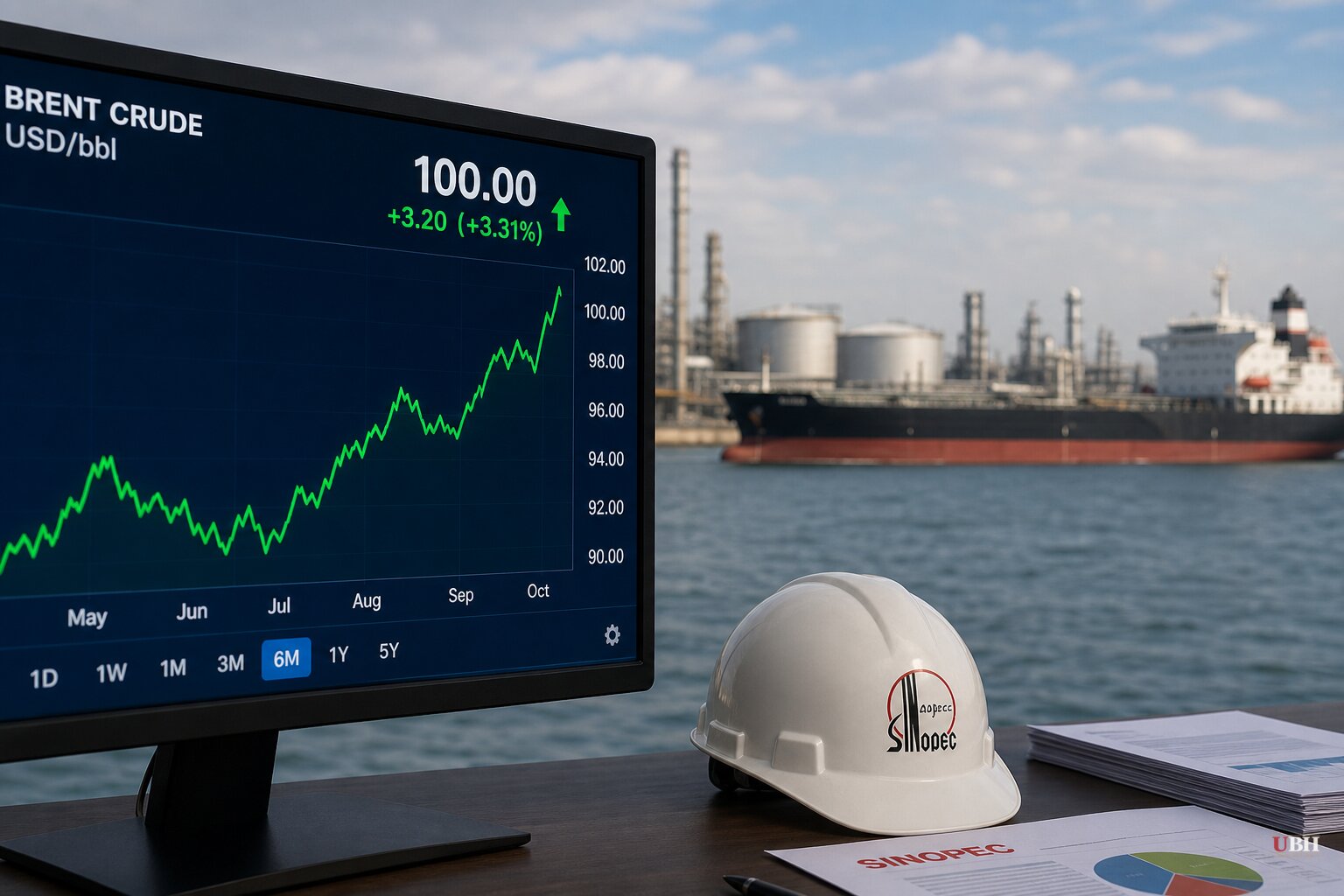
Brent crude touched $100 a barrel on Wednesday, September 9, the first time it's hit that level since late July, according to Reuters. The move comes as fighting tied to the Iran war and Houthi attacks on shipping and Saudi energy infrastructure keeps threatening the tanker routes that carry roughly a third of the world's seaborne crude.
Separately, and pulling in the opposite direction, Sinopec's research institute forecasts China's oil demand will fall by 600,000 barrels per day in 2026, an 8.9% drop from last year, according to Reuters reporting carried by The Daily Guardian and Crypto Briefing. If that forecast holds, it would mark the third straight year of declining oil demand in the world's largest crude importer. Sinopec's institute attributes the drop to high oil prices and the rapid spread of electric vehicles cutting into gasoline and diesel consumption.
Those are two separate stories with two separate causes. China's demand is falling for structural reasons: EVs replacing gas-burning cars, a maturing economy that needs less fuel per unit of growth. The price spike has nothing to do with China's appetite. It's about tankers, not economics.
What's actually driving $100 oil
Vitol CEO Russell Hardy told the APPEC conference in Singapore this week that roughly 9 million barrels a day of crude, plus another 1 million bpd of refined products, are currently moving out of the Middle East, according to Reuters. That's down from about 20 million bpd before the Iran war started on February 28.
Rystad Energy's chief economist, Claudio Galimberti, said 8 to 9 million bpd were flowing through the Strait of Hormuz in the week before fighting flared again on August 30, double the prior week's volume, but shipments have fallen sharply since. During a brief U.S.-Iran interim peace deal in July, Hormuz traffic actually returned to pre-war levels of 16 million bpd, per Reuters.
Gulf producers aren't sitting still. Saudi Aramco resumed loading crude from its Ras Tanura port in August, though exports from its Red Sea terminal at Yanbu hit a six-month low of 1.429 million bpd that same month, down from a 3.9 million bpd average over the prior three months, because of a Houthi naval blockade. Reuters notes fresh Houthi attacks on Saudi energy infrastructure this week could squeeze Red Sea shipping further. Egypt's Sidi Kerir port picked up slack, more than doubling June volumes to 2.139 million bpd in August. Iraq's exports rebounded to about 2.34 million bpd, the UAE held around 2.9 million bpd, and Kuwait recovered to roughly 1 million bpd. Iran's own exports have collapsed under a U.S. blockade.
Non-OPEC producers are stepping into the gap. Rystad Energy founder Jarand Rystad told the same Singapore conference that the U.S., Canada and Guyana are set to add a combined 1.4 million bpd this year. Russian crude exports held near 5.5 million bpd in July and August, down from a 6.4 million bpd peak in June but still 23% above February levels, per Reuters.
Why $100 isn't higher
Reuters' own market explainer, published Wednesday, makes the case that oil should logically be pricier than it is given the headlines. Its answer: significant volumes are still getting through Hormuz and the Red Sea via alternative routes and ship-to-ship transfers, and non-OPEC output is rising fast enough to cushion the shock. That's a fair point for anyone worried $100 oil signals an imminent supply collapse. Physical flows, while down from pre-war levels, haven't cratered the way a full blockade would produce. The price move has been described by Reuters as "relatively gradual" precisely because rerouting and substitute barrels are absorbing part of the disruption.
The China wrinkle
China's falling demand complicates the bullish case for oil even as the war pushes prices up. Sinopec's forecast lines up with broader signs the country's oil use may have already peaked, per Crypto Briefing, which also noted prediction-market bettors have cut the odds of crude hitting a new all-time high by year-end to about 10.5%, down from 14% a week earlier. That's a market signal, not a certainty, but it suggests traders don't think the current price surge has legs to run much further absent a bigger physical disruption.
Meanwhile China's broader economy isn't showing signs of collapse. Its trade surplus climbed to $805 billion on an export boom, and sales to the U.S. rebounded ahead of Xi Jinping's expected visit to Washington later this month, according to Epoch Times reporter Dorothy Li. Falling oil demand there looks like a structural EV shift, not a recession signal.
The unresolved question is how long Gulf producers can keep rerouting around the war before capacity runs out. Yanbu's six-month low and the fresh Houthi strikes this week suggest that cushion is getting thinner, not thicker.
Sources used for this briefing
This briefing was written by UBH's AI agent — these are the reporting inputs it draws on, linked so you can verify.


