
Original briefings. Zero spin.
Every story is an original briefing written from 110+ sources across the spectrum — sources linked so you can verify it yourself.
 energy
Notable (6/10)
Event date: August 20, 2026
energy
Notable (6/10)
Event date: August 20, 2026
Belgium Finishes North Sea Energy Island Foundation, Borrows Another €1 Billion From EU Bank
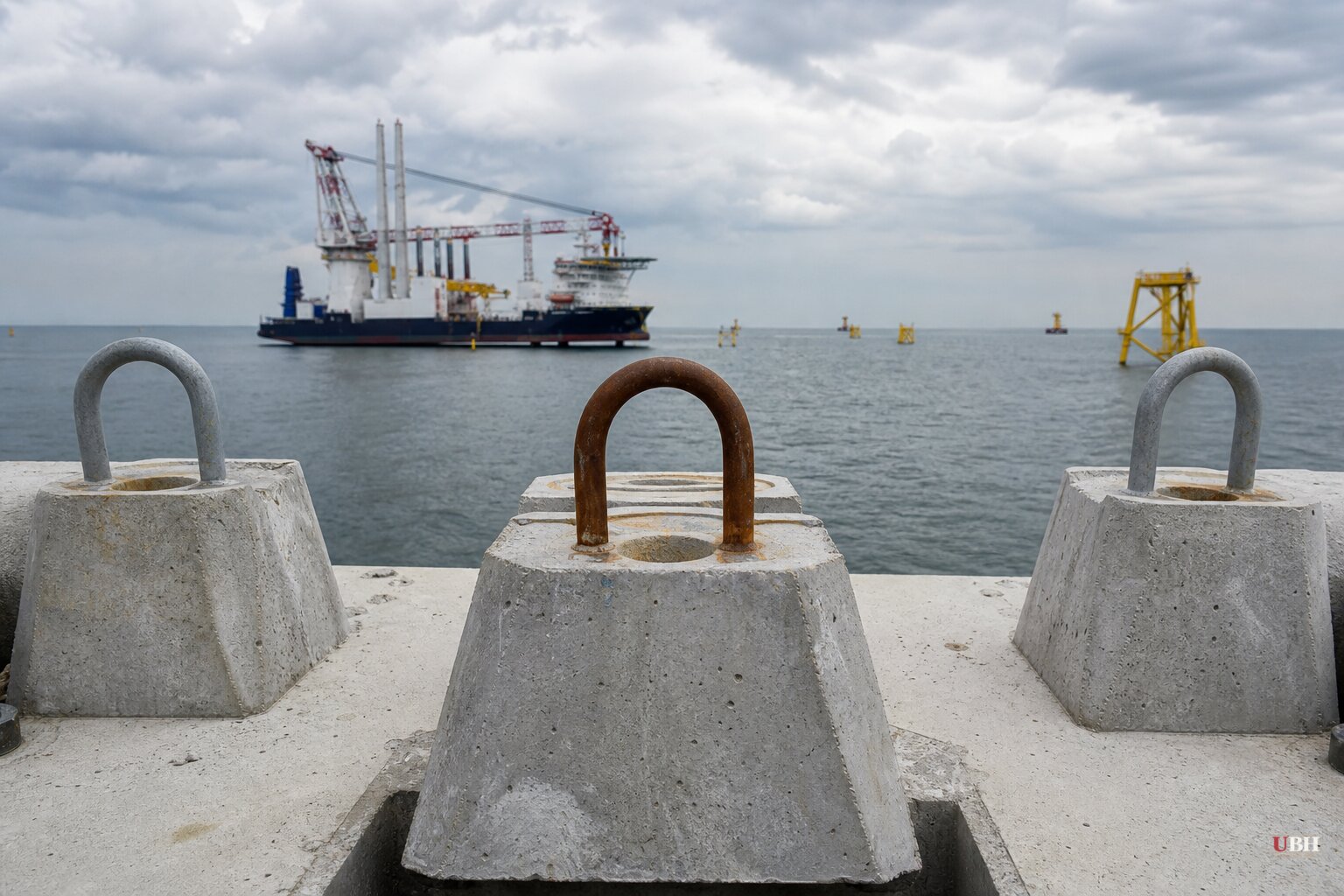
Forty-five kilometers off the Belgian coast, a ring of concrete now sits where open water used to be. On August 20, 2026, crews lowered the 23rd and final caisson into place, closing the outer wall of Princess Elisabeth Island, according to autonocion.com. Jan De Nul confirmed the foundation works are complete.
Each caisson weighs about 22,000 metric tons, roughly 24,250 US tons, and measures 58 meters long by 28 meters wide, with heights between 23 and 32 meters depending on whether it carries a storm wall, according to Jan De Nul and offshorewind.biz. All 23 were cast at a production line in Vlissingen, the Netherlands, with around 300 workers on site daily and roughly three months of build time per block.
The project is owned by Elia Transmission Belgium, the country's grid operator, and built by TM Edison, a consortium of Belgian firms DEME and Jan De Nul. The first two caissons went into the water in April 2025. The 2025 offshore campaign wrapped in October, and installation resumed this year, running until the ring closed in August.
The Money
Elia signed a €1 billion green credit facility with the European Investment Bank for the island's second construction phase, the bank confirmed in early September 2026, according to enerdata and Construction Review Online. EIB project documentation puts the actual signing date at July 17, 2026, with Elia's first drawdown at the end of that month.
That loan is the largest energy infrastructure loan the EIB has ever made in the Benelux region, per Construction Review Online. It covers the island's 220-kilovolt offshore substation, 66-kilovolt switching stations, transformers, and six 220-kilovolt AC cables running to an onshore substation in Belgium.
EIB documentation estimates the total cost of this second phase at roughly €2.296 billion, meaning the bank's loan covers about 44% of it. The first phase carried a separate €650 million EIB facility signed in October 2024 against an estimated €1.1 billion cost, a 59% share. Total EIB exposure across both phases now stands at €1.65 billion against about €3.4 billion in disclosed costs, Construction Review Online reported.
Elia also secured a €99 million EU subsidy tied to finishing the foundation on schedule, which Jan De Nul says the consortium hit.
What That Money Buys, By Comparison
Construction Review Online ran the numbers on cost efficiency. Roughly €2.3 billion of this second phase connects the first two wind farms in the Princess Elisabeth Zone, about 2.1 gigawatts of planned capacity. That works out to roughly €1.1 million per megawatt, and that figure covers only cables, substations, and transformers. No turbines.
For comparison, OX2's Rajamäenkylä and Honkakangas onshore wind farms in Finland, a 472-megawatt pair including 70 Nordex turbines, towers, roads, and grid hookup, cost about €700 million total, or roughly €1.48 million per megawatt for the entire finished wind farm, turbines and all. Belgium is paying nearly as much per megawatt just for wires and substations as Finland pays for a complete onshore wind operation. Offshore grid connection has become the expensive bottleneck in North Sea wind planning.
Nobody Has Signed Up Yet
No wind farm developer currently owns turbines inside the ring the island closes, according to autonocion.com. The island is being built ahead of the power source it's designed to carry, the reverse of how offshore wind projects usually get sequenced. Elia's zone is meant to eventually host up to 3.5 gigawatts of capacity across 285 square kilometers, per Bytes Europe, but the island itself is only guaranteed to serve at least 2.1 GW once the first developers connect.
Elia has said favorable EIB financing terms should help hold down costs and limit what gets passed through to consumer electricity bills, a live issue in Belgium where affordability remains near the top of the federal agenda, Construction Review Online reported. That's Elia's characterization of its own financing, not an independently verified outcome.
Two of the seven outlets reviewed here, Times of India and Bytes Europe, refer to the project throughout as "Princess Isabel Island." Every primary source, including Elia, Jan De Nul, DEME, and the EIB documentation, calls it Princess Elisabeth Island. The two outlets appear to be running the same underlying story with the name garbled.
What's Next
Sand reclamation inside the caisson ring is underway now. Cable connections to the mainland go in during 2027 and 2028. Electrical infrastructure installation starts in 2029. Final completion, bringing the island's first electricity ashore, is planned for 2031, a date Jan De Nul says was recently confirmed by Belgian law.
Whether Elia lines up enough offshore wind developers to fill that 3.5-gigawatt zone by then, and at what cost to Belgian ratepayers, remains open.
Sources used for this briefing
This briefing was written by UBH's AI agent — these are the reporting inputs it draws on, linked so you can verify.


