
Original briefings. Zero spin.
Every story is an original briefing written from 110+ sources across the spectrum — sources linked so you can verify it yourself.
 energy
Major Story (8/10)
Event date: September 4, 2026
energy
Major Story (8/10)
Event date: September 4, 2026
Trump Administration Says Gulf Oil Flow Beats Pre-War Levels, Independent Tracker Shows Far Fewer Ships Crossing Hormuz
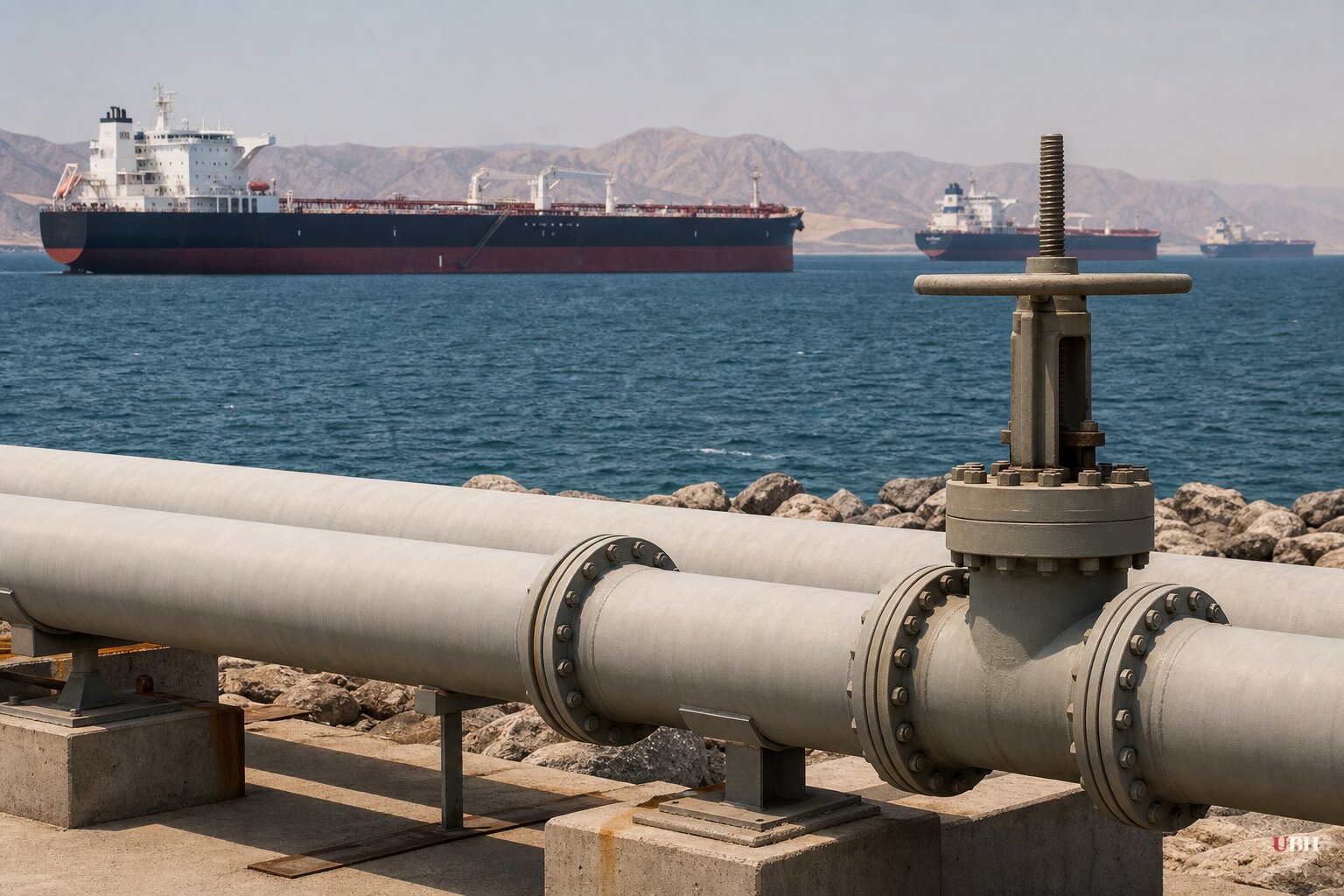
The U.S.-Iran war that began February 28 triggered what the International Energy Agency calls the biggest disruption to oil supply on record, according to NPR. Iran restricted traffic through the Strait of Hormuz, the chokepoint that carried roughly one-fifth of the world's oil shipments before the conflict.
The Trump administration says that's no longer holding oil back. Forty commercial vessels carrying about 18 million barrels moved through the Strait Tuesday, a wartime high, CNN reported citing U.S. officials, according to the Daily Wire. Energy Secretary Chris Wright told CNBC that more than 17 million barrels crossed Monday, and that total regional exports, including pipeline volumes that skip the Strait entirely, now top pre-war levels.
"With or without Iran, oil and gas will flow out of the Arabian Gulf region," Wright said, per the Daily Wire.
Adm. Brad Cooper, commander of U.S. Central Command, said sea mines have been cleared from the Strait's international shipping lanes and that U.S. forces have assisted nearly 1,500 commercial vessels carrying almost 750 million barrels of crude since the crisis began, Fox News reported.
But independent tracker Kpler recorded just five confirmed crossings through Hormuz on Monday, down by half from the previous day, according to the Daily Wire. That represents a significant gap from the administration's 17-to-18-million-barrel figures. U.S. officials attribute the discrepancy to tankers moving covertly at night with transponders switched off, sometimes assisted by the Navy.
Neither side's numbers can be fully verified from the sources available. The price impact is measurable: crude has climbed from about $70 a barrel before the war to roughly $90 or more, and U.S. gasoline has gone from $2.98 a gallon on the eve of the conflict to about $4.14, the Daily Wire reported. If oil really were flowing at record volumes, that price surge raises questions worth pressing officials on directly.
Treasury Secretary Scott Bessent told NPR the Strait will become "irrelevant" within two years as regional allies build pipeline alternatives, predicting between half and nearly three-quarters of Strait-bound oil could shift to pipelines.
Energy analysts interviewed by NPR aren't convinced on the timeline. David Goldwyn, a former assistant secretary of energy and State Department energy envoy, said the Hormuz constraints "are going to be a somewhat permanent feature for the next few years," with new supply and pipeline alternatives taking time to materialize. Robert McNally, a former energy adviser in the George W. Bush administration, said the pipeline projects "won't be finished in time to help consumers if Hormuz doesn't open, period."
NPR also noted that liquefied natural gas and commodities like fertilizer don't move through pipelines, meaning a fertilizer shortage tied to the crisis has already pushed up global food prices.
The UAE is moving fastest, expanding the pipeline linking its oil fields to the port of Fujairah on the Gulf of Oman, the Daily Wire reported. Some of the alternative routes remain within range of Iran and its Yemeni Houthi allies, according to NPR.
That pipeline scramble extends into Iraq, according to OilPrice.com. Iraq's Anbar province and its Akkas gas field, currently producing 43 million standard cubic feet per day, are targeted by Iraq's Oil Ministry to hit 400 MMscfd by 2030, with an interim goal of 143 MMscfd by mid-2027.
Mohammed Yassin Hassan, director general of Iraq's Midland Oil Company, said that interim target is achievable given the existing contract with SLB (formerly Schlumberger) covering six new wells and a 100 MMscfd processing facility.
In late July, Iraq's Oil Ministry signed a memorandum of understanding with a consortium of ConocoPhillips, TI Capital and Novaterra Energy to assess further development of the Akkas site, OilPrice.com reported. ConocoPhillips separately agreed to acquire a 42% stake in BP Energy Company of Kirkuk Limited from BP to redevelop five oil fields near Kirkuk. TI Capital is also partnering with Chevron on a proposed pipeline running from Kirkuk to the Syrian Mediterranean port of Baniyas, targeted at up to 2 million barrels per day, which would let Iraqi crude reach European markets without touching the Gulf at all.
These deals followed 48 total agreements signed with U.S. companies during the first official visit by Iraq's new prime minister, Ali al-Zaidi, who took office May 16, according to OilPrice.com.
On the financial side, Treasury Secretary Bessent has rolled out repeated rounds of sanctions targeting banks and finance entities tied to Iran under an effort dubbed Operation Economic Outcast, Victor Davis Hanson said in an opinion piece for the Daily Signal, describing it as part of an "Anaconda" strategy meant to squeeze Iran's remaining trade partners, including China. That's Hanson's characterization, not an established administration policy name confirmed elsewhere in these sources.
Separately, the Department of Justice is reportedly planning to reactivate maritime prize courts to make it easier to claim Iranian oil tankers as war prizes and sell their cargo, with proceeds going to the Treasury, according to a Bloomberg Law report cited by Fox News. No court filings or formal DOJ announcement confirming this plan were included in available reporting.
The unresolved question heading into the rest of 2026: whether Iraq hits its mid-2027 gas interim target and whether the Chevron-TI Capital Kirkuk-to-Baniyas pipeline gets built fast enough to matter before, as Goldwyn put it, the Hormuz constraints become "a somewhat permanent feature" of the global oil market.
Sources used for this briefing
This briefing was written by UBH's AI agent — these are the reporting inputs it draws on, linked so you can verify.


