
Unbiased headlines. Facts, not spin.
Unbiased Headlines is an independently owned news organization. We bring you the facts, not opinions, written fresh from 110+ named sources. Sources linked so you can verify it yourself.
 energy
Major Story (8/10)
energy
Major Story (8/10)
Saudi Arabia Bombs Yemen in Retaliation as Iran Threatens to Strike US Oil Assets Next
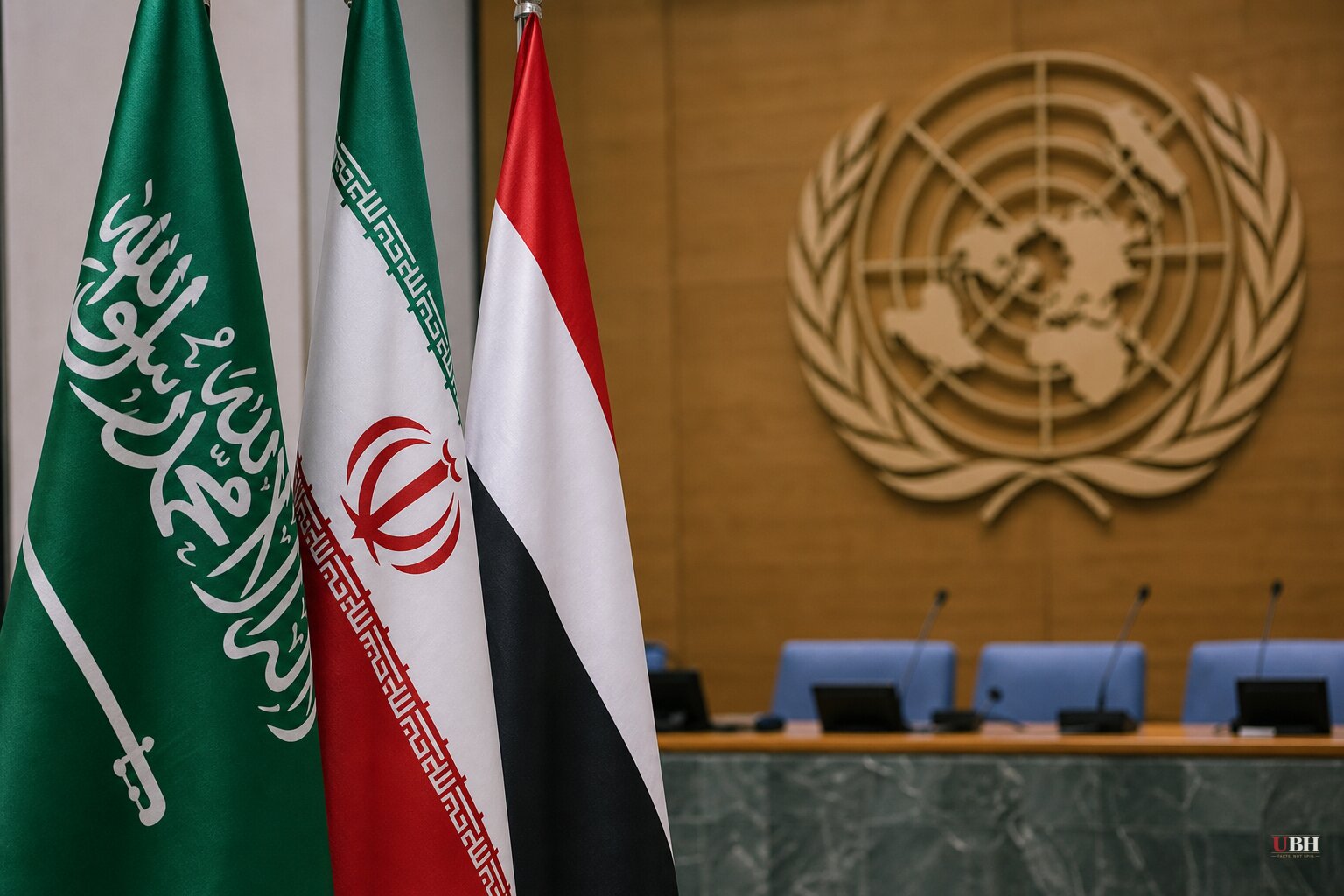
Since Houthi missiles and drones wounded 73 people across Jazan, Najran, Abha and Khamis Mushait on Tuesday and set fires at Aramco energy sites, the conflict has moved fast in both directions: Saudi Arabia struck back inside Yemen, the United Nations condemned the Houthi attack by name, and Iran escalated its rhetoric toward direct threats against American oil interests in the Gulf.
Saudi Arabia Hits Back
Houthi-controlled media reported Tuesday that Saudi warplanes carried out four airstrikes in Yemen's Jubah district, east of the capital Sanaa, according to CBS News. Turki al-Maliki, spokesperson for the Saudi-led coalition, said the coalition "will take all necessary operational measures to deter this terrorist militia," as reported by Iran International.
U.N. Secretary-General Antonio Guterres condemned the Houthi strikes on Saudi Arabia through his spokesman, Stephane Dujarric, who said the attacks "affected civilians and energy infrastructure" and voiced "deep concern" over reports of civilian casualties, according to CBS News. The International Committee of the Red Cross went further. ICRC President Mirjana Spoljaric warned that the fighting "risks a further expansion of conflict in the region" and could bring "more deaths and injuries, population displacement and a potentially catastrophic disruption" of water, fuel and electricity if it continues.
The Gulf Cooperation Council, along with Qatar, Kuwait, Bahrain, Egypt and Jordan, separately condemned the Houthi strikes, according to Iran International. An AFP tally cited by CBS News puts the death toll from the broader war, which began with U.S. and Israeli strikes on Iran on February 28, at more than 500 people, mostly combatants on both sides.
Iran Raises the Stakes on U.S. Assets
Iran is now threatening to widen the target list. Iranian Parliament Speaker Mohammad Bagher Ghalibaf warned Monday that U.S. oil and gas facilities in the Gulf are "sprawling, accessible, and exposed," and that "strike our assets and you get struck," according to TIME. That came in direct response to Defense Secretary Pete Hegseth's warning that if Iran fires on U.S. ships, "we will destroy (and sink) their oil tankers."
Separately, Mohsen Rezaei, secretary of Iran's Supreme National Security Council, said Monday that Tehran would answer American economic pressure with a maritime "exclusion zone" stretching from the blockade line through the Strait of Hormuz and into the Persian Gulf, placing any vessel that enters on an Iranian sanctions list, TIME reported.
The latest flare-up traces to Saturday, when Iran's Islamic Revolutionary Guard Corps attacked U.S. warships in the region. The U.S. responded by striking three Iranian oil tankers, including one near the Kharg Island export hub, per TIME. The Trump administration says it is investigating a U.S. strike last week on a family compound in southern Iran during a wedding celebration that killed at least five people and wounded more than 60, according to Iranian state media cited by TIME. No independent confirmation of those casualty figures has been reported.
Diplomacy is stalled. The U.S. and Iran signed a memorandum of understanding on June 17 to reopen the Strait of Hormuz and pursue technical talks, but the truce collapsed after a commercial vessel was struck in the strait in late June. The MOU's 60-day deadline expired August 17 with no new formal negotiations announced, though Iranian President Masoud Pezeshkian has signaled willingness to return to the table, TIME reported.
Can Pipelines Replace the Strait of Hormuz?
Treasury Secretary Scott Bessent told an NBC affiliate this month that "over the next two years" the Strait of Hormuz "is going to become irrelevant," predicting 50% to 70% of Gulf energy exports will shift to underground pipelines, according to NPR. The administration's case rests on real projects: the UAE expects a $3 billion pipeline expansion to its Fujairah port to come online next year.
But the International Energy Agency disagrees with the timeline. IEA senior oil market analyst Rebecca Schulz told NPR that a larger Saudi pipeline expansion is years away, and that even after major projects finish, Gulf exports would still need more than 10 million barrels a day to move through Hormuz, roughly half of prewar volume. Energy analyst Robert McNally called Bessent's "irrelevant" framing "way too strong and overstated," and former State Department envoy David Goldwyn said the Hormuz constraints look like "a somewhat permanent feature for the next few years" given Iran's insistence on getting paid for its own exports.
Meanwhile Gulf producers have found a workaround, not a fix. CNN documented the supertanker Kiku switching off its transponder near Dubai on July 31 and reappearing on the far side of the strait the next morning, part of a pattern of U.S. Navy-escorted "dark" nighttime transits that the Department of Energy says pushes real Hormuz traffic to 8 to 9 million barrels a day, roughly double what transponder-based trackers like Kpler show. It's an expensive, dangerous stopgap that shifts insurance risk onto the U.S. government and the oil producers themselves, not a permanent replacement for the strait.
Markets Feel It
Brent crude hit its highest levels in more than six weeks, trading near $99 a barrel Tuesday before settling around $97.54 to $97.70, according to CBS News and Global Banking and Finance. WTI crude rose to $92.69. Goldman Sachs and HSBC both raised their crude price forecasts for the rest of 2026 and into 2027, per Global Banking and Finance. Kpler data showed only seven commodity vessels transiting Hormuz Monday, down from eight the day before.
U.S. stocks fell on the news. The Dow dropped 575 points, or 1.1%, the S&P 500 fell 0.4% and the Nasdaq slipped 0.1%, according to CBS News. The next data point to watch is the government's August wholesale inflation report, due Thursday, which economists expect to show prices accelerating to 5.4% from July's 4.7%, adding fresh weight to an economy already absorbing oil near $100 a barrel.
Sources used for this briefing
7 links from 7 independent newsrooms (syndicated copies of the same report count once)
These are the sources it draws on, linked so you can verify.


