
Unbiased headlines. Facts, not spin.
Unbiased Headlines is an independently owned news organization. We bring you the facts, not opinions, written fresh from 110+ named sources. Sources linked so you can verify it yourself.
 energy
Notable (6/10)
Event date: September 7, 2026 ·
energy
Notable (6/10)
Event date: September 7, 2026 ·
Nuclear Power Set a Second Straight Generation Record in 2025, But 550 GW of the 2050 Pledge Has No Project Behind It
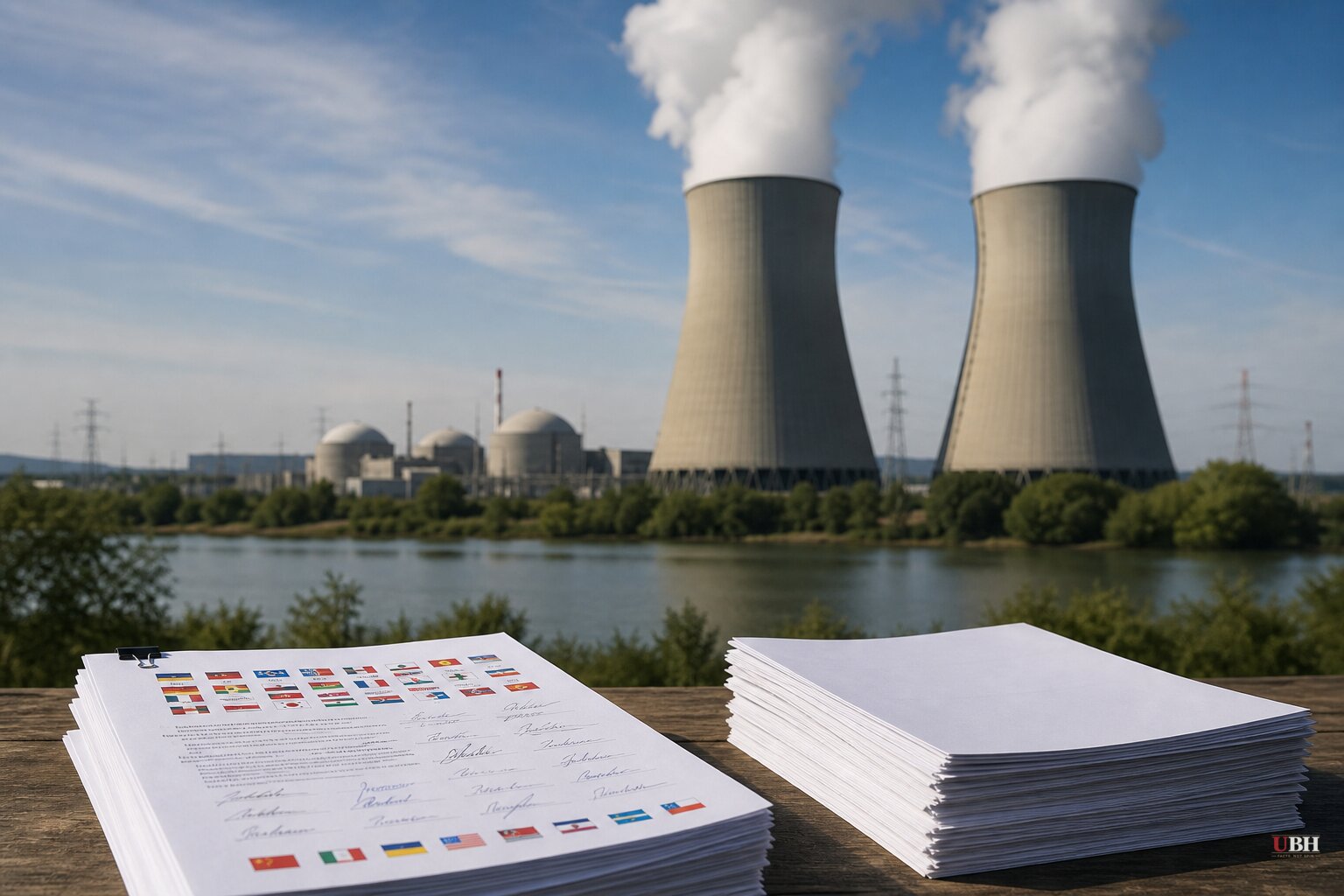
Nuclear Power Set a Second Straight Generation Record in 2025, But 550 GW of the 2050 Pledge Has No Project Behind It
Nuclear power had its best year on record in 2025, for the second year running. Reactors worldwide generated 2,702 terawatt-hours of electricity, up 35 TWh from 2024's 2,667 TWh, according to the World Nuclear Association's World Nuclear Outlook Report 2026, released Monday, September 7, ahead of the group's 51st World Nuclear Symposium.
The global fleet ran at an 83.7% capacity factor last year, meaning reactors produced power at nearly full output 84% of the time they were capable of running, per the WNA report as cited by World Nuclear News. Fission doesn't care if the sun is down or the wind stopped.
For comparison, the U.S. nuclear fleet specifically runs above a 92% capacity factor, the highest of any major U.S. power source, against roughly 34% for wind and 23% for solar in the United States, according to Tech Times. World Nuclear News also notes something counterintuitive: capacity factor actually rises as reactors pass 50 years old, undercutting the assumption that aging plants get less reliable.
The Math Behind the Tripling Pledge
Thirty-eight countries have now endorsed the goal, first agreed at COP28, of tripling global nuclear capacity by 2050. Current operating capacity sits at 423 GWe. The WNA projects that if every national target is hit and the existing fleet keeps running, the world could reach 1,457 GWe by 2050, which the association says is more than 200 GWe beyond a straight tripling.
The construction pipeline tells a tighter story. Capacity actually under construction rose to 82 GWe in 2025, with 11 reactors breaking ground that year, according to World Nuclear News. Add in the combined total of planned, proposed, and potential projects, which grew to 416 GWe, and you still land well short of what the 2050 targets require.
The difference, more than 550 GWe, is capacity that governments have pledged but that has no specific project attached to it, whether under construction, planned, or formally proposed, according to both World Nuclear News and Energy Connects. WNA Director General Dr. Sama Bilbao y León put it plainly in the association's press release: "Ambition alone will not deliver 24/7 clean energy."
Who's Actually Building
The report projects that the largest share of new capacity through 2050 will come from the countries that already run nuclear fleets: the United States, China, France, Russia, and India, per World Nuclear News. Countries with existing regulatory frameworks, trained workforces, and supply chains are the ones most likely to close the gap. Nations starting from zero face a much steeper climb.
Tech Times ties the renewed momentum directly to AI data center demand, framing hyperscalers as a driving force behind corporate interest in nuclear because large language model training runs continuous, round-the-clock loads that intermittent sources struggle to match without heavy battery storage. That emphasis is Tech Times' own framing. The WNA report itself and the other outlets covering it focus more on government energy-security policy than on any single industrial customer, so readers should treat the AI-demand narrative as one outlet's interpretive lens rather than something the underlying WNA data itself singles out.
A reasonable skeptic would note that a capacity factor comparison between nuclear and wind or solar isn't entirely apples-to-apples: intermittent sources are designed to run when conditions allow, not continuously, and their lower capacity factor reflects that design choice rather than unreliability in the way a forced reactor outage would. Cost is also a live concern, separate from the WNA's generation figures. A related NucNet report from August 26 estimated a new nuclear plant in Switzerland could cost up to €45 billion, underscoring why so much of that 550 GW gap remains unbuilt even where governments say they want it.
What Happens Next
The WNA symposium opens Wednesday, September 9, at the Hilton London Metropole under the theme "From Ambition to Action." The association's report includes specific policy recommendations for governments, regulators, and financiers, including calls to streamline licensing, establish durable investment frameworks, and shift from one-off projects to sustained deployment programs, according to World Nuclear News.
Whether any of that translates the 550 GW of paper capacity into steel and concrete is the open question the symposium is built around. The WNA's own numbers show construction starts ticked up in 2025, eleven reactors, but that pace would need to accelerate substantially and sustain itself for 25 years to hit the 2050 targets these 38 countries have signed onto.
Sources used for this briefing
4 links from 4 independent newsrooms (syndicated copies of the same report count once)
These are the sources it draws on, linked so you can verify.


