
Original briefings. Zero spin.
Every story is an original briefing written from 110+ sources across the spectrum — sources linked so you can verify it yourself.
 energy
Major Story (8/10)
Event date: September 7, 2026
energy
Major Story (8/10)
Event date: September 7, 2026
BoE's Bailey Warns UK Inflation Could Top 4% and Food Prices Near 5% as Iran War Drags On
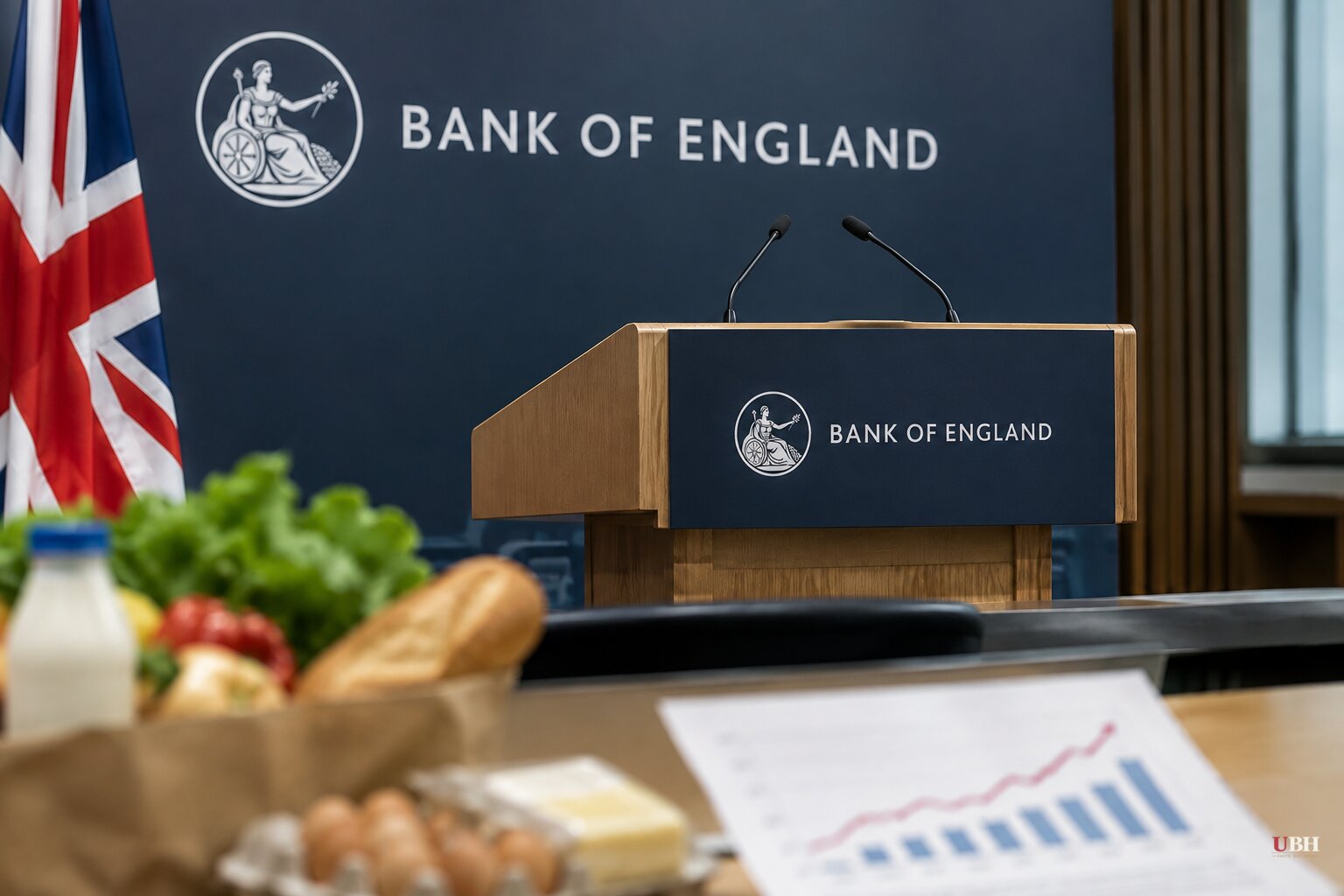
Since Brent crude climbed toward $100 a barrel this week on Houthi attacks against Saudi refineries, the Bank of England has moved from monitoring the Iran war's economic fallout to actively warning Parliament about it.
Governor Andrew Bailey told the Treasury Committee on Tuesday that inflation risks are "to the upside" and that energy prices "could be higher still" if the conflict continues. "The conflict is still going on and it is also causing a high level of energy prices and quite a bit of volatility in energy prices," Bailey said, according to OilPrice.com. That volatility, he added, is "feeding through into financial markets."
The Bank's own summer projections warned inflation could hit 4%, double its 2% target, if oil holds near $100 a barrel for several months. UK inflation was already at 2.9% in July, up from 2.6% the month before.
Food is the next pressure point. Bailey told MPs that hot, dry conditions have hurt British wheat, barley and oat yields, while a strong El Niño pattern threatens global supplies of rice, coffee, cocoa and palm oil, according to Retail Gazette. The Financial Times, cited by Retail Gazette, reported food inflation could approach 5% by next summer. British Retail Consortium data already shows shop price inflation at 1.5% in August, its highest in more than two years, with food inflation climbing from 2.2% to 2.8%.
Pill Wants Action, Not Patience
Huw Pill, the Bank's chief economist and one of its most hawkish voices, delivered a sharper warning to business leaders in Scotland, according to City A.M. A "wait and see approach," he said, risks letting inflation expectations harden into a wage-price spiral that is slower to emerge but "more lasting." Pill argued the Bank needs to act "clearly, promptly and decisively" at its September 17 meeting rather than let uncertainty create a "status quo bias."
Pill was one of three Monetary Policy Committee members who voted for a 25 basis-point hike in July, up from two members backing a hike at the prior meeting. The panel held rates at 3.75% anyway, the fifth straight hold.
The Economists' View
A Reuters poll of 65 economists conducted September 4-8 found unanimous agreement that the MPC will hold rates on September 17, with 57 of 65 expecting no change for the rest of the year. That's the same share as three weeks earlier, according to the poll reported by Euronext.
Santander CIB economist Gabriella Willis said "there are no flashing warning signs" for the Bank. HSBC's Elizabeth Martins noted the Bank said it would move if "second-round effects" appeared in wages, and "so far, that's not the case." Goldman Sachs economist James Moberly expects inflation to peak at 3.3% in November, above the Bank's own forecast but still short of the level that would trigger alarm about wage-price spirals.
Financial markets are pricing three rate hikes starting in November, but the economists actually polled think the Bank holds through mid-2027, with its first cut not coming until Q3 2027. Bond traders and the professional forecaster consensus are reading the same conflict very differently.
The Household Bill
The Centre for Economics and Business Research calculates the war has already cost the average UK household £1,100 in real income this year, rising to £2,400 cumulative by the end of 2027, according to the Guardian. That's £70.4 billion economy-wide. CEBR senior economist Liam Daly said the hit comes through both direct channels (energy bills feeding into prices) and indirect ones (the Bank holding rates instead of cutting them, squeezing mortgages and borrowing).
Ofgem has already approved a 4% rise in the household energy price cap for October. The Energy and Climate Intelligence Unit estimates the war has added £9.8 billion to UK energy and transport costs since fighting began, with UK households paying an extra £190 million for every additional week of conflict.
On Tuesday it also emerged the UK is paying the highest cost on new government debt in nearly 30 years, with Bailey acknowledging gilt yields reflect market fears of an inflation spike and a premium traders are charging for Hormuz-related supply risk.
The Supply Side Nobody Disputes
Whatever the UK inflation debate, the underlying oil disruption is not contested. Iranian crude loadings have collapsed to roughly 287,000 barrels a day this month, down from about 2 million barrels a day before the war, according to tanker-tracking data from Kpler cited by Fox News. China, Iran's largest customer, is now taking about 523,000 barrels a day, down from 1.7 million at the war's start. More than 40 million barrels of Iranian crude sit trapped on tankers in the Gulf under the U.S. blockade.
That squeeze, combined with the Houthi refinery strikes in Saudi Arabia, is the direct mechanical driver behind Brent's push toward $100. NATO allies are now exploring individual, non-NATO contributions to protect Hormuz shipping lanes, a sign the supply disruption is expected to persist rather than resolve quickly.
The MPC votes September 17. Every economist polled by Reuters expects a hold. Whether that call still looks right after one more inflation and jobs release, which Elizabeth Martins says is the last data point before the meeting, is the open question the Bank itself hasn't answered.
Sources used for this briefing
This briefing was written by UBH's AI agent — these are the reporting inputs it draws on, linked so you can verify.


