
Original briefings. Zero spin.
Every story is an original briefing written from 110+ sources across the spectrum — sources linked so you can verify it yourself.
 energy
Major Story (8/10)
Event date: September 2, 2026
energy
Major Story (8/10)
Event date: September 2, 2026
Russian Crude Output Falls to 8.72 Million Barrels a Day as Ukrainian Drone Strikes Pile Up on Refineries and Ports
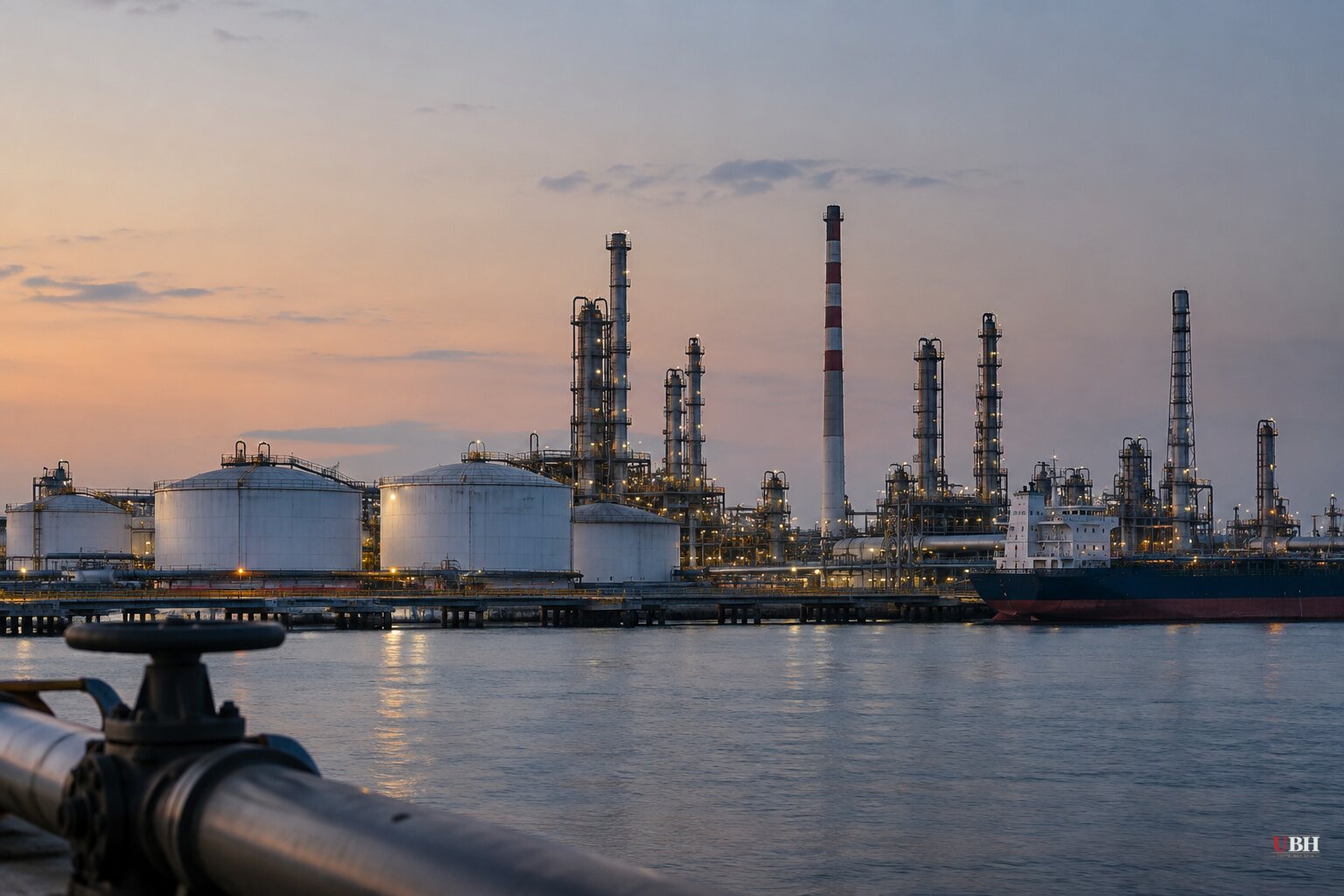
Russia's crude production dropped to an average of 8.718 million barrels a day in August, according to the Organization of the Petroleum Exporting Countries' monthly report, cited by Bloomberg. That's down 160,000 barrels a day from a revised July average and the steepest monthly decline since Russian output started shrinking in December 2025.
Rystad Energy calculates Russia's required September production target under its OPEC+ agreement at 9.949 million barrels a day, according to a statement the firm sent to Rigzone. August's actual output ran more than 1.2 million barrels a day below that number.
Rystad cut its full-year 2026 forecast for Russian output to 8.95 million barrels a day, and to roughly 8.6 million bpd for 2027, a reduction of 90,000 bpd from its prior estimate. Rystad Vice President Daria Melnik said drone strikes are no longer just a refining problem. "The increasing frequency and effectiveness of drone attacks on Russian oil and gas infrastructure is no longer affecting only refineries; it's constraining the country's upstream sector as well," Melnik said.
Refineries Under Nightly Fire
Ukraine has struck Russian oil refineries at least 70 times since the start of 2026, according to the Kyiv Post, pushing Russian refining output to its lowest level in two decades. Melnik said refinery runs in June and July were among the lowest recorded in two decades, with throughput forecast around 4 million bpd through December, nearly 30% below the 2016-2023 seasonal average of about 5.7 million bpd.
Ukrainian drones hit the Saratov refinery overnight on September 8, injuring 10 people including three children, Saratov Region Governor Roman Busargin said. It was the fourth strike on that Rosneft-operated plant this year. On September 2, the KINEF refinery in Leningrad Oblast, Russia's second-largest by capacity, fully halted processing. At least seven Russian refineries fully or partially stopped production in August, the Kyiv Post reported.
The fuel squeeze has forced Russia into measures it hasn't needed before. At least 17 Russian regions have imposed gasoline sale restrictions, including 30-40 liter caps per vehicle and odd-even license plate rationing. Russia has started importing gasoline by sea from India, Morocco and Turkey while increasing purchases from Belarus to record levels, according to the Kyiv Post.
Ports and Exports Squeezed Too
The Kyiv School of Economics Institute's Russian Oil Tracker found that Black Sea shipments of crude fell 26% month-on-month in July, while oil products shipments through Black Sea ports dropped 47%. Total seaborne crude and product exports fell 10.7% from June, and Russia's oil export revenue dropped $2 billion to $13.8 billion for the month. Moscow imposed a diesel export ban on July 8 to shore up domestic supply, according to KSE.
Bloomberg's tanker-tracking data, published via Energy Connects, showed Russia has been rerouting Kazakh crude to Novorossiysk to free up space at its less-vulnerable Baltic terminal, Ust-Luga. Ukraine struck Novorossiysk again overnight into September 9, hitting an oil-loading terminal, military port facilities and warships carrying Kalibr missiles, President Volodymyr Zelenskyy said. Russian officials, including Krasnodar Governor Veniamin Kondratyev, said four people, including a child, were killed in that strike.
Revenue Down, But Not Only Because of Drones
Russia's oil-related budget revenue fell sharply in August, but the causes are mixed. Bloomberg's calculations, based on Russian Finance Ministry data and reported by NV, put net budget revenue from oil production at 326.2 billion rubles ($3.76 billion) in August, down 22% from a year earlier and the lowest since February 2026. That figure fell more than 60% from July alone.
A large part of that drop traces to price, not just sabotage. Bloomberg reported that August budget revenues were calculated using an oil price of just over $59 a barrel, according to Russia's tax authority, down from a spring peak near $95 a barrel for Urals crude. That earlier spike was driven by the Iran war pushing up global prices and Asian buyers seeking alternatives to Gulf supply; the subsequent de-escalation in the Middle East pulled Urals prices back down. Russia's total oil and gas revenue fell 16% year-over-year in August to 424 billion rubles ($4.89 billion). Both the price collapse and the drone-driven export disruptions are pressuring the Kremlin's wartime budget at the same time, and the sources don't allow separating exactly how much each factor contributed.
The Other Side of the Strikes
Russia has continued its own strike campaign on Ukraine. A Russian drone attack on the Starokazache-Tudora border crossing between Ukraine and Moldova on September 9 killed two people and injured three, according to Ukraine's State Border Guard Service. Moldovan President Maia Sandu said "Russia's front line is moving further west," and closed the crossing. Russian drones also killed one person and injured 17 in Kyiv the same night, striking a 24-story residential building, Kyiv authorities said.
A drone incursion into Moldovan airspace the day before delayed Zelenskyy's departure for Norway. Norwegian Prime Minister Jonas Gahr Store said Zelenskyy's plane was "almost hit by a drone." A Ukrainian presidential source called that characterization "exaggerated," while Moldovan authorities said they had briefly closed airspace after detecting the drone before clearing the flight. The two accounts of how close the aircraft came to danger remain unreconciled.
Russian President Vladimir Putin has framed his own economic-infrastructure strikes as retaliation. "Kyiv had opened Pandora's box" by targeting Russia's economy, Putin said on August 22, warning of a response against Ukraine's "most sensitive economic sectors." Two days later he signed a decree letting the state take control of critical infrastructure deemed insufficiently protected from drone attacks. First Deputy Prime Minister Denis Manturov said the measure would not be applied broadly and is "not a precursor to nationalization."
The Institute for the Study of War assessed in July that Ukraine's drone campaign is "causing significant effects on the Russian economy." Whether that pressure translates into any shift in Moscow's negotiating position, or simply forces further rationing and rerouting inside Russia, remains an open question heading into the fall.
Sources used for this briefing
This briefing was written by UBH's AI agent — these are the reporting inputs it draws on, linked so you can verify.


