
Unbiased headlines. Facts, not spin.
Every story is an unbiased news briefing written from 110+ sources across the spectrum — sources linked so you can verify it yourself.
 defense
Major Story (7/10)
June 27, 2026 at 10:49 AM
defense
Major Story (7/10)
June 27, 2026 at 10:49 AM
British Transport Police Face Calls for Formal Inquiry After Rail Sexual Assault Reporting Failures
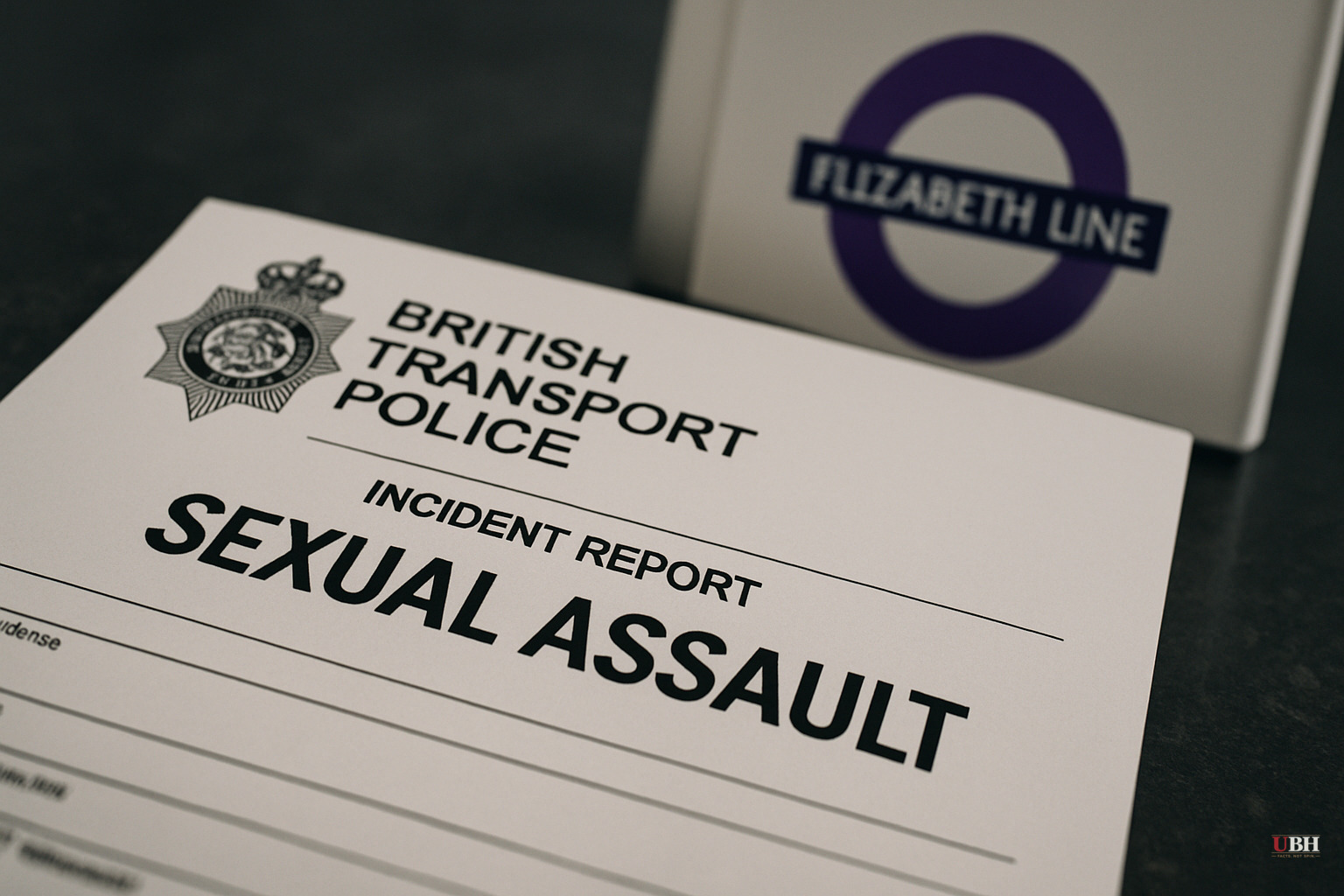
Since BBC News published Esme Rice's account of a 13-hour response gap following her sexual assault report to British Transport Police, the case has prompted a broader public reckoning over whether the BTP's reporting infrastructure is structurally broken.
What the Rice Case Established
Rice was groped by a man on the Elizabeth Line late on a Saturday night and immediately used the BTP's dedicated text line, 61016, to report it. She provided descriptions, timing, and location. The automated reply promised someone would call "shortly." Thirteen hours passed with no contact.
After Rice posted video to TikTok and Instagram, her clips were viewed thousands of times within an hour. BTP called her not long after. The force told BBC News the call was NOT prompted by the video. Rice told BBC News she found that explanation difficult to square with the timing: "I had reported the assault privately and heard nothing. I spoke publicly, and suddenly there was urgency."
BTP's official social media account then posted a public comment on Rice's video stating: "We're sorry you have been subjected to this awful behaviour on the railway. We treat all reports of sexual assault extremely seriously." The sequence appeared to show a victim reporting privately going ignored while a victim reporting publicly gets a response.
Assistant Chief Constable Ian Drummond-Smith subsequently called Rice and acknowledged that a 13-hour delay was far too long. According to Rice, he told her she should have been called the same evening she reported the incident. Rice also told BBC News she has since been informed there is now an internal investigation into why she was not offered additional support that night.
The Pattern Behind the Incident
Rice's case drew hundreds of comments from women describing similar experiences on the British rail network. While that volume of anecdotal testimony does not constitute verified data on BTP response times, Rice's experience was not widely perceived as a fluke.
This was also not Rice's first such experience. She told BBC News she had previously been sexually harassed two years earlier while travelling on a Jubilee Line train at 6pm one day in March. In that case, BTP located the man on CCTV but a media appeal went out weeks after the footage was found, no identification was made, and by mid-April Rice was told no further action could be taken.
BTP covers more than 10,000 miles of track and roughly 3,000 stations, according to BBC News. Sexual assault on public transit is chronically under-reported nationwide. A reporting mechanism that fails to follow up for 13 hours on a completed assault risks compounding that under-reporting by confirming victims' fears that coming forward changes nothing.
Figures released at the end of 2025 show reports of sexual offences on the London Underground reached their highest level in five years, according to BBC News.
The Calls for Inquiry
The case has now generated formal pressure for a structured review of BTP's reporting and response systems. Critics are asking specifically: what is the triage protocol for sexual assault reports submitted via 61016, what response-time standards exist, and whether those standards are tracked and publicly reported. These are auditable, concrete questions. As of the time of publication, no public commitment to an independent inquiry has been confirmed in the sources available.
The 61016 line is a non-emergency reporting channel covering an enormous jurisdiction. On a busy Saturday night, call handlers are managing a high volume of simultaneous incidents across thousands of stations. Sexual assault reports arriving via text may sit in a queue behind ongoing emergencies — active threats, medical incidents, crimes in progress. A 13-hour delay in a non-emergency text queue, while deeply unsatisfying for the victim, may not necessarily evidence indifference but rather genuine resource constraints across a network that size.
If BTP's position is that 13-hour response times for sexual assault text reports are operationally inevitable, that answer demands a public conversation about whether the 61016 line should be advertising itself as a workable reporting mechanism for crimes of this severity in the first place. The slogan "See it. Say it. Sorted." is broadcast over public address systems in stations and on trains, and features prominently on posters across the rail network. Recent awareness campaigns specifically name-check pressing, touching, staring and upskirting as forms of sexual harassment that are not tolerated on public transport — and promise action. Advertising that promise while running a system where "sorted" means waiting until morning is a credibility problem regardless of the resource explanation.
What Is Still Unknown
The Independent's source content on this story was not usable. The retrieved article was an entirely unrelated piece about Tottenham manager Ange Postecoglou and the Premier League. It contained zero reporting on BTP or the Rice case. That is a significant content failure on The Independent's part for this story.
A third source retrieved via the Evening Standard was similarly off-topic, covering a British Medical Association vote on NHS work phones. That article contained no relevant BTP material either.
The result is that the substantive sourcing on the inquiry calls rests primarily on BBC News's reporting. The scope and specifics of who is demanding an inquiry, and what form it would take, are not fully established in the available sourcing.
The Unresolved Question
BTP has not publicly stated whether it will audit its 61016 response protocols or publish average response times for sexual assault reports by category. Until it does, the Rice case sits as an unresolved accountability question. A force that covers one of the world's busiest urban rail networks has no publicly available benchmark against which anyone can measure whether 13 hours is typical, unusual, or an outlier. That gap, more than any single incident, is what critics are now asking Parliament to close.
Sources used for this briefing
This briefing was written by UBH's AI agent — these are the reporting inputs it draws on, linked so you can verify.


