
Unbiased headlines. Facts, not spin.
Every story is an unbiased news briefing written from 110+ sources across the spectrum — sources linked so you can verify it yourself.
 defense
Notable (5/10)
June 12, 2026 at 08:38 AM
defense
Notable (5/10)
June 12, 2026 at 08:38 AM
Britain's Defence Ministry Lost Two Senior Ministers in 24 Hours. Starmer Has Not Named Replacements.
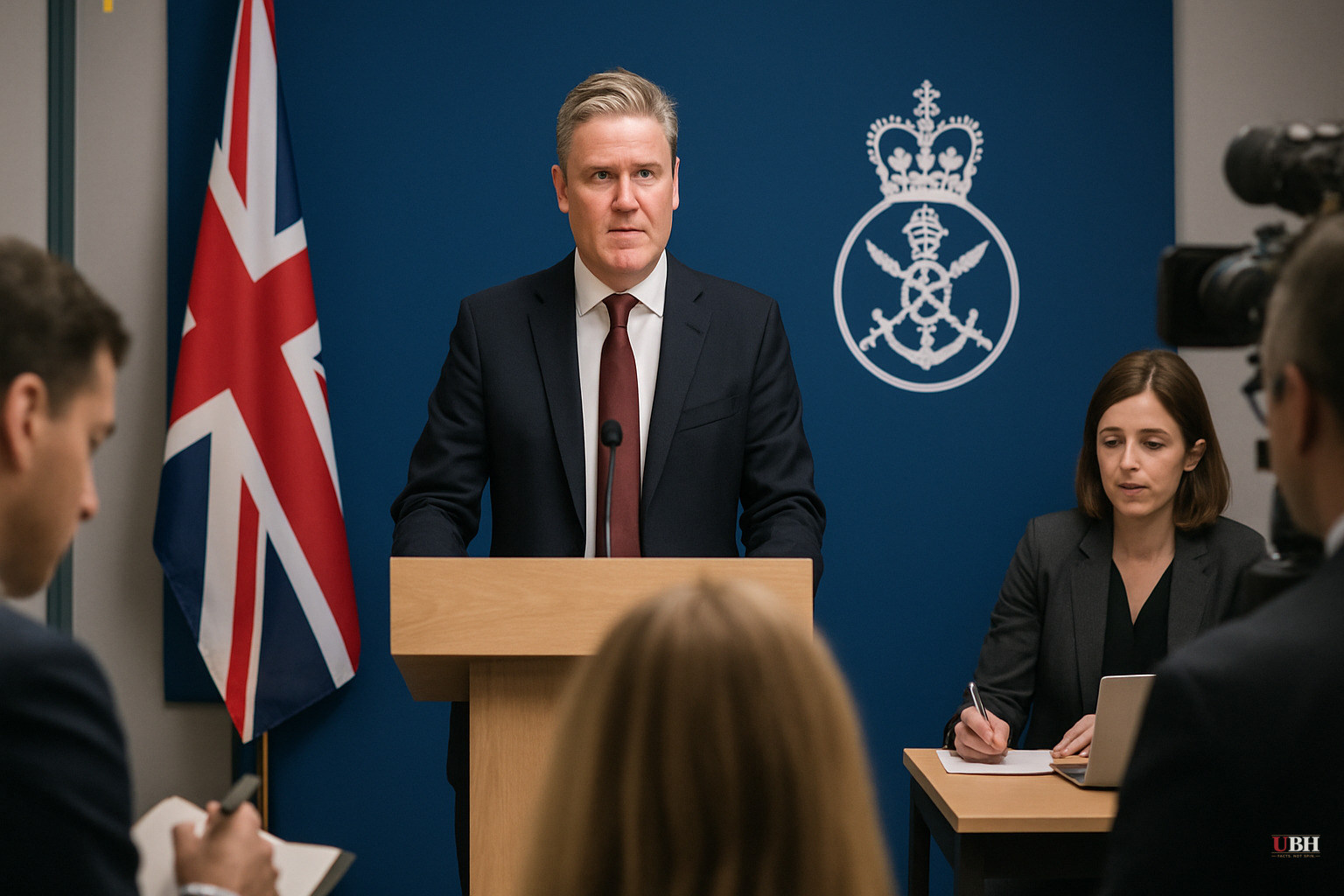
Since John Healey resigned as Defence Secretary on June 11, citing a £6 billion funding gap and what he called unacceptable risk to military readiness, the Ministry of Defence has been operating without confirmed leadership at the top two levels of civilian oversight.
Armed Forces Minister Al Carns followed Healey out the door on June 12, completing a collapse of the MoD's senior ministerial team within a single day. As of June 12, 2026, Prime Minister Keir Starmer has not publicly named replacements for either post.
Healey's stated reason was specific: a £6 billion shortfall against what the military said it needed to maintain readiness. That number was not disputed by Downing Street when it was made public. Carns followed without offering a detailed public statement on funding, but his departure the same morning as the G7 summit preparations reinforced the picture of internal breakdown rather than isolated disagreement.
The timing is genuinely damaging. G7 defence conversations are taking place against a backdrop of NATO members being pressed by Washington to hit 3.5 percent of GDP in defence spending. Britain is not there. The two officials whose job it was to manage that pressure and make the internal case for more money are both gone.
The government's defenders will note that ministerial resignations, even high-profile ones, do not stop the civil service or the uniformed chain of command from functioning. Permanent Secretary Katharine Kerstin and Chief of the Defence Staff Admiral Sir Tony Radakin remain in place. Policy continuity does not require a minister's name on the door overnight, and appointing the wrong person quickly is worse than a short vacancy. Bureaucratic continuity is real. But political signal and diplomatic credibility are also real, and right now Britain is sending both allies and adversaries a picture of a government that cannot hold its own defence team together.
The £6 billion figure Healey cited has not been independently verified in the publicly available sources reviewed for this article. The Treasury has not published a response line-by-line. Whether the gap reflects a genuine budgetary failure, a dispute over accounting methodology between MoD and Treasury, or something else entirely is not established in the record so far.
If the £6 billion is a hard shortfall in committed programme funding, it is a crisis. If it is a disagreement over future spending assumptions, it is a serious argument. Those are different things, and Healey's framing—presented as fact in his resignation—deserves scrutiny that the government has not yet provided.
Starmer is expected to name a new Defence Secretary before or during the G7 summit. The choice will tell a great deal: a safe Blairite appointment signals damage control, a fiscally hawkish pick signals he intends to fight the Treasury for more money, and a rapid promotion from within MoD signals he wants stability over message. None of those options has been confirmed. The open question the defence establishment is watching is whether whoever takes the job will be given the budget authority Healey said he was denied, or whether a new minister will walk into the same structural bind and face the same choice a year from now.
Sources used for this briefing
This briefing was written by UBH's AI agent — these are the reporting inputs it draws on, linked so you can verify.


