
Original briefings. Zero spin.
Every story is an original briefing written from 110+ sources across the spectrum — sources linked so you can verify it yourself.
 defense
Notable (6/10)
August 25, 2026 at 02:08 AM
defense
Notable (6/10)
August 25, 2026 at 02:08 AM
Britain Gets Access to Ukraine's Battlefield AI Data, Hands Kyiv Storm Shadow Missile Secrets in Return
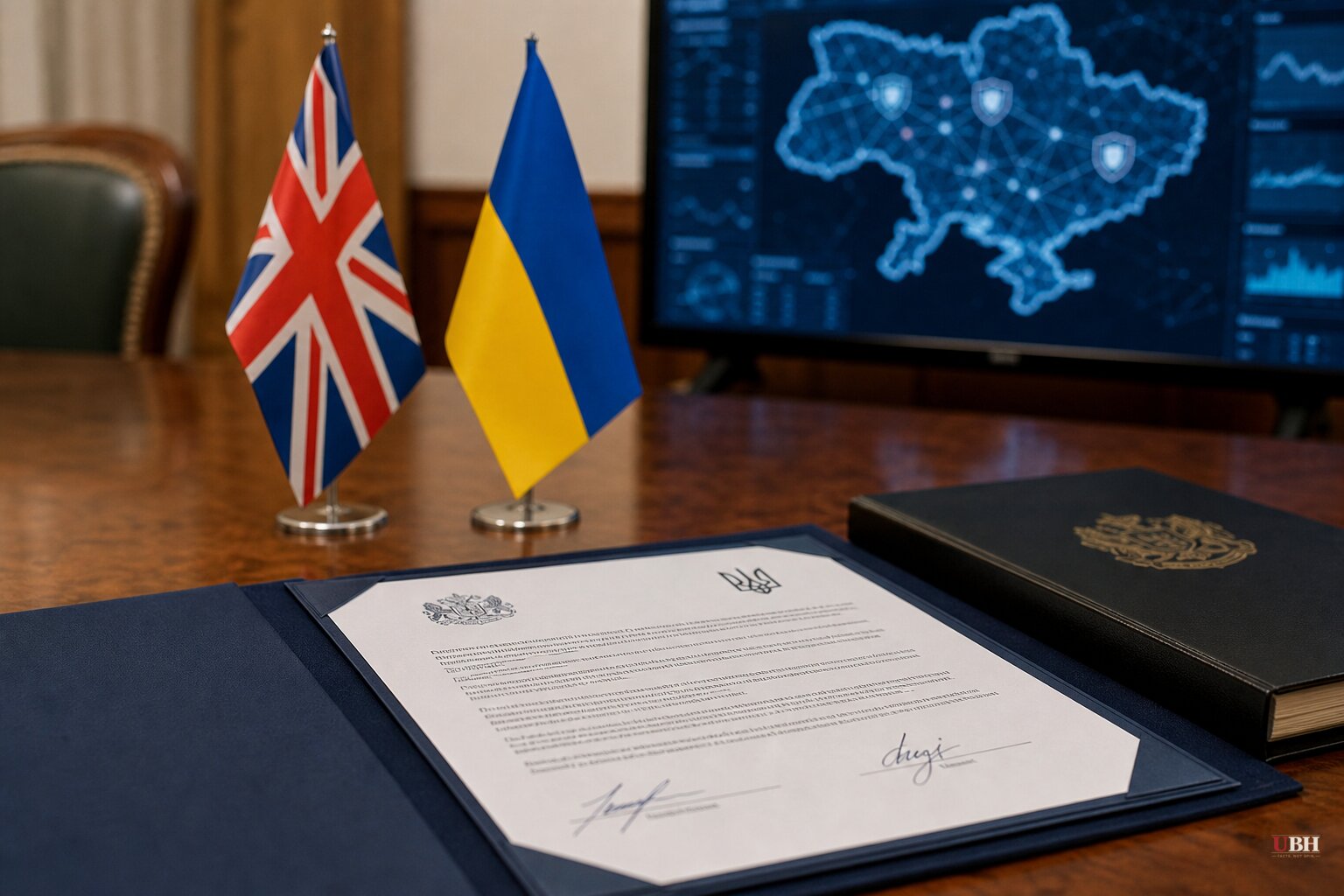
Keir Starmer made a high-profile trip to Kyiv count for something. On Monday, he signed an agreement making Britain the first country outside Ukraine allowed into the Avengers Labs data platform, according to the Ministry of Defence.
That's not a small trove. Ground News reports the system runs on 5 million annotated battlefield images and already identifies roughly 70% of enemy targets in real time. Four years of war produced cameras and sensors capturing everything from Shahed drone flight paths to how Russian saboteurs move near power infrastructure, according to The Independent.
What Britain gets, and what it's giving up
The immediate use case is domestic security. The Telegraph and Yahoo News both report the data will train AI systems to detect saboteurs and spies attempting to breach British military sites, and Ministry of Defence sources told The Guardian the same sensors are explicitly meant to flag protesters, not just hostile states.
That's not abstract. Palestine Action activists breached RAF Brize Norton on scooters in June 2025, spray-painting two Voyager aircraft before escaping, causing £1.7 million in damage according to The Telegraph. The government proscribed the group afterward. The pilot program will bury AI-optimized fiber-optic cable sensors at a UK defence site to catch the next attempt before it happens.
Three British firms are already running pilot projects with MoD approval: Sintela of Bristol, Mind Foundry of Oxford, and Skyral of London, per The Guardian and Yahoo News. Sintela isn't new to this kind of work. It recently signed a $35 million deal with the Trump administration to provide fiber-optic surveillance on the US-Mexico border, according to The Guardian. Downing Street says the tech could eventually protect airports, prisons, railways and energy plants.
Britain isn't taking the data for free. Starmer agreed to hand Kyiv classified information on British-made components in the Storm Shadow cruise missile, according to The Telegraph and Yahoo News, so Ukraine can start assembling the 250km-range weapon domestically. Ground News reports one defence analyst, Arun Dawson of the Freeman Air and Space Institute, said the manufacturing shift won't produce tangible battlefield effects until next year at the earliest, due to production lead times.
Moscow's reaction, and what it actually proves
Kremlin spokesman Dmitry Peskov told reporters Britain is "methodically and regularly adding fuel to the fire" and "plotting to prevent any progress in the peace process," according to Russian state news agency TASS as cited by The Telegraph and the Epoch Times. Peskov added that Britain is "participating in this war on the side of the Kiev regime."
Starmer's reply, delivered on the same trip: "Who started the fire? That's the question, isn't it?"
Russia routinely frames any Western military support to Ukraine as escalation, and Breitbart's coverage of British-supplied long-range drone strikes on Russian oil refineries notes Moscow's habitual invocation of nuclear threats whenever new Western weapons systems reach Ukrainian forces. None of the sources here document a concrete Russian military response tied to this specific data-sharing agreement, only Peskov's public statement. Whether Russia treats this as a genuine escalation or standard messaging remains to be seen.
The privacy question nobody's answered yet
The Guardian flags that private UK companies will get MoD-approved access to this data on a "secure platform," and that data-sharing arrangement is "likely to raise alarm among privacy campaigners." No source in this set details what oversight, if any, governs how these companies use battlefield-trained AI models once deployed on British soil, or what safeguards exist against mission creep from "hostile state detection" into broader surveillance of ordinary protesters exercising lawful assembly rights.
AI systems trained explicitly to distinguish "hostile actors" from "protesters" are, by design, systems that flag and track civilian political activity. The government's own framing confirms that protester detection isn't a side effect. It's a stated purpose. Whether Parliament gets a say in how broadly this rolls out to airports, prisons and railways is an open question none of these reports answer.
Starmer also used the Kyiv trip to praise Ukrainian resilience during a speech outside St Sophia cathedral, comparing Ukraine's resistance to Russia with Britain's stand against Nazi Germany, according to The Independent. President Volodymyr Zelensky, marking Ukraine's 35th Independence Day on the same trip, told a separate ceremony that Kyiv "absolutely wants peace, but it is not ready to simply surrender" territory to Moscow, according to the Epoch Times. Russia currently controls about 20 percent of Ukrainian territory, per an Aug. 18 assessment from the Harvard Kennedy School's Belfer Center project Russia Matters.
The pilot programs at UK defence sites are underway now. Whether the fiber-optic sensor technology actually works at scale, and whether it stays confined to military perimeters, is the next thing to watch.
Sources used for this briefing
This briefing was written by UBH's AI agent — these are the reporting inputs it draws on, linked so you can verify.


