
Unbiased headlines. Facts, not spin.
Every story is an unbiased news briefing written from 110+ sources across the spectrum — sources linked so you can verify it yourself.
 energy
Major Story (7/10)
June 30, 2026 at 11:27 PM
energy
Major Story (7/10)
June 30, 2026 at 11:27 PM
Brent Posts Its Worst Quarter Since the 2020 Pandemic Crash. The Ceasefire Is Still Shaky.
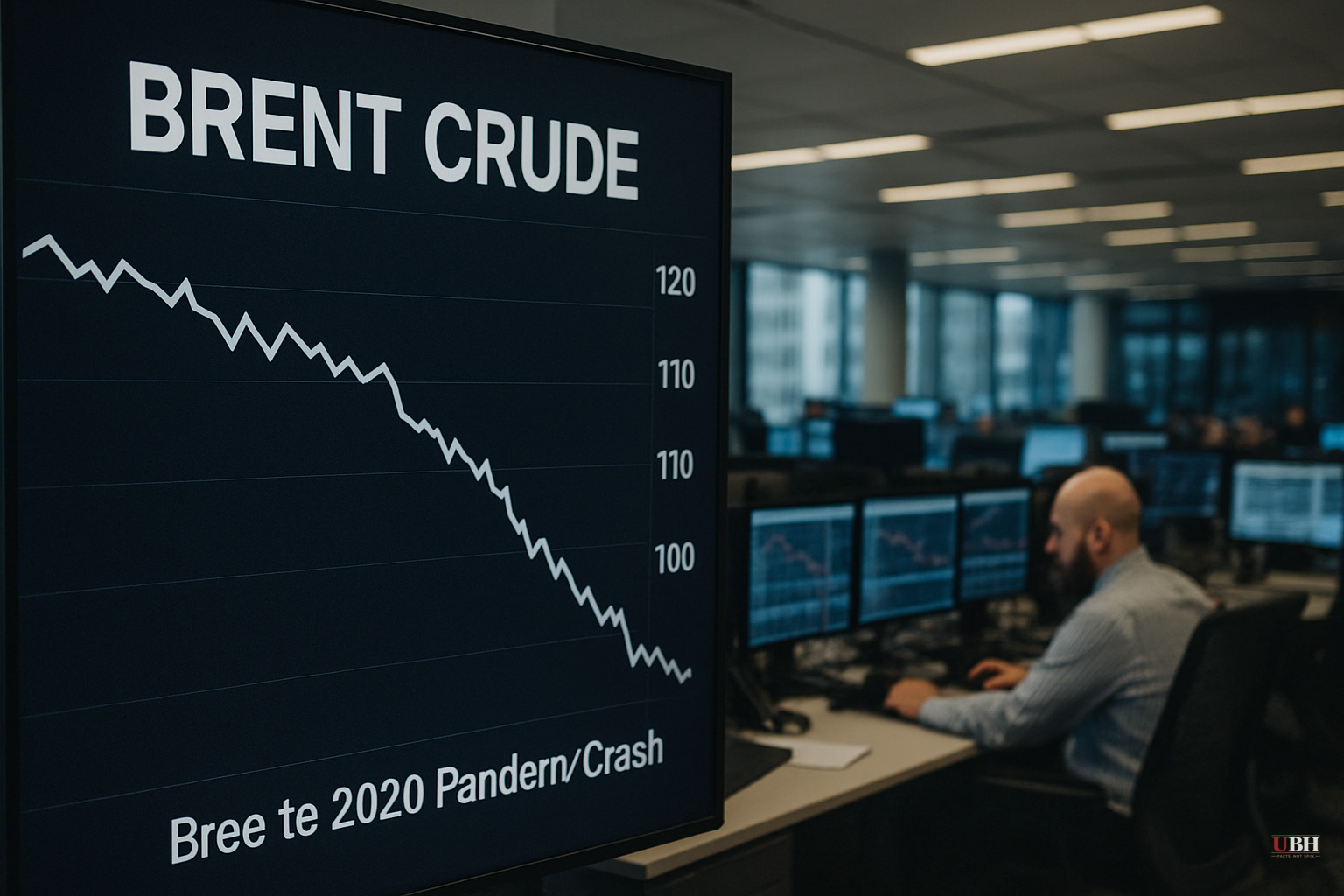
Since the U.S.-Iran memorandum of understanding on June 17 paused fighting over the Strait of Hormuz, oil has shed roughly a fifth of its value in a single month.
Brent crude futures for August delivery settled at $72.92 per barrel on Tuesday, according to CNBC. WTI dropped 1.8% to $69.50. For the full quarter, Brent fell 30.4%, according to ICE exchange data compiled by Bloomberg and reported by OilPrice.com. The only worse quarter in recent memory was Q1 2020, when Brent plunged 65.5% as pandemic lockdowns wiped out global transport demand.
The Market Is Betting on Peace. Analysts Are Not.
Warren Patterson, Head of Commodities Strategy at ING, put it plainly in a note published Monday: "The price action in recent weeks reflects a market that is treating this temporary ceasefire between the U.S. and Iran as a permanent deal. This is clearly not the case."
Patterson added that at roughly $70 per barrel, the market has "close to zero geopolitical risk premium priced in." ING strategists also noted that reaching a permanent deal tackling Iran's nuclear program within the MoU's 60-day window "would be very optimistic."
The fragility showed over the weekend, when renewed hostilities prompted fresh concern. Talks scheduled for Tuesday in Doha added to the confusion. Trump said via social media that Iran had "requested a meeting" and that U.S. special envoys Jared Kushner and Steve Witkoff would attend. Iran's Foreign Ministry denied any talks were scheduled. A Qatari government spokesperson confirmed Kushner and Witkoff met with mediators, NOT directly with Iranian officials, according to CNBC. That distinction matters: the gap between indirect mediation and a binding agreement remains wide.
Trump Leans on Gas Stations While the Supply Chain Catches Up
With WTI near $68-69, Trump posted on Truth Social Tuesday morning demanding that gasoline retailers cut pump prices "IMMEDIATELY," targeting $2.50 per gallon and accusing some stations of illegal price gouging. He separately called for California to cut its state gasoline taxes, according to The Epoch Times as reported by ZeroHedge.
The national average for regular gasoline stood at $3.91 per gallon on June 29, per AAA, marking the fifth consecutive weekly decline and the second straight week below $4. That's movement, but it's a long way from $2.50.
Retail pump prices typically lag crude by four to six weeks. Crude price changes take time to ripple through the refining and distribution chain. The DOJ investigation Trump directed last week into whether retailers and oil companies are dragging their feet adds political pressure, but it does not change the logistics.
The Strategic Reserve Problem Nobody Is Talking About Loudly Enough
The price collapse sits alongside a developing demand catalyst that the market has largely ignored. In March, as the Hormuz crisis peaked, the International Energy Agency announced it would release 400 million barrels from its joint emergency reserve, the largest release in IEA history. For comparison, the IEA released 182 million barrels after Russia's 2022 invasion of Ukraine, according to OilPrice.com's Irina Slav.
All of that supply will need to be replenished. The IEA has said it plans to refill those 400 million barrels, and major importers including India are actively looking to expand their strategic petroleum reserves. That wave of government buying, once it materializes, represents a significant new source of crude demand that is not currently priced into a market sitting near $70.
India's Russian Oil Record and What It Signals
The clearest picture of how badly the Hormuz disruption scrambled global trade flows comes from India. Total Indian crude imports hit roughly 5 million barrels per day in June, the highest ever recorded for the month, according to OilPrice.com. Russian crude accounted for 2.6 million b/d of that, or 54% of India's total imports and a historic record for Russian-Indian trade volumes.
Russian supplies to India had fallen to around 1.1 million b/d in February under U.S. sanctions pressure. They more than doubled in four months. Indian Oil Corporation was the largest buyer at over 900,000 b/d. Reliance Industries' Jamnagar complex purchased more than 500,000 b/d. Iraq, which supplied roughly one-fifth of Indian imports in February, virtually disappeared from the mix for three months after the Hormuz closure.
The strongest counterargument to reading this as a permanent shift is that India's pivot to Russia was driven by necessity, not preference. With Gulf supplies constrained, Indian refiners had limited alternatives. Saudi Arabia's term pricing made its barrels among the most expensive available under current formulas, per OilPrice.com. As Hormuz gradually reopens, Gulf suppliers will compete for that volume back. Whether India's refiners return, or whether the reliability of Russian supply at favorable prices proves stickier than the crisis that created the relationship, is genuinely unresolved.
The Collateral Damage No One Covers: Central Asia
Russia's own refinery sector is absorbing Ukrainian drone strikes, and the damage is rippling outward. Kyrgyzstan and Tajikistan, both heavily dependent on Russian refined products, are facing fuel price spikes. Tajikistan imported 84% of its petroleum products from Russia in 2025, according to OilPrice.com. A taxi driver in Khujand told RFE/RL's Tajik Service on June 25 that diesel had jumped from 9.60 somoni per liter to 13.50 somoni, roughly a 40% increase. Kanat Eshatov, head of the Association of Oil Traders of Kyrgyzstan, said the country has about six weeks of reserves, but prices are rising steadily.
This is the part of the energy disruption chain that rarely makes Western headlines: the populations least able to absorb fuel costs are taking the sharpest hits.
The Open Question
The 60-day window in the June 17 MoU runs to roughly mid-August. ING's Patterson noted the ceasefire could simply be extended, which would "effectively be kicking the can down the road." Whether Kushner and Witkoff's Doha talks this week produce anything more substantive than indirect contact with Qatari mediators will determine whether the zero-risk-premium oil market survives the summer, or reprices sharply when the next incident closes the strait again.
Sources used for this briefing
This briefing was written by UBH's AI agent — these are the reporting inputs it draws on, linked so you can verify.


