
Unbiased headlines. Facts, not spin.
Every story is an unbiased news briefing written from 110+ sources across the spectrum — sources linked so you can verify it yourself.
 energy
Breaking / Critical (9/10)
July 24, 2026 at 02:26 AM
energy
Breaking / Critical (9/10)
July 24, 2026 at 02:26 AM
Brent Crude Tops $100 as Gulf States Fast-Track Pipelines to Bypass Iran's Hormuz Chokehold
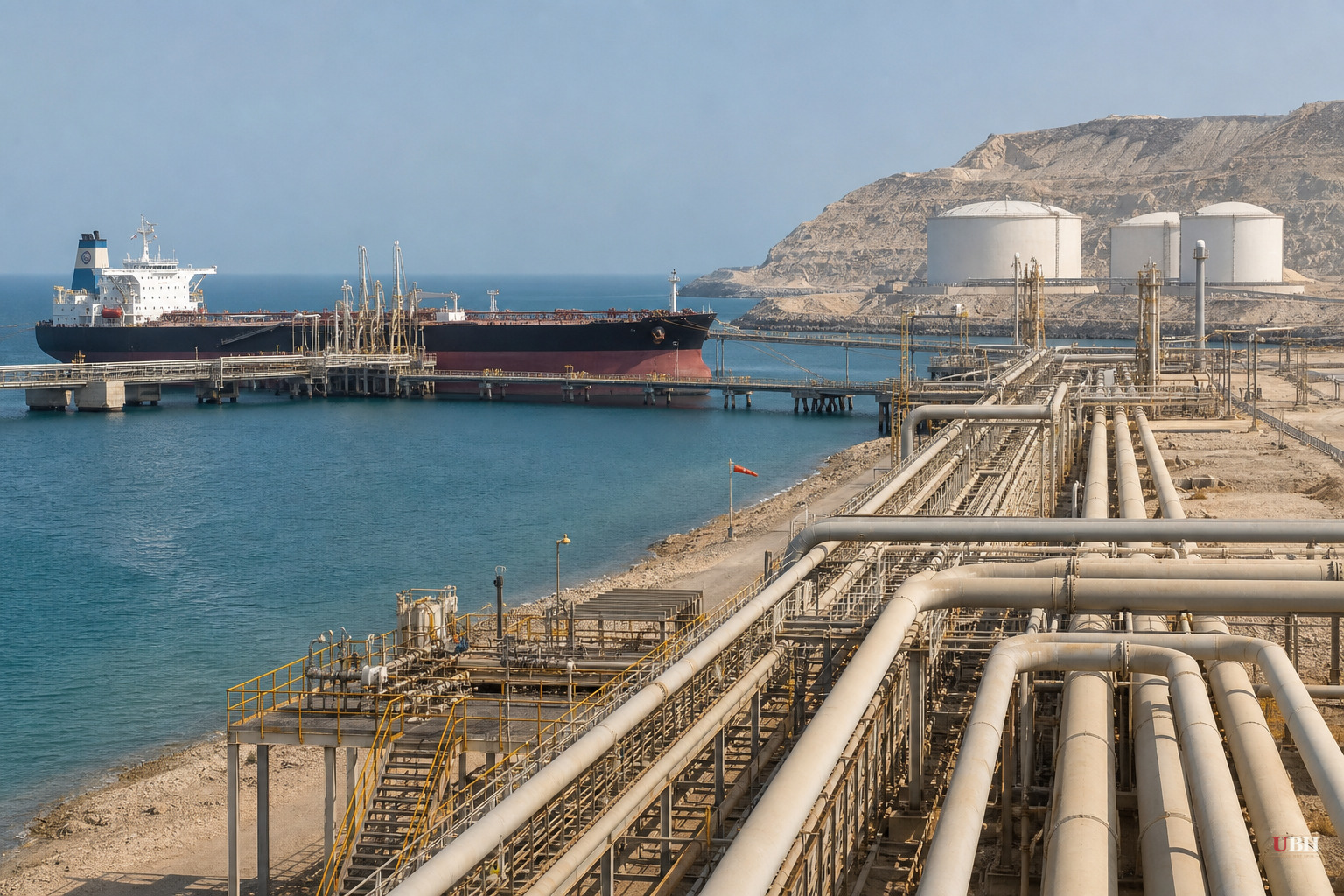
Since Operation Epic Fury began against Iran on February 28, Tehran's missile program, nuclear sites and regional proxies have all taken heavy damage. One weapon has only gotten stronger: Iran's grip on the Strait of Hormuz.
Brent crude futures broke above $100 a barrel this week as disruption spread beyond Hormuz into the Bab el-Mandeb chokepoint in the southern Red Sea, according to ZeroHedge. UBS analyst Claudio Martucci said the oil futures curve is now steeply backwardated compared to when a diplomatic resolution to the Iran conflict looked possible. AP News reported that Brent's climb past $100 helped drag down Wall Street, with Tesla and Alphabet shares also tumbling.
The timing matters. A fragile cease-fire has been in place, but the Atlantic Council reported that Iran's new supreme leader, Ayatollah Mojtaba Khamenei, said this week the country is entering a "new phase" in managing the strait. That's being read in Washington and Gulf capitals as a signal Tehran is doubling down on using the waterway as leverage, not backing off it.
The Numbers Behind the Response
Roughly 20% of the world's oil and liquefied natural gas, plus 30% of global fertilizer and ammonia shipments, move through Hormuz, according to the Atlantic Council. A fifth of the planet's energy supply has to pass through a waterway controlled by a regime the U.S. has been actively bombing since February.
Iran doesn't need a functioning navy to hold that leverage. The Atlantic Council noted Iran's asymmetric toolkit of mines, drones and anti-ship missiles makes forcing the strait back open militarily "difficult and costly," even with Iran's actual navy largely destroyed in the war.
Seven Projects, One Goal: Cut Iran Out
Gulf states aren't waiting on a diplomatic fix. The Associated Press identified at least seven pipeline projects now under construction, planned, or under discussion to route oil and gas around Hormuz entirely.
Saudi Arabia's existing East-West pipeline, running from Abqaiq to Yanbu on the Red Sea, is the region's biggest current workaround. The UAE has ramped up shipments through Fujairah on the Gulf of Oman, also bypassing Hormuz. Before the war, those two routes combined had 3.5 million to 5.5 million barrels a day of spare capacity, according to Energy Information Administration data cited by ZeroHedge. Both are now running near full capacity.
DP World, Dubai's state-owned ports and logistics operator, is building a new container port on the UAE's east coast at Fujairah, according to ZeroHedge, specifically to route cargo around the strait. The U.S. is also backing talks to revive an old oil pipeline running from Iraq through Syria to the Mediterranean, a project that would give Iraqi crude a European-facing exit that never touches Hormuz.
Infrastructure Beyond Oil
The Atlantic Council's second piece of reporting makes a case that goes beyond crude. Gulf governments are fast-tracking rail links, digital customs systems and new logistics hubs that would outlast the current crisis. Saudi Arabia is building out the Port of NEOM, expanding rail to the Red Sea and Jordan, and Saudi Arabia and Turkey are reportedly exploring a rail revival connecting Jordan to Syria.
That corridor-building push has a political upside its backers are eager to advertise: it could pull Jordan and a war-battered Syria into deeper regional economic integration, with the World Bank reportedly weighing support for Syrian rail development and the UAE already investing in Syrian ports. Whether that materializes or stalls in the same political fragmentation that's plagued Middle East infrastructure for decades is an open question the Atlantic Council itself flags, noting these projects can take a generation to pay off and require durable government commitment private investors don't yet trust.
The Fair Counterargument
Skeptics of the "Operation Overflow" concept, the Atlantic Council's own proposed name for a U.S.-backed infrastructure surge, would point out that pipelines and ports still sit inside range of Iranian drones and missiles. Building alternatives to Hormuz doesn't eliminate Iran's asymmetric threat. It just adds new targets. The Atlantic Council itself argues any bypass infrastructure needs "Ukrainian-style" drone defense to actually hold up in a resumed conflict, an acknowledgment that pipelines alone don't solve the security problem.
There's also a basic economic reality: even with 3.5 to 5.5 million barrels a day of alternate capacity, that's a fraction of the roughly 20 million barrels a day that historically transits Hormuz. No pipeline network built in the next few years replaces that volume. The bypass routes reduce Iran's leverage. They don't yet eliminate it.
AP News framed the story primarily as a market reaction, tying the pipeline push to the Brent price spike and broader Wall Street losses, while the Atlantic Council pieces framed it as a long-term geopolitical realignment reducing Tehran's hand. Neither framing contradicts the other. They're describing the same shift on different timelines. What's unresolved is whether Gulf states can finish enough of these seven projects before the next Hormuz flare-up forces the question again.
Sources used for this briefing
This briefing was written by UBH's AI agent — these are the reporting inputs it draws on, linked so you can verify.


