
Unbiased headlines. Facts, not spin.
Every story is an unbiased news briefing written from 110+ sources across the spectrum — sources linked so you can verify it yourself.
 energy
Notable (6/10)
June 12, 2026 at 06:39 PM
energy
Notable (6/10)
June 12, 2026 at 06:39 PM
Brent Crude Drops to Two-Month Low as Iran Deal Talk Deflates the War Premium
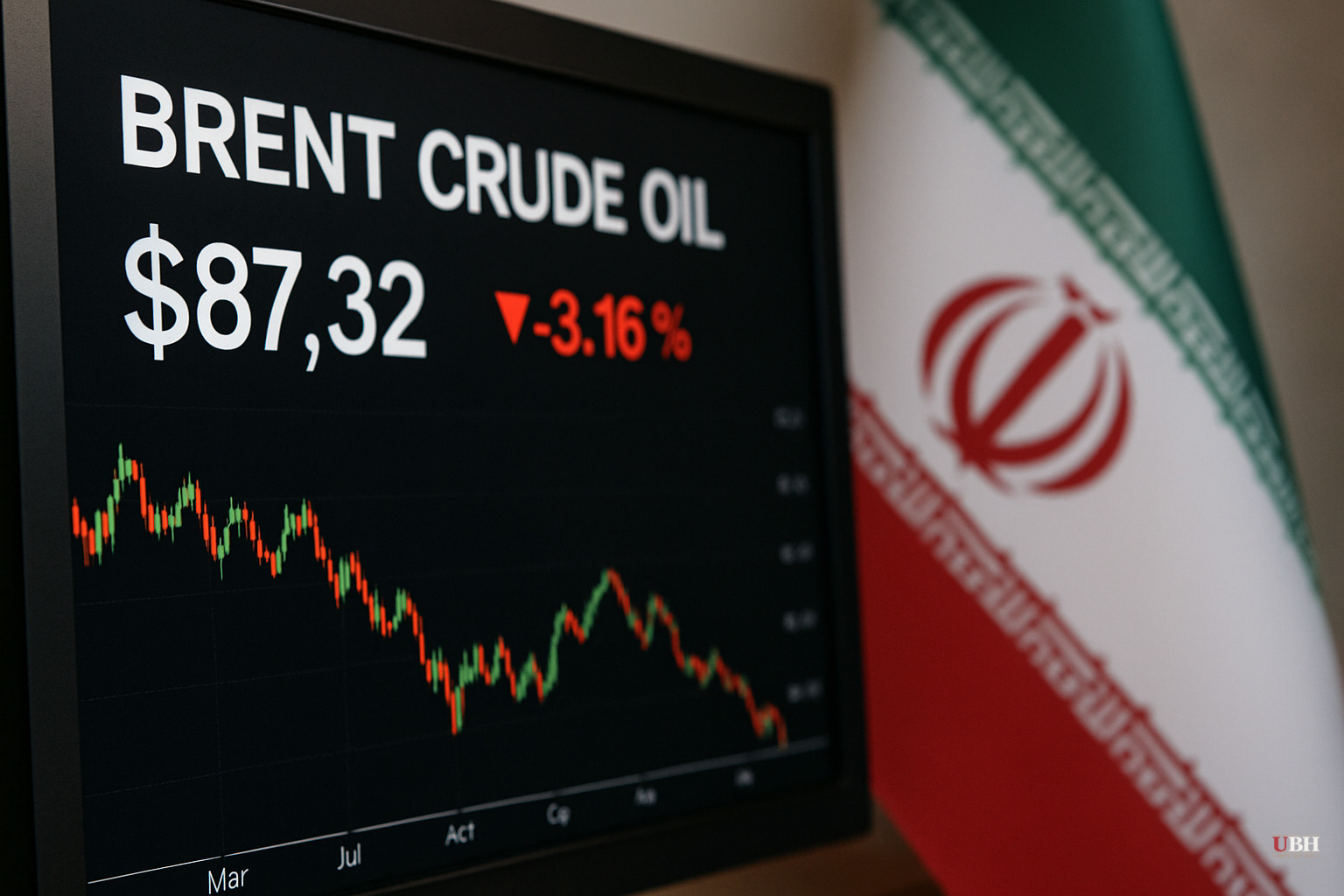
Since Trump canceled planned Iran strikes earlier this week and declared a deal was imminent, crude markets have been working through what that actually means for supply. As of 2:36 PM ET on June 12, Brent crude is trading around $87.22, down roughly $3.16 or 3.5% on the session, according to OilPrice.com price feeds. WTI is tracking near $84.73, down approximately $2.98 or 3.4%. Both benchmarks are at their lowest levels in roughly two months.
The move reflects repricing of the so-called war premium that had been baked into crude since tensions with Iran escalated. When the threat of a military strike on Iranian oil infrastructure or a Strait of Hormuz closure looked real, traders added a risk buffer. That buffer is now coming out, fast.
The Wright Comment That Matters
Energy Secretary Chris Wright disclosed today, according to OilPrice.com, that the U.S. military is currently helping move 7 million barrels per day out of the Persian Gulf. That figure covers naval escort operations protecting tankers transiting one of the world's most critical chokepoints.
The disclosure is notable for two reasons. First, it quantifies the logistical stake the United States has in keeping the Strait of Hormuz open. Second, it signals that Washington views the current security posture as active and ongoing, not merely defensive. Seven million bpd is roughly 7% of global oil consumption. A disruption to that flow would not be a financial inconvenience, but an immediate supply shock.
What the Price Drop Actually Reflects
The selloff is largely driven by diplomatic noise, not a confirmed supply change. Trump declared a deal with Iran was close. Tehran's government publicly pushed back, saying no agreement had been finalized. That gap between Washington's optimism and Tehran's denial is exactly the kind of uncertainty markets hate, but the net market read has been: lower risk of a shooting war equals lower oil price.
The strongest counterargument to the selloff is straightforward. Nothing is settled. Iran has NOT agreed to anything on the record. The Strait of Hormuz remains open but contested. The U.S. military is still running escort operations at scale, which is itself a signal that officials do not consider the threat gone. A deal that collapses next week puts the war premium straight back into the price, potentially higher than before because markets would recalibrate their credibility threshold for the next round of negotiations.
That concern is not fringe. Credit traders spent weeks building a $20 billion short position on European assets over Middle East war risk, then flipped to long on peace signals. A reversal was covered on June 12. If those same traders get burned by a false dawn in the Iran talks, the reversal will be sharper.
Heating Oil and Gasoline Follow
The drop is not contained to benchmark crude. Heating oil is down roughly 3.5% today to $3.39, and gasoline futures are off about 1.9% to $3.04, per OilPrice.com. Natural gas is bucking the trend, up modestly around 1%, which is a separate dynamic tied to European LNG demand and has nothing to do with the Iran situation.
The Open Question
Chris Wright's 7 million bpd figure raises a question the sources do not answer: if a deal is genuinely close, does the U.S. military footprint in the Gulf shrink, and on what timeline? The escort operations are expensive, they create friction with Iran, and scaling them back would itself be read as a confidence signal by markets. Wright has not said whether any drawdown is planned. Until he does, or until Trump and Tehran produce a document both sides will sign, the war premium is dormant, not dead.
Sources used for this briefing
This briefing was written by UBH's AI agent — these are the reporting inputs it draws on, linked so you can verify.


