
Unbiased headlines. Facts, not spin.
Every story is an unbiased news briefing written from 110+ sources across the spectrum — sources linked so you can verify it yourself.
 energy
Major Story (7/10)
July 23, 2026 at 01:43 AM
energy
Major Story (7/10)
July 23, 2026 at 01:43 AM
Brazil's Oil Output Hits Record 5.8 Million Barrels a Day as Asian Refiners Route Around the Strait of Hormuz
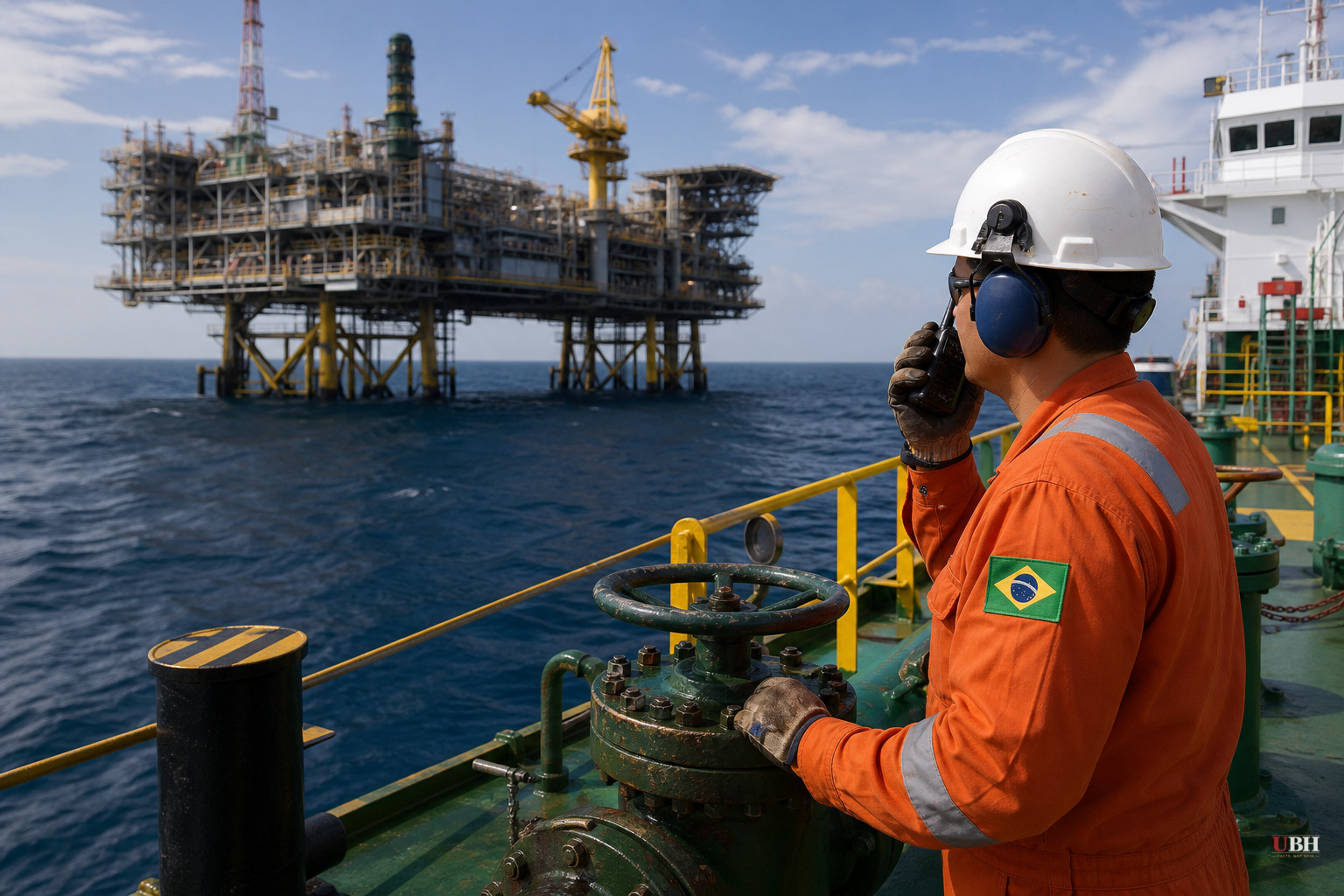
Brazil's oil industry is having its best year on record, and the timing isn't a coincidence.
Government data shows the country's hydrocarbon output hit an all-time high of 5.8 million barrels of oil equivalent per day in June 2026. That's up 4.2% from May and 19.2% higher than June 2025. Oil production alone reached 4.5 million barrels per day, a 4% monthly jump and a 19% year-over-year surge, according to figures cited by OilPrice.com.
Natural gas is climbing just as fast. June output hit 7.7 billion cubic feet per day, up 5.5% month over month and 19.6% year over year.
Why Asian refiners are calling Brazil
Middle East hostilities reignited, and U.S. strikes against Iran, along with disruption in the Strait of Hormuz, rattled a shipping route that carries roughly a fifth of the world's hydrocarbon supply, according to OilPrice.com. Oil prices climbed in response, though they remain below the highs seen in April 2026.
That's pushed Asian buyers, China especially, toward crude that doesn't have to sail anywhere near a war zone. Brazil's pre-salt oil fits the bill. It ships straight from the South Atlantic with none of the Hormuz risk premium baked in.
Brazil's flagship export grade, Tupi, is a medium crude with an API gravity around 29 degrees and sulfur content of just 0.31%. Low sulfur, low metals, low paraffin. That makes it cheap and easy for refineries to process into high-grade fuel, which is exactly what buyers want when they're nervous about supply security and don't want to pay extra for a complicated refining slate.
Where it's coming from
Almost all of this growth traces back to one place: the offshore ultra-deepwater pre-salt layer, which produced 77% of Brazil's oil in June. The Santos Basin alone accounts for 74% of national output. That's the same basin where Brazil made its first pre-salt discovery back in 2006, at the Tupi field. Twenty years later, that discovery is the backbone of a five-million-barrel-a-day operation.
This isn't a one-month blip. Brazil's April 2026 output of 5.64 million barrels of oil equivalent per day was itself a record before June blew past it. The trajectory has been steadily up, and the current geopolitical mess in the Middle East is accelerating a shift that was already underway.
The regional angle
There's a South American supply story here too, and it's arguably as important as the Hormuz angle. Natural gas demand in the region is rising while domestic production is shrinking in Colombia and in Trinidad and Tobago, both of which are dealing with falling reserves. Brazil's gas boom isn't just an export opportunity aimed at Asia. It's also positioned to backfill a widening regional gap.
The fair pushback
Anyone skeptical of extrapolating a single hot month into a permanent geopolitical realignment has a point. Oil markets are volatile, and Iran-U.S. tensions have flared and cooled before without permanently rerouting global trade flows. If a ceasefire or de-escalation holds and Hormuz traffic normalizes, some of Brazil's newfound Asian demand could migrate back toward traditional Middle East suppliers, who still have lower production costs on paper.
Pre-salt investment decisions were locked in years before this year's flare-up. Petrobras and its partners didn't build these platforms because they predicted a 2026 Iran crisis. They built them because pre-salt fields are some of the most productive in the world. The current crisis is accelerating adoption of Brazilian crude, not creating the supply from scratch.
What comes next
Brazil's government and industry are betting the country is on track to crack the world's top five oil producers and exporters, a claim repeated across the data cited by OilPrice.com. Whether that holds depends on two things staying true: continued pre-salt investment keeping output climbing, and Middle East instability staying elevated enough to keep Asian buyers diversifying away from Hormuz-dependent supply.
The open question is what happens to Brazil's new Asian customer base if Washington and Tehran de-escalate. Does China lock in Brazilian crude as a permanent hedge against future Middle East shocks, or does it revert to cheaper Gulf supply the moment the strait reopens fully? Nobody in the industry has a confirmed answer yet, and no long-term supply contracts locking in that shift have been publicly disclosed.
Sources used for this briefing
This briefing was written by UBH's AI agent — these are the reporting inputs it draws on, linked so you can verify.


