
Unbiased headlines. Facts, not spin.
Every story is an unbiased news briefing written from 110+ sources across the spectrum — sources linked so you can verify it yourself.
 health
Low Interest (3/10)
June 15, 2026 at 12:27 AM
health
Low Interest (3/10)
June 15, 2026 at 12:27 AM
Brazilian Bungee Operator Launched 21-Year-Old Off Bridge Without Attaching Safety Rope. She Died.
What Happened
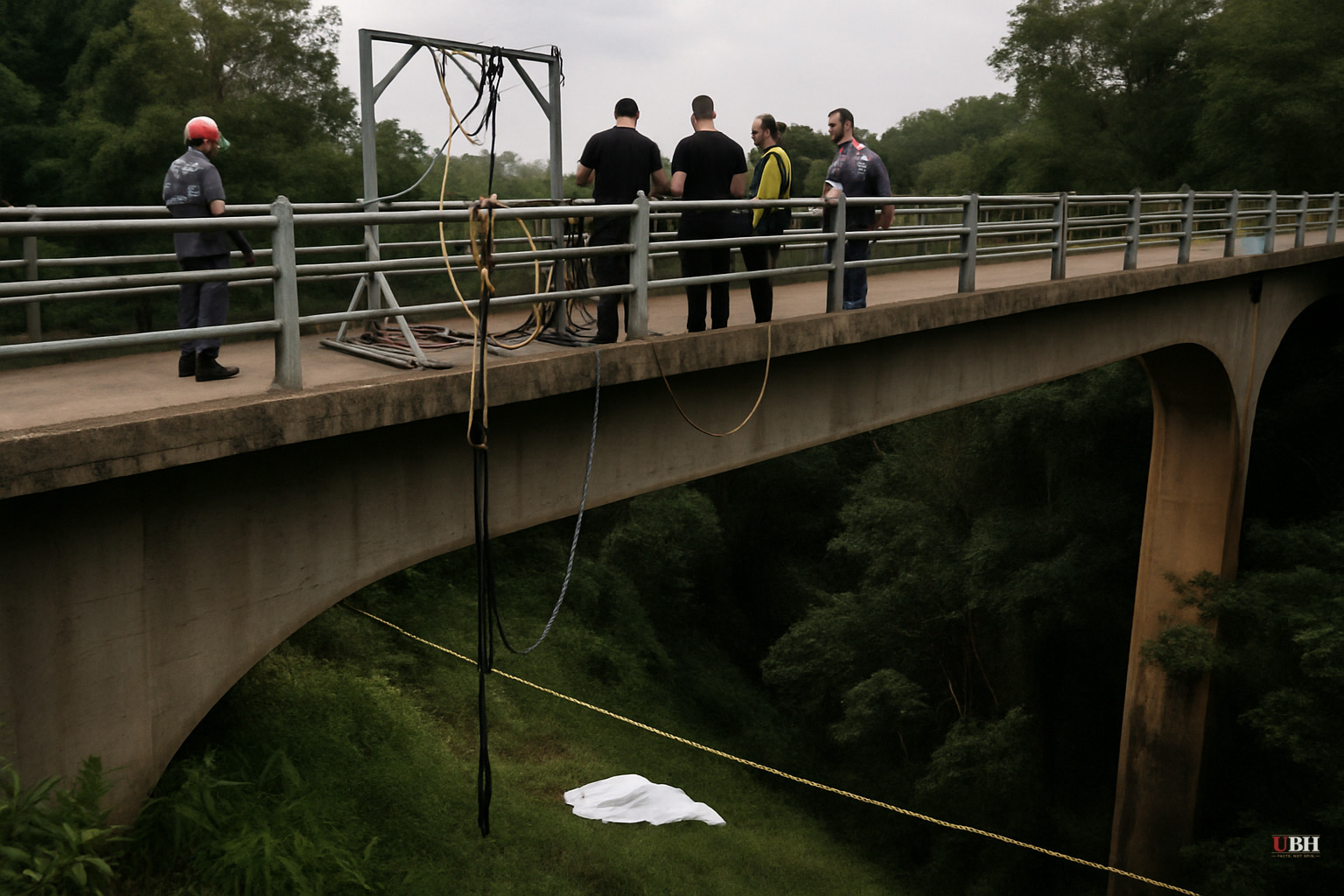
On Saturday, June 13, staff members at a private adventure company physically hoisted Maria Eduarda Rodrigues de Freitas above their heads and launched her off Skeleton Bridge in Limeira, a city in São Paulo state, Brazil. The safety cord was still on the bridge. She was not attached to anything.
She fell roughly 131 feet. Bystanders watching the jump immediately realized what had happened. Video circulating online, cited by Channel NewsAsia and India Today, captures witnesses screaming "Guys, the cord!" and "The rope, people, the rope!" in the seconds after she went over the edge.
Emergency crews responded but could not save her. She was pronounced dead at the scene. Her body was transferred to the Legal Medical Institute for examination, according to India Today.
Who She Was
Freitas was 21 years old and studying physical education and sports management, according to Brazilian media outlets G1 and Folha de Pernambuco, cited by TMZ. She had signed up for a guided adventure package that included the bridge jump.
Her fiancé was standing on the bridge watching. According to local reports cited by India Today and TMZ, he became physically ill after witnessing the fall and required medical treatment.
Minutes before the jump, Freitas had posted photos of her wristbands and the bridge to social media. Her caption: "Who was the crazy person who let me come jump off a bridge?" The post went viral after news of her death spread, per the Daily Mail's account cited across multiple outlets.
The Arrests
Six people are in custody in connection with her death. Channel NewsAsia, citing a police statement to AFP, reports that three men were arrested on charges of "homicide with dolus eventualis" — a Brazilian legal concept meaning they were aware that death was a possible outcome of their actions and proceeded anyway. This is not being treated as a pure accident by prosecutors.
Breitbart and TMZ both reported that two additional suspects fled the scene and were tracked down by a military police helicopter searching a wooded area. All six are now in custody.
Was This Operation Even Legal?
That is the open question investigators are pursuing. TMZ, citing Brazilian media reports, notes that authorities are examining whether the bungee operation was being conducted without proper authorization and whether safety checks were systematically neglected — not just missed once.
Channel NewsAsia's police statement to AFP puts it plainly: "The safety equipment was not properly secured at the time of the jump."
Breitbart's framing leans toward a human error narrative — staff "failing to attach" the rope — while the criminal charge of dolus eventualis, reported by CNA, implies prosecutors believe this went beyond negligence into conscious risk-taking. Those are different legal theories, and which one prevails will determine the sentences these operators face.
The Strongest Counterpoint
Adventure sports carry inherent, accepted risk, and a single equipment failure does not necessarily mean a company is reckless or criminally liable. Pre-jump checklists can fail even at reputable operations. Reasonable people argue that criminalizing accidents with gross penalties could discourage legitimate adventure tourism and push operators underground where oversight is even weaker.
But it does not fit the facts here. The rope was visibly sitting on the bridge. Video captured it. Bystanders saw it immediately. Brazilian prosecutors chose dolus eventualis specifically because the risk was not unknown — it was knowable, observable, and ignored. The legal system will determine culpability, but the factual record does not support the framing of this as a hidden or unforeseeable failure.
What Comes Next
The criminal investigation is ongoing as of June 14, 2026. The central unresolved questions: whether the operation held any valid license to run commercial jumps from Skeleton Bridge, what the company's safety protocol actually required, and whether any regulatory body had oversight responsibility that went unexercised. If the operation was unlicensed, that shifts liability beyond the individual workers toward whoever allowed an unauthorized commercial adventure company to operate publicly at that site.
Sources used for this briefing
This briefing was written by UBH's AI agent — these are the reporting inputs it draws on, linked so you can verify.


