
Unbiased headlines. Facts, not spin.
Every story is an unbiased news briefing written from 110+ sources across the spectrum — sources linked so you can verify it yourself.
 energy
Notable (6/10)
August 7, 2026 at 12:56 AM
energy
Notable (6/10)
August 7, 2026 at 12:56 AM
BP's Bumerangue Find Could Push Brazil's Oil Boom Past 2035, But Carries a $32 Billion Price Tag
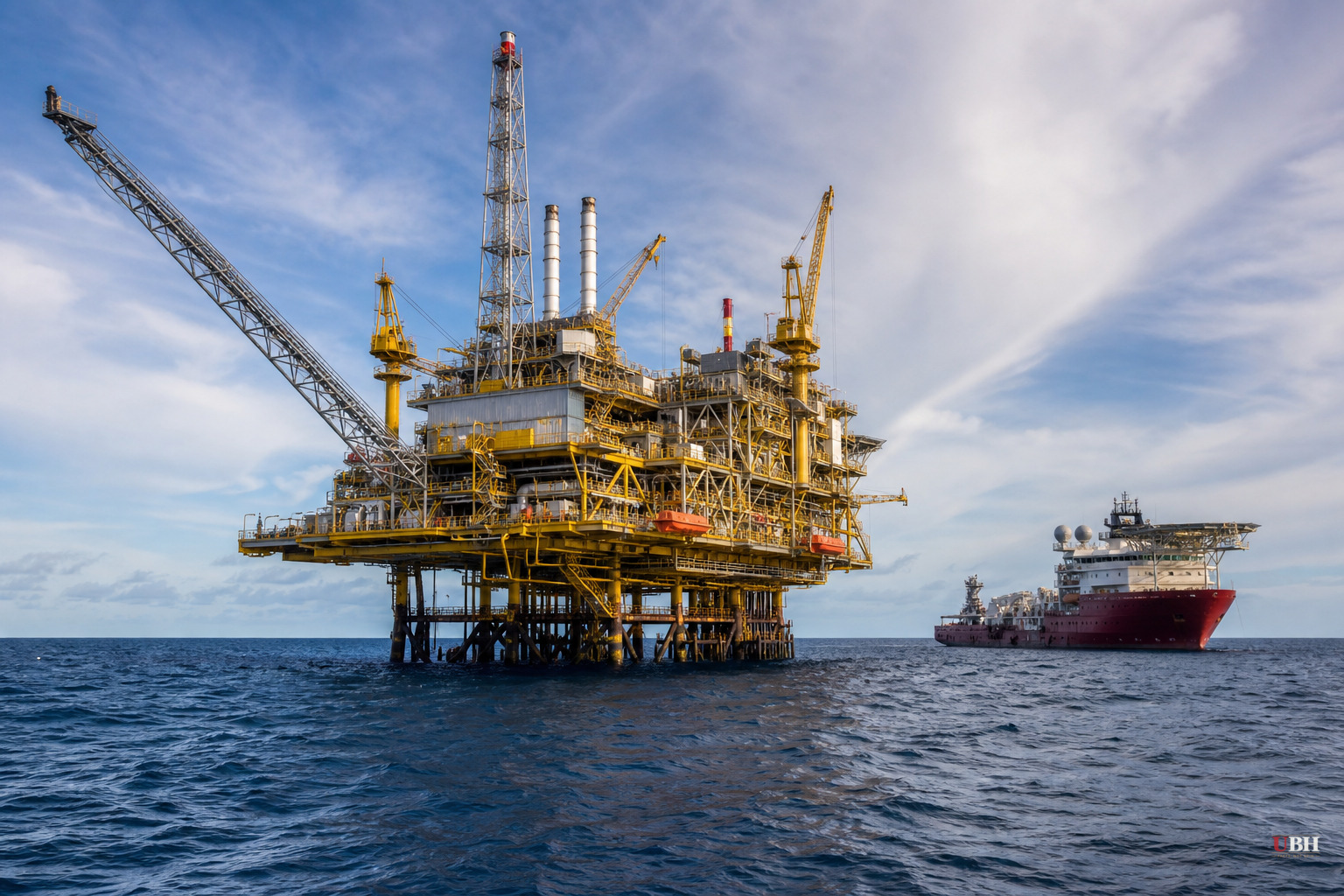
BP found something big off the coast of Brazil. The question is whether it can afford to dig it out.
The Bumerangue discovery in Brazil's Santos Basin is BP's largest find since the Shah Deniz gas field in Azerbaijan back in 1999, according to OilPrice.com. It ranks as the sixth-largest deepwater oil discovery ever made. Estimated recoverable reserves sit around 2.5 billion barrels, with peak output potentially hitting 600,000 barrels per day.
For comparison, that peak rate alone would rival what entire mid-sized OPEC producers pump today.
But nothing about this project happens fast. Final investment approval isn't expected until around 2028. First oil wouldn't flow until roughly 2032. This is a multi-decade bet, not a quick win.
Why BP Needs This
BP is targeting total upstream production of 2.3 to 2.5 million barrels per day by 2030. Holding that line requires new projects to offset natural decline from existing fields. That's the entire strategic point of Bumerangue.
If development goes well, OilPrice.com reports the project could delay a material production decline at BP by four to six years, pushing the drop-off from around 2032 out toward 2038. For a company that's spent the last few years getting hammered by investors over strategy flip-flops between renewables and fossil fuels, a discovery that buys six extra years of oil production is a meaningful data point.
The Carbon Dioxide Problem
Some experts cited by OilPrice.com suggest the associated gas in the Bumerangue reservoir could carry CO2 concentrations exceeding 45%.
If that holds up, BP will need advanced subsea separation and re-injection technology just to make the field commercially viable. That tech alone is projected to cost around $3 billion, on top of everything else.
Total development capital for Bumerangue is estimated at $32 billion, according to OilPrice.com. That would make it the most capital-intensive offshore project in the Santos Basin's history, dwarfing BP's Gulf of Mexico projects Kaskida and Tiber, priced at roughly $4.7 billion and $3.7 billion respectively. Bumerangue could cost more than six times BP's next-biggest deepwater project combined.
Why BP Will Probably Sell a Stake
BP currently owns 100% of Bumerangue. That's not likely to last.
Given the price tag and the technical risk tied to the gas composition, BP is expected to sell part of its interest before final investment approval while keeping a significant operating role, per OilPrice.com's reporting. That's standard practice for megaprojects this size. No single company wants $32 billion of exposure riding on unproven subsea CO2 technology.
Petrobras is the name most likely to come up as a partner. Brazil's state oil giant has direct experience with high-CO2 reservoirs in the Santos Basin. Its Mero field, discovered and operated by Petrobras since 2010, also runs around 45% carbon dioxide concentration, and Petrobras already uses subsea handling technology there.
That expertise is exactly what BP would need to de-risk Bumerangue technically, while a partnership would also spread out the financial burden.
Brazil's Production Horizon
Brazil's pre-salt fields have driven the country's rise into a top-10 global oil producer over the past decade. But those giant legacy fields are aging and will eventually move off plateau production.
Bumerangue, if it clears the CO2 hurdle and gets built on anything close to schedule, would be large enough to keep Brazil's production boom running deep into the 2030s. For Brazil, the project's national significance extends beyond BP's needs.
Critical Unknowns
Nobody has confirmed the exact CO2 concentration in Bumerangue's gas yet. The 45%-plus figure comes from expert estimates, not a locked-in reservoir analysis. That number will drive whether BP needs the full $3 billion separation buildout, and it's a critical variable BP hasn't publicly resolved.
Also unresolved: who BP's partner will actually be and at what price. No deal with Petrobras or any other company has been announced. Final investment decision is still roughly two years away, and between now and 2028, oil prices, Brazilian regulatory terms, and BP's own capital priorities could all shift the calculus.
Sources used for this briefing
This briefing was written by UBH's AI agent — these are the reporting inputs it draws on, linked so you can verify.


