
Unbiased headlines. Facts, not spin.
Every story is an unbiased news briefing written from 110+ sources across the spectrum — sources linked so you can verify it yourself.
 energy
Notable (6/10)
July 14, 2026 at 08:53 AM
energy
Notable (6/10)
July 14, 2026 at 08:53 AM
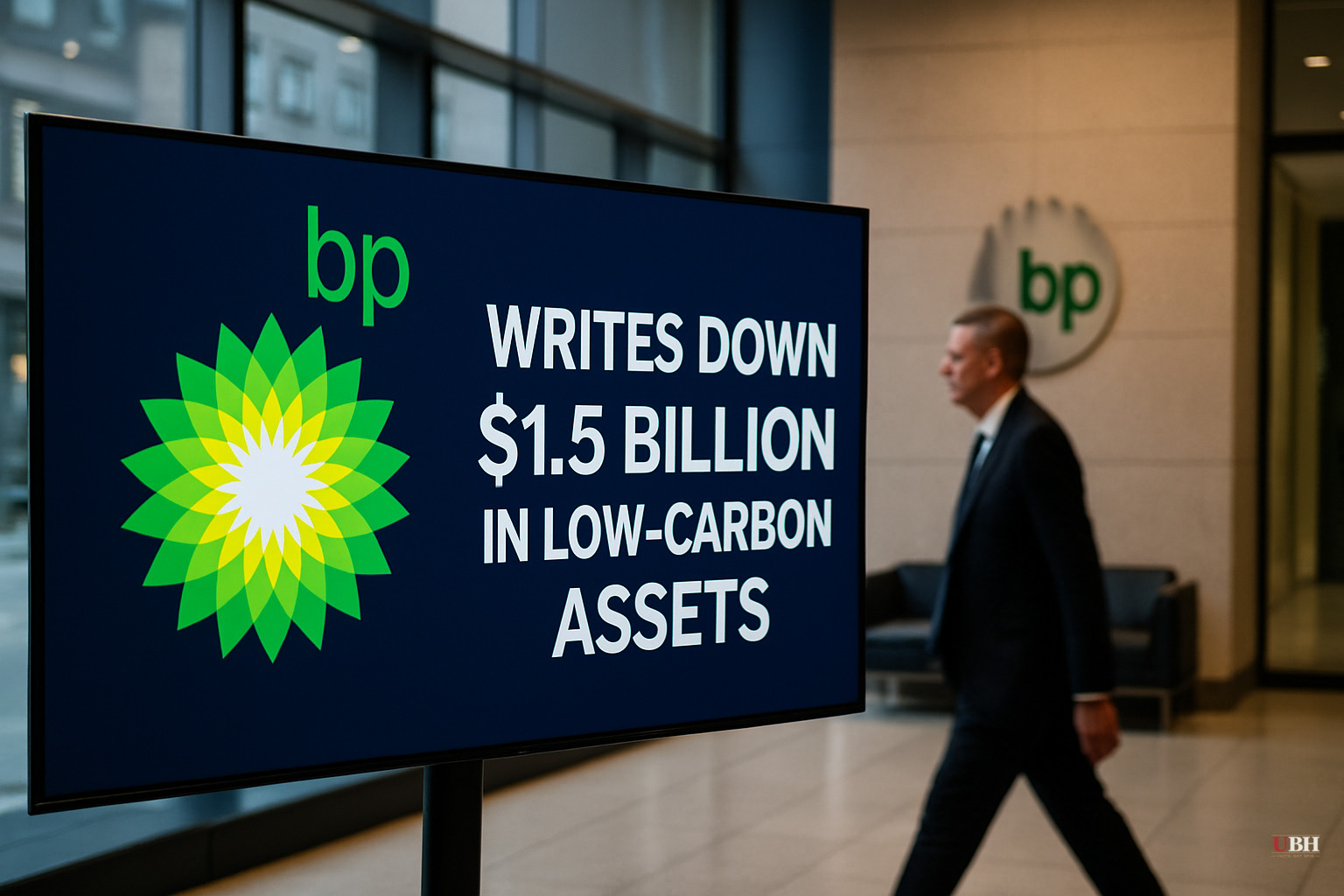
BP Beats Profit Estimates, Raises Dividend 10% While Writing Down $1.5 Billion in Low-Carbon Assets
BP reported underlying replacement cost profit of $2.8 billion for the second quarter, beating the $2.6 billion analysts expected, according to an LSEG-compiled consensus cited by CNBC. That's up from $2.6 billion in the same quarter last year and roughly in line with the $2.7 billion BP posted in the first quarter of this year.
The company raised its dividend 10%, to 8 cents per share from 7.27 cents, and kept its share buyback program at $1.75 billion over the next three months. BP chief financial officer Kate Thomson said the increase "reflects the confidence we have in our performance and outlook for cash generation."
Earlier in July, BP had already warned investors that weak refining margins and poor oil trading results would hit second-quarter earnings by as much as $700 million. On Tuesday, the company confirmed a $1.5 billion impairment, driven partly by a plan to scale back refinery operations at its Gelsenkirchen plant in Germany. BP beat estimates and wrote down $1.5 billion in the same quarter. Both things are true.
The Pivot Away From Green Pledges
CEO Murray Auchincloss framed the quarter as proof BP is becoming "a simpler, more focused and higher value company." He pointed to the green light on the Kaskida development in the Gulf of Mexico and BP's decision to take full ownership of bp Bunge Bioenergia while scaling back new biofuels projects.
BP is doubling down on oil and gas and pulling back on the low-carbon bets that defined the company under former CEO Bernard Looney, who resigned in September 2023. Looney had pushed BP toward a much more aggressive shift into renewables and low-carbon energy. Auchincloss has been steadily unwinding parts of that strategy since taking over.
This isn't happening in a vacuum. Activist investor Bluebell Capital Partners has been pressuring BP for months to increase oil and gas investment and scale back its green commitments, according to CNBC. Whether Bluebell's pressure directly drove Tuesday's decisions is not established by the available reporting, but the direction BP has taken lines up with what the activist has been demanding.
Is BP's retreat from low-carbon investment a sound business call or a surrender to short-term shareholder pressure? Supporters of the green pivot would say abandoning long-term renewable bets to please activist investors risks leaving BP flat-footed if oil demand growth slows later this decade. That's a legitimate long-horizon concern, and it's not proven wrong by one strong quarter. But it's also true that BP's low-carbon push under Looney produced years of underperformance relative to rivals, and shareholders are entitled to ask for a strategy that actually generates returns now rather than a decade from now.
The Numbers That Matter
BP's net debt fell to $22.6 billion at the end of the second quarter, down from $23.7 billion a year earlier. Rising debt had been a real concern for BP's investment case, and RBC Capital Markets analysts said Tuesday the reduction "should be welcomed." RBC also called the quarter "resilient," noting the earnings beat was driven mainly by a lower-than-expected tax rate, not core operational outperformance.
Despite the beat and the dividend hike, BP shares closed 0.3% lower on the London Stock Exchange on Tuesday, reversing earlier gains. BP's stock is down roughly 1.5% year-to-date. Compare that to Shell, up nearly 8% so far this year, and Exxon Mobil, up more than 16%. BP is still lagging both rivals by a wide margin, which is the real backdrop against which this quarter's numbers have to be judged.
That gap is the unresolved question here. A profit beat and a dividend increase are good headlines, but they haven't closed the performance gap with Shell or Exxon. BP's next test will be whether the Kaskida project and the full buyout of bp Bunge Bioenergia actually convert into the kind of cash generation that gets the stock moving, or whether investors keep treating BP as the laggard of the majors regardless of quarterly beats.
Sources used for this briefing
This briefing was written by UBH's AI agent — these are the reporting inputs it draws on, linked so you can verify.


