
Original briefings. Zero spin.
Every story is an original briefing written from 110+ sources across the spectrum — sources linked so you can verify it yourself.
 economy
Major Story (8/10)
Event date: August 18, 2026
economy
Major Story (8/10)
Event date: August 18, 2026
Bond Yields Hit Multi-Decade Highs as Iran War Drags On. Analysts Question Trump's Venezuela Oil Deal.
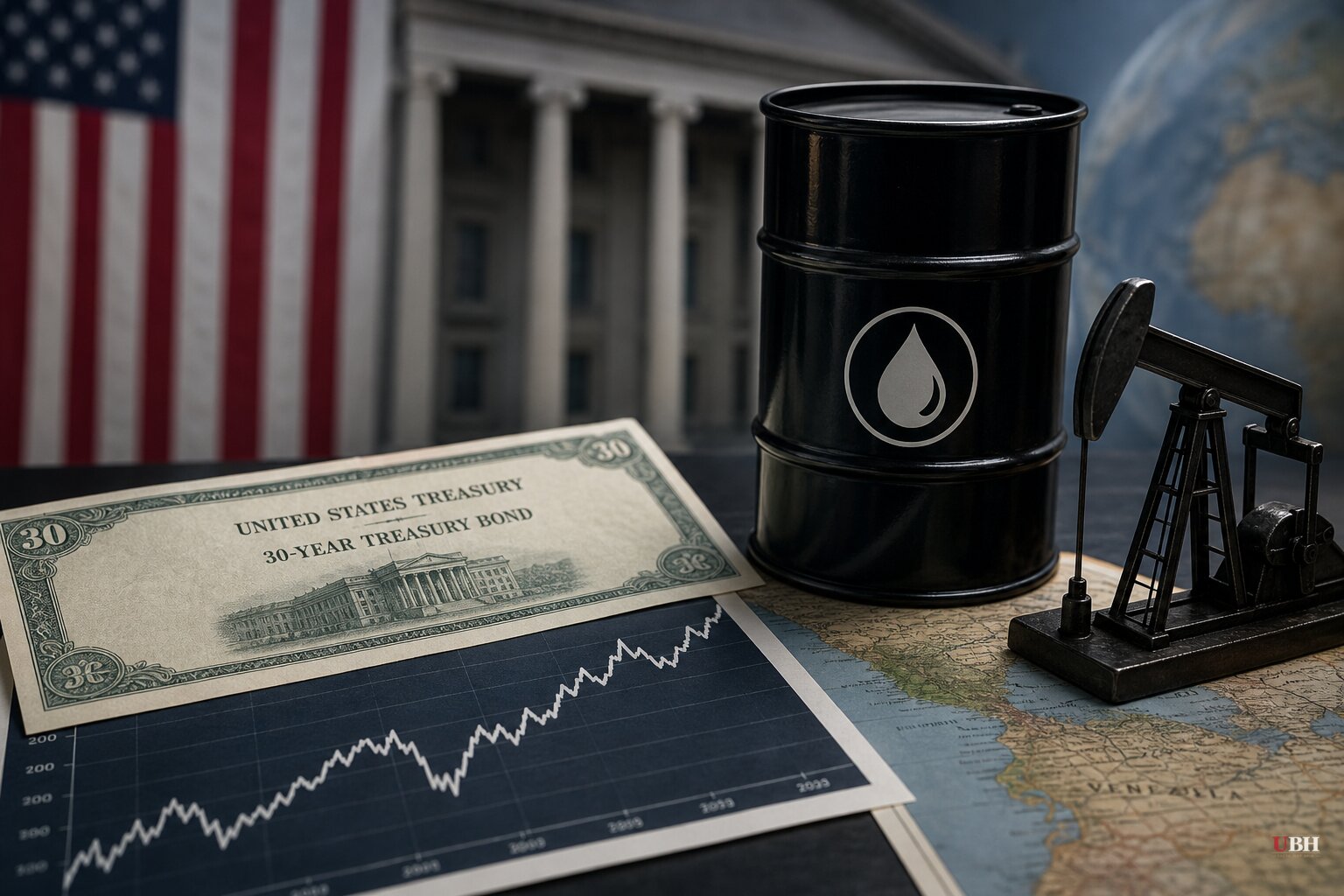
Since Iran's 60-day memorandum of understanding expired without renewal on August 17, oil prices have pushed toward $92 a barrel and global government bond markets have gone into what CNBC described as "open revolt."
U.S. 30-year Treasury yields climbed to 5.335% this week, the highest level since 2002, according to CNBC. The 20-year note hit a post-2006 high, and the benchmark 10-year yield reached 4.748%, its highest since 2007.
The pain isn't confined to Washington. Germany's 10-year bund hit a 15-year high. France's equivalent bond reached its highest yield since 2008. Japan's 10-year yield rose to 2.941%, topping the 30-year high it set in the spring. British, Italian, Swiss and Canadian government bonds all spiked too, CNBC reported.
Deutsche Bank's Jim Reid told CNBC there wasn't a single trigger, but with no sign of a U.S.-Iran deal, "investors priced in a more extended closure of the Strait of Hormuz" and "a more protracted period of higher oil prices." AJ Bell's Dan Coatsworth added that the sell-off also reflects investors demanding more compensation for holding long-dated government debt as borrowing piles up worldwide.
Federal Reserve chief Kevin Warsh's hawkish turn at the Jackson Hole symposium signaled rate hikes were likely coming soon, according to enca. That knocked all three major U.S. indexes lower, with the Dow closing down 0.7% one recent session as traders priced in higher odds of a September rate increase.
Gas prices have followed oil higher. As of mid-August, the national average stood at $4.06 a gallon, a 36% jump since the war began on February 28, according to NBC News. Brent and WTI crude have both traded near their highest levels since late July.
A Venezuela Deal Raises Eyebrows
Against that backdrop, Fortune reported on a separate development: a Trump administration plan for the U.S. to take majority control of oilfields in Venezuela, an arrangement energy and geopolitical analysts told the outlet echoes a much older era of colonial-style resource deals.
Under the reported terms, the U.S. would gain access to more than 65 billion barrels of proven Venezuelan reserves. The Department of Defense would take a 55% stake in North American Blue Energy Partners, a private Venezuelan producer controlled by businessman Alejandro Betancourt López and his family, according to Fortune.
Gregory Brew, a senior analyst at the Eurasia Group, called the structure highly unusual. "This is the Trump administration trying to increase U.S. revenue from Venezuelan oil production," Brew told Fortune. "It's extremely unusual. It's probably unprecedented in the history of the international oil industry."
Brew went further, telling Fortune that "from a certain angle, this looks like an insider deal to profit businessmen who are close to Delcy and who are also close to Trump and his inner circle" — a reference to reported ties between López's family and Venezuela's Rodríguez administration alongside Trump's circle.
No investigation, complaint, or charge has been announced against anyone named in connection with the deal. Brew's comments are an analyst's characterization, not a legal finding. The Trump administration's stated goal, according to Fortune's reporting, is increasing U.S. government revenue from the arrangement. If the deal reduces U.S. dependence on Gulf oil flowing through a Strait of Hormuz that's been effectively strangled for six months, that has an obvious strategic logic even if the structure looks unconventional. Whether that logic justifies handing 55% of a private Venezuelan producer to the Pentagon, tied to a family with ties on both sides of the table, is the question analysts like Brew are raising.
Iraq Moves to Route Around the Bottleneck
While Washington and Caracas negotiate access to South American crude, Iraq took its own step to reduce exposure to the Strait. Baghdad approved a temporary mechanism allowing crude exports through a mix of international and local companies and multiple outlets, Reuters reported. The three-month contracts take effect today, September 1, and are designed to cut Iraq's reliance on Gulf shipping routes that currently carry most of its exports through southern terminals near the contested strait.
What's Unresolved
The Federal Reserve's next policy meeting will determine whether Warsh's hawkish signal turns into an actual rate hike, a decision investors are increasingly pricing as likely. Congress has not scheduled hearings on the reported Venezuela oil arrangement, and the Trump administration has not issued a public statement confirming or defending the deal's structure. Until one of those happens, the bond market's bet that higher-for-longer oil and no Iran resolution mean higher-for-longer borrowing costs remains the clearest signal from this week's trading.
Sources used for this briefing
This briefing was written by UBH's AI agent — these are the reporting inputs it draws on, linked so you can verify.


