
Unbiased headlines. Facts, not spin.
Every story is an unbiased news briefing written from 110+ sources across the spectrum — sources linked so you can verify it yourself.
 defense
Notable (5/10)
July 22, 2026 at 08:16 PM
defense
Notable (5/10)
July 22, 2026 at 08:16 PM
Boeing Plans Multiple Overseas Factories for MQ-28 Ghost Bat Drone
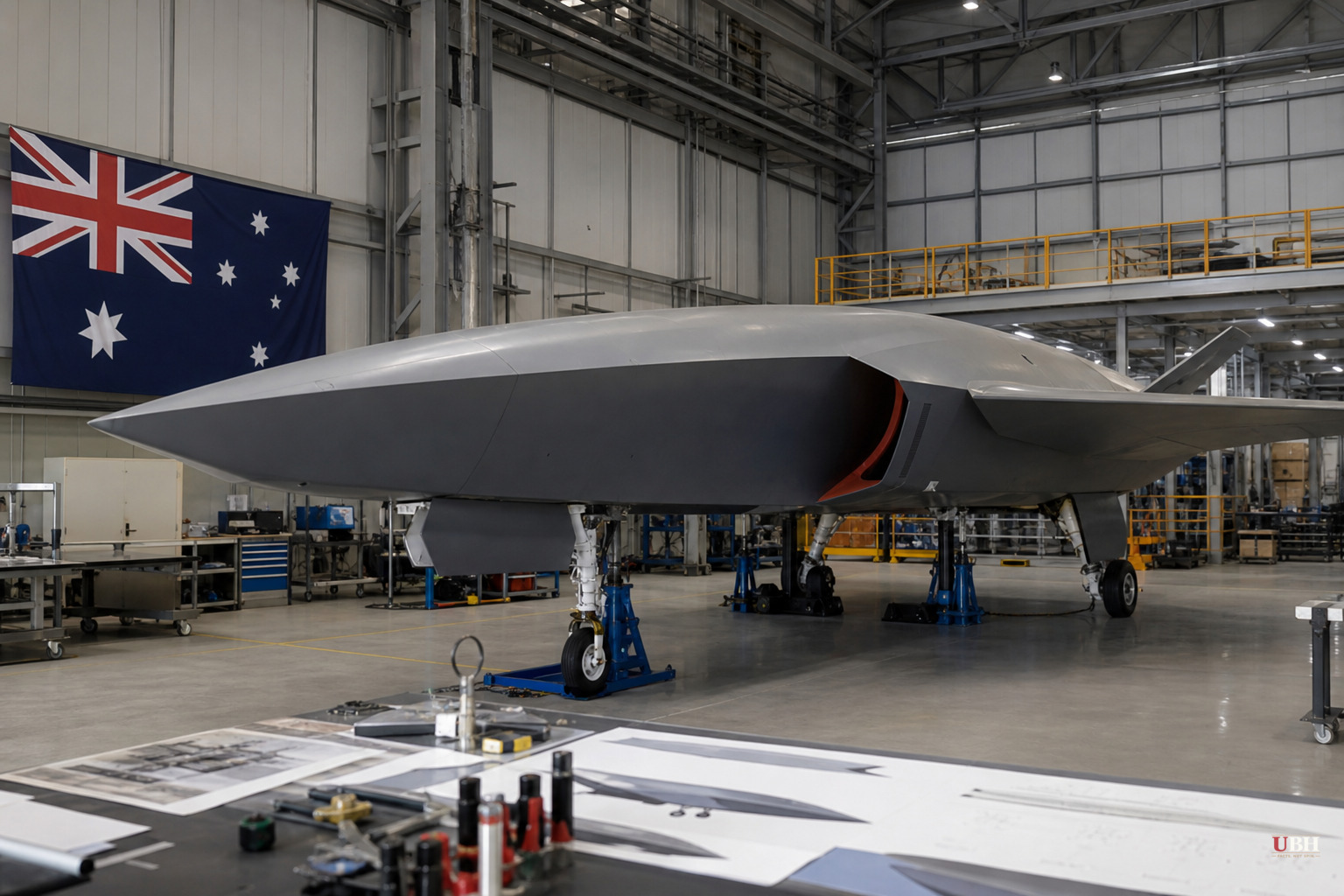
Boeing is telling foreign governments it will build its MQ-28 Ghost Bat drone wherever they want it built, not just in one central factory.
Glen Ferguson, the MQ-28 global program director, laid out the strategy at a press briefing Tuesday at the Farnborough Airshow. "I think we'd rather have many smaller factories building them, localized for countries to meet their own local needs than having one mega factory," Ferguson said, according to Breaking Defense.
Boeing hasn't finalized future production plans, Ferguson said, but he was blunt that a single "mega factory somewhere that builds thousands is probably not the best answer."
Why Countries Want Their Own Factories
The logic is straightforward: countries don't want to depend on someone else's supply chain when things go bad. "Most countries will want their own sovereign capability," Ferguson said, "because these things you need to regenerate, you need to be able to build at rate, and you need to be able to build them when you're in a supply chain denied environment."
Translation: if a war cuts off parts from overseas, a country with its own production line can keep building drones. A country buying finished units from a foreign factory can't.
Ukraine War Driving Urgency
Tim Flood, Boeing's director of business development and strategy for the UK, Europe and Americas, said the pressure across the Collaborative Combat Aircraft market right now is substantial. "Everyone talks about the need to address a growing threat across Europe. We're seeing increased activity. The urgency aspect is real," Flood told reporters, per Breaking Defense.
That urgency is being driven by the war in Ukraine and NATO defense spending that's opening up demand for new capabilities, according to Flood. Drone wingman programs like Ghost Bat are exactly the kind of capability that spending is chasing.
Germany Leads the European Push
Germany is on track to be the first European operator of Ghost Bat, with a target of fielding the drones alongside crewed fighters by 2029, according to Breaking Defense.
Boeing announced Tuesday that German electronics firm Hensoldt has joined its supplier base for Berlin's Collaborative Combat Aircraft bid. That follows Rheinmetall and Rohde & Schwarz joining the German industrial base last month. None of those deals currently involve actually manufacturing the drones in Germany, but they build political and industrial buy-in ahead of any production decision.
Boeing has also added other partners to the broader MQ-28 program. Multinational firm Eaton joined to supply the drone's internal weapons bay launcher. Leonardo, after eight years of partnership on the program, has been formally brought on to integrate infrared search-and-track systems.
What's Still Unclear
Boeing hasn't said which countries would get their own Ghost Bat factories, how many are actually being negotiated, or what the cost and timeline would look like for standing up multiple smaller production lines instead of one large one. Ferguson's comments suggest the company is still weighing options, not announcing a finalized global manufacturing footprint.
There's also an open question about whether a scattered manufacturing model actually works economically. Smaller, localized factories mean higher per-unit costs in some cases, more duplicated tooling, and more complexity managing quality control across borders. Boeing didn't address those tradeoffs directly at the briefing, according to Breaking Defense's account.
Germany's 2029 target is the next concrete milestone to watch. Whether Berlin's program actually includes German manufacturing, or just German suppliers feeding a foreign assembly line, will show whether Boeing's "many smaller factories" pitch turns into an actual sovereign production commitment or stays a sales pitch aimed at winning contracts.
Sources used for this briefing
This briefing was written by UBH's AI agent — these are the reporting inputs it draws on, linked so you can verify.


