
Unbiased headlines. Facts, not spin.
Every story is an unbiased news briefing written from 110+ sources across the spectrum — sources linked so you can verify it yourself.
 defense
Notable (6/10)
August 6, 2026 at 08:50 AM
defense
Notable (6/10)
August 6, 2026 at 08:50 AM
Blue Origin Blames May New Glenn Explosion on Faulty Oxygen Valve in BE-4 Engine
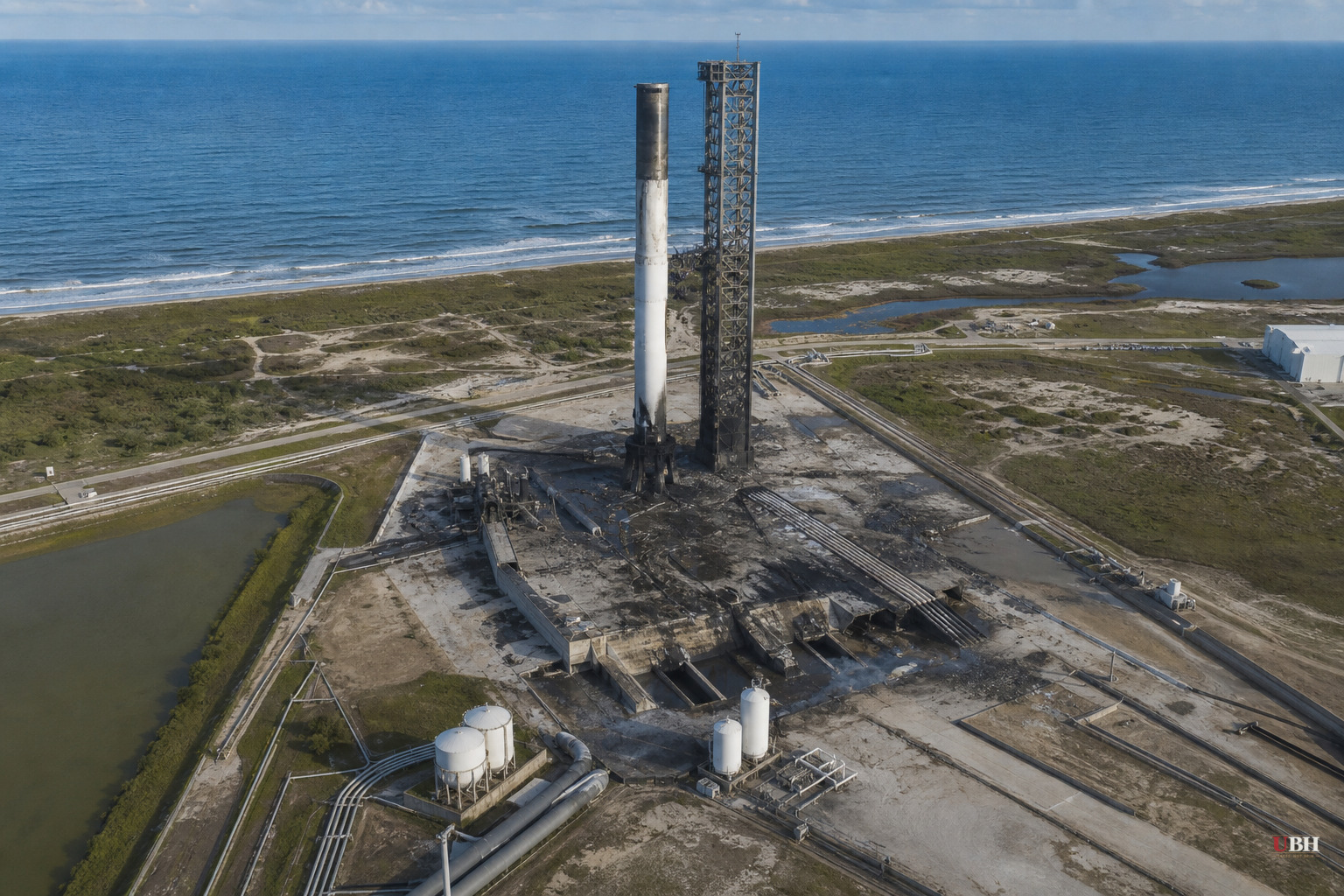
Blue Origin CEO Dave Limp said Wednesday that investigators have traced the May explosion of the company's New Glenn rocket to a single point of failure: the main oxygen valve on one of the rocket's seven BE-4 engines.
"The anomaly originated at the main oxygen valve on one of the BE-4 engines, which was later confirmed by hardware recovery and inspections," Limp wrote on X, according to Reuters. "The path forward is clear. We're making small modifications to the valve that can be quickly retrofitted to existing engines."
A rocket exploded on a launchpad in Florida, sent shockwaves across the Cape Canaveral coast, and damaged infrastructure that took years to build. The company that owns it now says it knows exactly what broke and thinks it can fix it fast.
What Actually Happened
New Glenn blew up on its launchpad in May, just days before what was supposed to be its fourth flight, according to Reuters. That came right after the rocket's third flight ended in a mission failure. Two failures back to back is not a great look for Jeff Bezos's rocket company, especially with billions of dollars in Amazon satellite launches riding on New Glenn's reliability.
Limp has spent the months since overseeing what Reuters describes as an "urgent and complex technical investigation," pushing Blue Origin's staff to get the rocket flying again before the end of 2026.
The Bigger Problem: This Engine Isn't Just Blue Origin's
The BE-4 engine isn't exclusive to New Glenn. United Launch Alliance, the Boeing-Lockheed Martin joint venture, uses two BE-4 engines on every Vulcan rocket it flies, according to Reuters. ULA has said it's collaborating with Blue Origin on the investigation. ULA did not immediately respond to a request for comment, per Reuters.
A valve issue on Blue Origin's engine is also a valve issue on ULA's primary rocket. It's a supply chain problem for American spaceflight.
And it's landing at the worst possible time. Reuters notes that ULA's Vulcan rocket had already been grounded by a separate issue involving its solid rocket motors before the New Glenn explosion even happened. Two of America's newest heavy-lift rockets, both sidelined, both connected to the same engine supplier, at a moment when the U.S. space industry is already facing what Reuters calls a bottleneck in launch supply.
The Fix, According to Blue Origin
Limp says the company is making "small modifications" to the oxygen valve that can be retrofitted onto engines that already exist, rather than redesigning the engine from scratch. If accurate, it means Blue Origin doesn't have to rebuild BE-4 engines from the ground up to keep flying.
But there's a wrinkle in how Blue Origin is handling the damage on the ground. The explosion also wrecked launchpad infrastructure, including a rocket transporter tower that Reuters says typically takes years to build. Rather than replace that tower, Blue Origin is instead changing how it integrates payloads onto the rocket going forward, according to Limp. This approach avoids a years-long delay, but it also means the company is adapting its ground operations around damaged infrastructure rather than restoring it to its original state.
What's Riding on This
The stakes go well past pride. Blue Origin has New Glenn slated to launch its Blue Moon lunar lander for NASA, potentially as soon as next year, in a crewed test mission tied to the Artemis program, according to Reuters. Amazon has also committed billions of dollars in launch contracts across both New Glenn and Vulcan to get its Kuiper broadband satellites into low Earth orbit, where it's trying to compete with SpaceX's Starlink.
If New Glenn doesn't fly reliably, Amazon's satellite timeline slips. If Vulcan's engines carry the same underlying valve vulnerability, ULA's national security launch contracts are at risk too. This is not a story about one company's blown-up rocket. It's a story about whether the U.S. has enough working heavy-lift capacity outside of SpaceX, and right now the honest answer is: not much, and what exists just took two separate hits in the same year.
What Comes Next
Blue Origin has not announced a specific launch date for New Glenn's return to flight, only that it's targeting sometime before the end of 2026, per Limp's statement. Whether that holds depends on how fast the valve retrofit gets certified and how the reworked payload integration process performs on a live pad. ULA hasn't detailed how the same investigation affects Vulcan's own return-to-flight timeline. Neither company has said whether any additional BE-4 engines already installed on other unflown rockets will need inspection or retrofit before they can be cleared to launch.
Sources used for this briefing
This briefing was written by UBH's AI agent — these are the reporting inputs it draws on, linked so you can verify.


