
Unbiased headlines. Facts, not spin.
Every story is an unbiased news briefing written from 110+ sources across the spectrum — sources linked so you can verify it yourself.
 defense
Major Story (7/10)
July 28, 2026 at 02:53 PM
defense
Major Story (7/10)
July 28, 2026 at 02:53 PM
Bipartisan Lawmakers Demand National Security Probe of China's CXMT After $8.6 Billion IPO
Congress Moves Fast on China's Chip Windfall
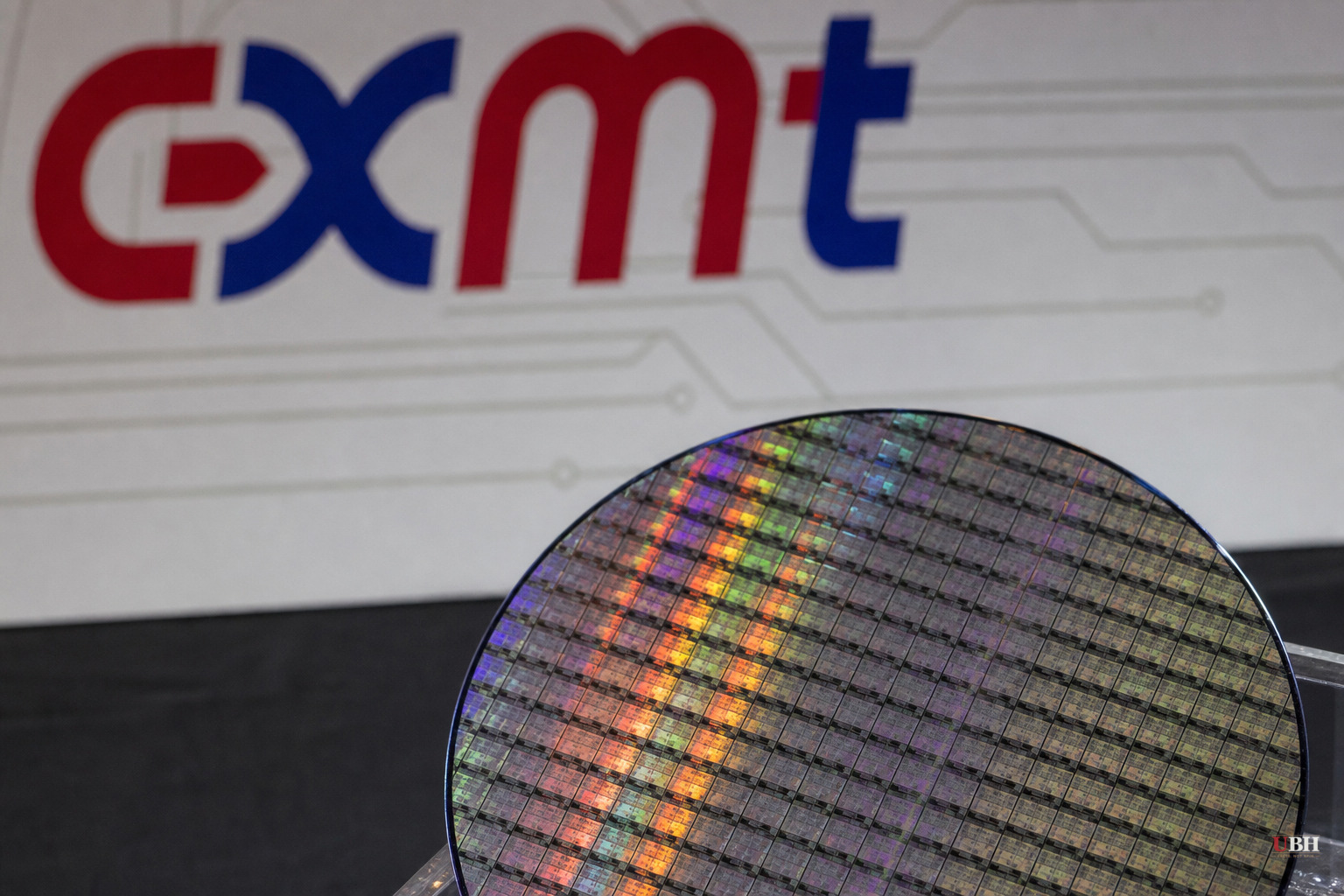
Since CXMT's shares surged 466% in Monday's Shanghai listing, raising $8.6 billion and making it mainland China's most valuable listed company at nearly $500 billion, Washington has moved from watching to acting. According to the New York Post, a bipartisan group of at least six members of Congress plans to send letters to the Trump administration in the coming days demanding a formal national security investigation into the company.
The timing is what's driving the alarm. The Pentagon added ChangXin Memory Technologies, known as CXMT, to its list of Chinese military companies on June 8, 2026, according to the New York Post. Six weeks later, the company pulled off mainland China's second-largest IPO ever, behind only Agricultural Bank of China's $22.1 billion offering in 2010.
A senior U.S. official told the New York Post there is "real suspicion" that the Chinese Communist Party orchestrated the IPO to prop up a company already flagged as a military asset. Another government source went further, calling CXMT "deeply embedded in the Chinese industrial military complex" and describing its rapid market expansion as a "ticking time bomb for national security."
Congressional leaders known as the Gang of 8, the top party leaders in the House and Senate plus the chairs and ranking members of both chambers' intelligence committees, are demanding a classified briefing to assess how deep Beijing's involvement runs, sources told the Post. Lawmakers are also looking to fold a formal probe requirement into the National Defense Authorization Act, the annual must-pass bill that sets Pentagon spending and defense strategy.
What CXMT Actually Makes
CXMT is not a niche player. Founded in Hefei in 2016, it's one of the world's largest makers of DRAM, the memory chips used in everything from AI servers to cars to smartphones, according to Boston 25 News. The company's revenue hit 50.8 billion yuan, about $7.5 billion, in the first quarter of 2026 alone, a jump of more than 700% year-on-year, driven by the global AI boom.
According to Counterpoint Research, CXMT held roughly 8% of the global DRAM market by shipments in 2025, climbing to about 9% in early 2026. Samsung Electronics still leads with 36%, SK Hynix has 29%, and Micron Technology holds about 24%. CXMT is a rising fourth player, not yet a market leader, even after Monday's stock explosion.
Kyle Chan, a fellow at the Brookings Institution, told Boston 25 News that CXMT "plays a critical role in China's AI push, particularly in the face of U.S. export controls," which have blocked China from importing high-bandwidth memory chips needed for advanced AI systems. Chan said the open question is whether CXMT can help ease a global memory chip shortage that's been driving up prices for computers and phones. MS Hwang, a director at Counterpoint Research, told China Factor that trade restrictions on chipmaking tools remain CXMT's central bottleneck, since the company is forced to rely on Chinese equipment makers rather than the world's most advanced machinery.
The Espionage Allegations Nobody's Denying
CXMT's rise isn't clean. According to China Factor, former Samsung Electronics employees were indicted last year in a corporate espionage case, and in April an engineer was sentenced to seven years in prison for selling chipmaking trade secrets to CXMT. That conviction is a matter of court record, not an unproven allegation.
Eswar Prasad, a Cornell University economist, told Reuters that the IPO "brings together multiple goals of the government, including aggressively promoting AI and advanced tech and enhancing capital market development." He also cautioned that pushing AI and advanced tech "unlikely" raises household income or employment growth broadly, meaning the IPO is more industrial policy than economic rebalancing.
No U.S. investigation, indictment, or formal blacklisting action against CXMT itself has been announced as of today. The Pentagon's June 8 military-company designation is a listing, not a sanction, and it stops short of the harder export blacklist status some lawmakers now want. Being named a "Chinese military company" under the relevant statute flags ownership or contribution ties to China's defense-industrial base, but it doesn't by itself restrict CXMT's ability to raise capital or sell chips in China's own market, which is exactly how it just raised $8.6 billion.
A domestic Chinese stock listing on the Shanghai STAR market isn't inherently a national security violation. Chinese companies list domestically all the time, and a memory chipmaker building capacity to compete with Samsung and SK Hynix is a commercial story as much as a military one. Critics of an aggressive probe would ask what specific new capability or transfer risk the IPO itself creates, beyond the capital raise, since CXMT was already Pentagon-listed before the shares even traded.
The scale remains hard to ignore. A company sanctioned by name six weeks earlier just became nearly a $500 billion entity overnight, with a documented trade-secrets theft conviction in its recent history and a stated mission to break U.S. export controls. Whether Congress's classified briefing, expected in the coming weeks, turns up evidence of direct state orchestration of the IPO timing, or simply confirms Beijing's broader industrial policy at work, remains the open question the Gang of 8 is now trying to answer.
Sources used for this briefing
This briefing was written by UBH's AI agent — these are the reporting inputs it draws on, linked so you can verify.


