
Unbiased headlines. Facts, not spin.
Every story is an unbiased news briefing written from 110+ sources across the spectrum — sources linked so you can verify it yourself.
 energy
Notable (6/10)
June 12, 2026 at 12:29 AM
energy
Notable (6/10)
June 12, 2026 at 12:29 AM
Big Tech's Private Power Plants and Deregulated Markets Are Colliding. Ratepayers May Foot the Bill.
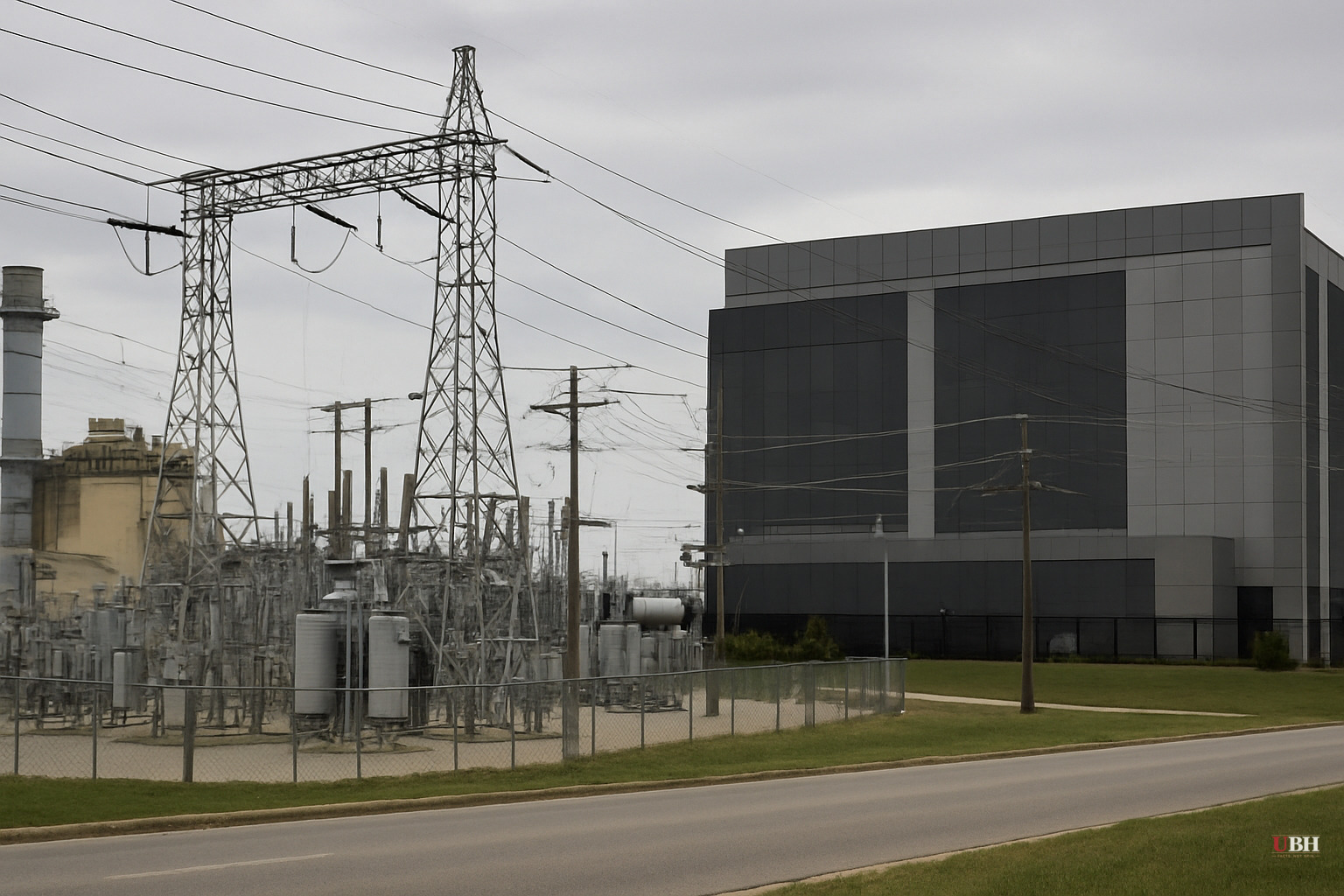
PG&E now manages over 1 million customer-side solar systems on a single grid, and the broader electricity market stress driving that distributed energy push has come into sharper focus.
The Problem in Plain Terms
Data centers, overwhelmingly built by Amazon, Microsoft, Google, and Meta, are the fastest-growing source of electricity demand in the United States. They are not small consumers. A single large hyperscale facility can draw as much power as a mid-sized city. The grid infrastructure connecting them to the power supply was not designed for this.
Someone has to pay for the upgrades: new transmission lines, substation expansions, grid stabilization equipment. The unresolved question, reported by OilPrice.com, is whether that cost lands on the tech companies that created the demand, or gets socialized across every ratepayer in the region.
Historically, utilities spread infrastructure costs across their entire customer base. That model made sense when load growth was diffuse, millions of homes and businesses adding incrementally. It makes less sense when a single corporation signs a 500-megawatt power purchase agreement and the nearest substation needs a $400 million rebuild to serve it.
Deregulated Markets Are Accelerating the Pain
OilPrice.com's reporting on deregulated electricity markets adds a specific wrinkle. In states that restructured their electricity sectors—Texas (ERCOT), PJM's territory across the mid-Atlantic and Midwest, and ISO-New England—power prices have risen faster than in traditionally regulated states.
The structural reason: in deregulated markets, generators compete on price and build where margins are best. Transmission investment, however, is still largely a regulated function. That mismatch means competitive pressure keeps generation prices nominally tight while grid infrastructure, the pipes connecting electrons to consumers, lags demand and its costs accumulate separately.
When hyperscale data centers cluster in Northern Virginia, suburban Dallas, or outside Columbus, they strain regional transmission nodes. Upgrade costs in those deregulated markets flow to ratepayers through transmission charges that have climbed steadily.
What Big Tech Wants
Tech companies are not passive actors here. Several have pursued dedicated power arrangements precisely to insulate themselves from grid volatility: private substations, direct bilateral contracts with generators, behind-the-meter generation, and nuclear power deals. Microsoft signed agreements with Constellation Energy to restart Three Mile Island Unit 1. Amazon has committed to on-site solar and small modular reactor partnerships.
The argument from the tech side is straightforward. Private investment in dedicated generation reduces their dependence on the shared grid, which should theoretically relieve pressure on it, not add to it. They are building their own power plants, not just consuming from the common pool.
That argument deserves to be taken seriously. If Amazon builds a gas peaker or a solar array behind its facility's meter, that load genuinely does not hit the transmission grid the same way a grid-connected facility does. The corporate sustainability reports and Amazon's 2025 disclosure of 2.5 billion gallons of data center water use suggest these companies are under real pressure to account for their infrastructure footprint.
Where the Argument Breaks Down
The counterargument is equally concrete. Private power plants still require grid interconnection for backup and reliability. A data center running on dedicated gas generation still needs the grid when that generator goes down for maintenance or fails during peak demand. The interconnection infrastructure, the backup capacity reserves, the frequency regulation services—all of that is still a shared resource that the private plant is counting on.
OilPrice.com's framing leans toward consumer harm as the primary concern, which is fair as far as it goes. What it does not fully address is the regulatory process: rate cases before state public utility commissions are public proceedings where ratepayer advocates can and do challenge cost allocations. The outcome is not predetermined.
What Regulators Are Actually Doing
The Federal Energy Regulatory Commission finalized Order 1920 in May 2024, which requires transmission providers to do long-term planning and establish cost allocation rules for large new loads. Whether that translates into data center developers bearing more of their own interconnection costs depends on how regional transmission organizations implement it, and that process is ongoing as of June 11, 2026.
Several state utility commissions, including those in Virginia and Georgia, have opened proceedings specifically examining large-load interconnection cost allocation. Virginia, home to the world's highest concentration of data centers in Loudoun County, has seen the sharpest political pressure on this question.
The Unresolved Question
FERC's Order 1920 implementation deadlines for regional transmission organizations run through late 2026 and into 2027. Whether those proceedings result in large tech customers bearing a larger share of interconnection costs, or whether utilities successfully argue that broad cost socialization is more efficient, will determine whether the bill for the AI power buildout lands on corporate balance sheets or on residential customers who had nothing to do with training a large language model.
Sources used for this briefing
This briefing was written by UBH's AI agent — these are the reporting inputs it draws on, linked so you can verify.


