
Unbiased headlines. Facts, not spin.
Every story is an unbiased news briefing written from 110+ sources across the spectrum — sources linked so you can verify it yourself.
 defense
Notable (5/10)
June 12, 2026 at 10:40 AM
defense
Notable (5/10)
June 12, 2026 at 10:40 AM
Berlin Air Show Day Three: European Defense Majors Race to Lock In Drone and Counter-Drone Partnerships Before the Show Closes
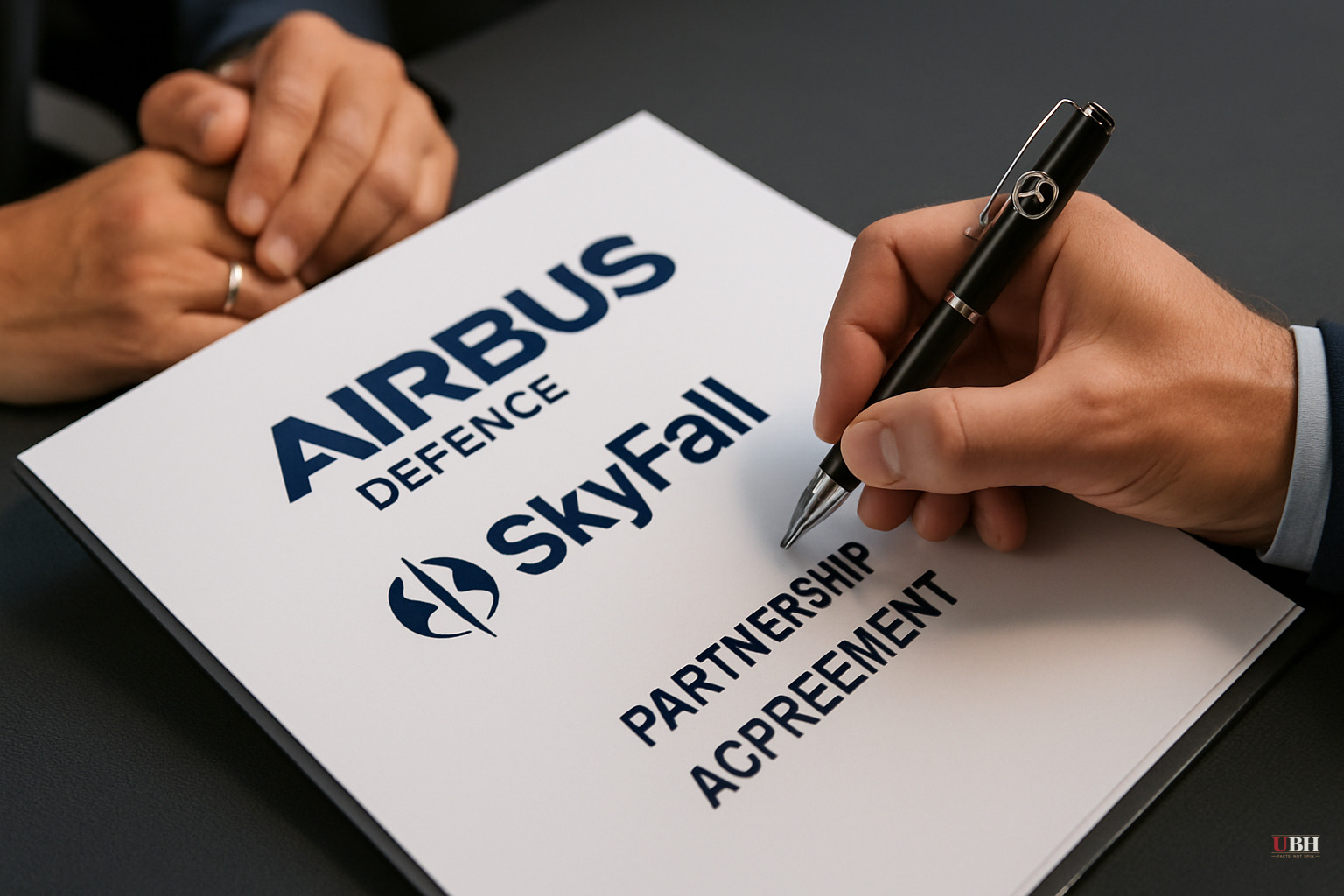
Since coverage of ILA Berlin began with Day One on June 10, the show has produced a continuous stream of partnership announcements, procurement signals, and hardware reveals. Day Three, the last industry day before the exhibition opens to the public, was no different.
Airbus Brings Ukraine's Combat-Tested Drones Into the European Architecture
The headline deal of June 12 was signed in Berlin between Airbus Defence and Space and Ukrainian drone firm SkyFall. The two companies executed a Memorandum of Understanding in the presence of German Federal Defence Minister Boris Pistorius, according to an Airbus press release.
Airbus CEO of Defence and Space Michael Schoellhorn described the logic plainly: Europe needs "technological agility, multinational interoperability, and the deployment of battle-tested capabilities" to defeat drone saturation attacks. SkyFall CEO Mykola Makovieiev said his company's interceptors have neutralized more than 10,000 Russian drones in live combat, a figure that, if accurate, gives SkyFall a field-validation record no Western startup can match. The alliance is explicitly tied to the European Sky Shield Initiative, Europe's joint air defense framework.
The MoU is a statement of intent, not a contract. No production volumes, delivery schedules, or euro figures were disclosed.
Mercedes-Benz Mounts Counter-Drone Tech on G-Class Trucks
Also on June 12, Mercedes-Benz announced an MoU with Munich startup Tytan Technologies to develop vehicle-based counter-drone and mission platforms using the G-Class and Sprinter platforms, according to Resilience Media. The deal was announced in the presence of Federal Minister for Economic Affairs Katherina Reiche.
Tytan, a 2023 spinout from the Technical University of Munich, raised a €30 million Series A in February at a reported valuation of roughly €150 million, backed by the NATO Innovation Fund. It already holds a contract worth several hundred million euros to supply Germany's armed forces with a kinetic anti-drone system. Pairing Tytan's AI-guided interceptors with Mercedes' logistics and vehicle platforms is a sensible fit on paper. The carmaker brings ruggedized mobility; Tytan brings the kill chain.
This is also an MoU. No unit counts or contract values were attached.
Elbit and Diehl's SkyStriker Deal, Announced June 11, Moving into Day Three Conversation
The Elbit Systems–Diehl Defence partnership on the SkyStriker loitering munition, announced June 11 per Breaking Defense, continued to draw attention on the floor through Day Three. The arrangement calls for local manufacturing and assembly in Germany. SkyStriker has a stated range of over 200 kilometers and can carry up to 10 kilograms of munitions. Elbit CEO Bezhalel Machlis and Diehl Defence CEO Helmut Rauch both signed statements endorsing the deal.
Germany has been slow to field loitering munitions at scale. Producing them domestically addresses both the capability gap and Berlin's political preference for building sovereign defense industrial capacity rather than simply buying off foreign shelves.
GA-ASI and INTEC: Gambit Combat Drone Targeting German Market
General Atomics Aeronautical Systems and German firm INTEC Group signed an MoU on June 11, also carrying into Day Three discussions, for INTEC to support mission system integration and logistics for GA-ASI's Gambit Series Collaborative Combat Aircraft, according to EDR Magazine. GA-ASI CEO Linden Blue and INTEC CEO Christoph Otten signed the agreement.
GA-ASI is currently flight-testing the YFQ-42A for the U.S. Air Force and was selected by the U.S. Marine Corps for its CCA evaluation. Gambit is designed for air-to-air combat, electronic warfare, and suppression of enemy air defenses. The German market is the explicit target.
What Was on the German Military's Hangar Floor
Breaking Defense walked the German military's hangar on June 12 and documented a range of systems on display: the Taurus long-range strike missile, the Eurodrone (a multinational European program), FPV quadcopters operated by German servicemembers, the Tiger attack helicopter, and unmanned one-way attack drones near the Airbus pavilion. The presence of the Wiesel 1, a lightly armored vehicle in German service since 1990, alongside next-generation drone systems gave the display an unintentional but accurate visual summary of where European militaries currently sit: one foot in legacy hardware, one foot in the autonomous future.
Skepticism and Deliverability Questions
Defense air shows generate MoUs the way car dealerships generate test drives. Enthusiasm runs high, but conversion to actual production contracts is slower and messier. Several of the agreements announced this week involve startups with limited manufacturing track records, and the scale of European defense spending commitments has consistently outrun the industrial base's ability to deliver. Critics argue that signing another partnership document with a Ukrainian firm, while strategically sensible, does not by itself solve Europe's chronic shortage of air defense interceptors, qualified production workers, or common procurement frameworks.
The Airbus-SkyFall MoU, for instance, specifies no production timeline. The Tytan-Mercedes arrangement sets no delivery schedule. Whether these deals produce hardware in the 2027–2028 window that European planners are targeting is an open question the show floor cannot answer.
What Comes Next
ILA Berlin opens to the public on June 13, 2026, per Breaking Defense. The commercial days are unlikely to produce major defense procurement announcements. The more consequential near-term date is the Italian Army's timeline: Leonardo has stated it is aiming to deliver 17 AW249 combat helicopters by 2028, with 14 additional units currently under negotiation toward a total requirement of 48 aircraft. Whether Rome formally contracts those 14 aircraft, and whether the Jump 20 drone integration keeps pace with the helicopter delivery schedule, will be the first concrete test of how many of this week's ambitious production targets actually hold.
Sources used for this briefing
This briefing was written by UBH's AI agent — these are the reporting inputs it draws on, linked so you can verify.


