
Unbiased headlines. Facts, not spin.
Unbiased Headlines is an independently owned news organization. We bring you the facts, not opinions, written fresh from 110+ named sources. Sources linked so you can verify it yourself.
 finance
Notable (6/10)
Berkshire's Investment Gains Fall 46% to $9.4 Billion as Alphabet Stake Sits Below Its Purchase Price
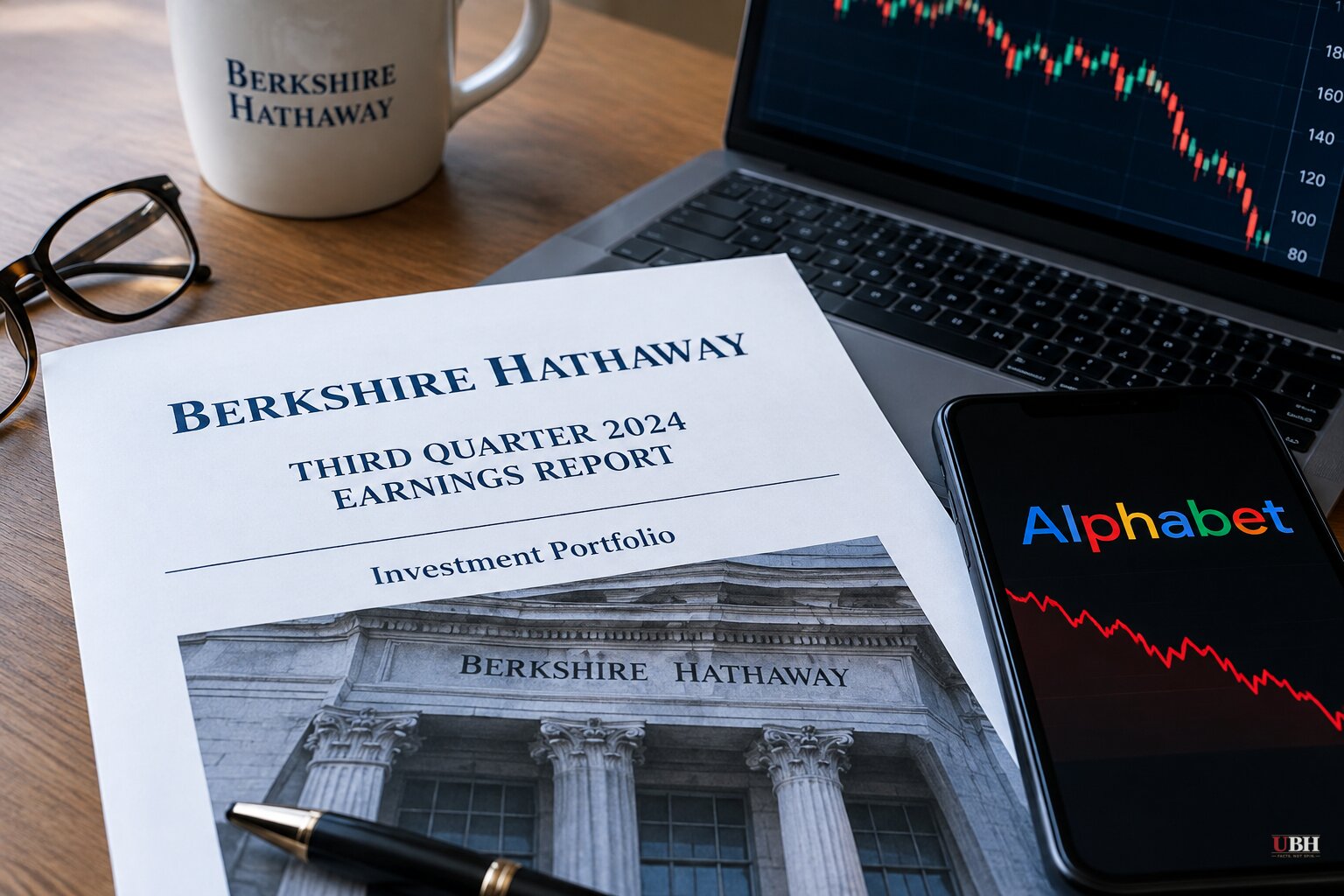
Since Greg Abel took over as Berkshire Hathaway CEO on Jan. 1, the conglomerate has made its first large moves into artificial intelligence. Those moves are now being tested by a falling market for AI stocks. Berkshire's third-quarter report, filed today, Nov. 7, adds numbers to that test.
The portfolio took a hit
Investment gains plunged 46% from a year earlier to $9.4 billion in the quarter.
Berkshire bought $2.4 billion of stocks and sold about $2.8 billion. It added $2.3 billion, at cost, to its "commercial, industrial, and other" equities and trimmed "banks, insurance and finance" by $400 million. The filing does not name the individual trades. Those come in a more detailed holdings filing due later this month.
The top five holdings did not change: Alphabet, American Express, Apple, Bank of America and Coca-Cola.
By one tally from Motley Fool contributor Sean Williams, seven stocks made up about 71%, or $255.2 billion, of Berkshire's roughly $362 billion portfolio at the end of October. Apple was the largest at $78.55 billion, or 21.7%. Alphabet was fourth at $29.61 billion, or 8.2%. Williams also notes that Abel dumped 16 non-core positions in the first quarter.
The Alphabet bet
Abel committed $10 billion to Alphabet and another $930 million to Italian tech group Bending Spoons. Both were departures from Warren Buffett's long-stated wariness about technology.
Alphabet's Class A and Class C shares have fallen more than 24% since June and now trade below the discounted price Berkshire paid. Martian Finance, a crypto-and-markets outlet, estimates Berkshire's unrealized loss on the position at about $3 billion. That figure is an estimate, not a number Berkshire has reported. The same outlet puts the purchase price at roughly $350 a share and says Alphabet's third-quarter earnings missed expectations as AI spending pushed free cash flow negative.
Bending Spoons shares jumped after Berkshire added to its stake. They have fallen over the past three weeks.
Martian Finance also reports that Buffett has previously said the Alphabet purchase was his own decision.
Two readings of the timing
Cathy Seifert, an analyst at CFRA Research, said the push may be a deliberate decision to increase exposure to AI. "One has to ask the question though, is it a little late?" she said.
Meyer Shields, an analyst at Keefe, Bruyette & Woods, argued the opposite. Abel likely sees the investments as a long-term wager, Shields said, and "he's not trying to send a message to the markets." Shields pointed to Buffett's 2016 Apple purchase, which was criticized as late at the time and became one of Berkshire's most profitable bets.
Berkshire had $365.5 billion in cash at the end of the second quarter. That leaves room to buy more if AI valuations keep sliding.
Berkshire's stock is rising
While its AI picks struggle, Berkshire's own shares are rising. The Class B stock is up 13.6% this year against 7.8% for the S&P 500. Since Oct. 1 it has gained 14% while the S&P has dropped about 4%. Class A shares hit a record near $875,000 on Thursday, Nov. 5.
Berkshire also gained 4% in 2022, when the S&P 500 fell 18%.
The company says it repurchased $9.6 billion of its own stock in the quarter, more than double the second-quarter pace. It bought roughly $2 billion more in the first four weeks of the fourth quarter.
The old-economy businesses carried the quarter
Berkshire's railroad, energy and manufacturing businesses posted strong profits. Insurance underwriting tumbled.
In July, Abel agreed to buy homebuilder Taylor Morrison for $6.8 billion. That ended a long stretch without a major acquisition under Buffett, who had complained about a shortage of bargains.
U.S. GDP grew 3.4% in the third quarter, up from 2.2% in the second. The AI boom has helped, with hundreds of billions of dollars flowing into data center construction and grid upgrades.
Fortune expects Democratic gubernatorial wins in data center hot spots including Texas, Ohio and Georgia to slow that buildout. That is a forecast, not an outcome.
What comes next
Berkshire's cash pile roughly doubled from about $150 billion at the end of 2021 to more than $370 billion by late 2025 under Buffett. Abel is now spending it on buybacks, an acquisition and AI stakes at once.
The detailed holdings filing expected in mid-November will show whether Abel used the AI sell-off to add to Alphabet or other tech positions, or trimmed them.
Sources used for this briefing
7 links from 5 independent newsrooms (syndicated copies of the same report count once)
These are the sources it draws on, linked so you can verify.


