
Unbiased headlines. Facts, not spin.
Unbiased Headlines is an independently owned news organization. We bring you the facts, not opinions, written fresh from 110+ named sources. Sources linked so you can verify it yourself.
 finance
Notable (6/10)
Event date: November 6, 2026 ·
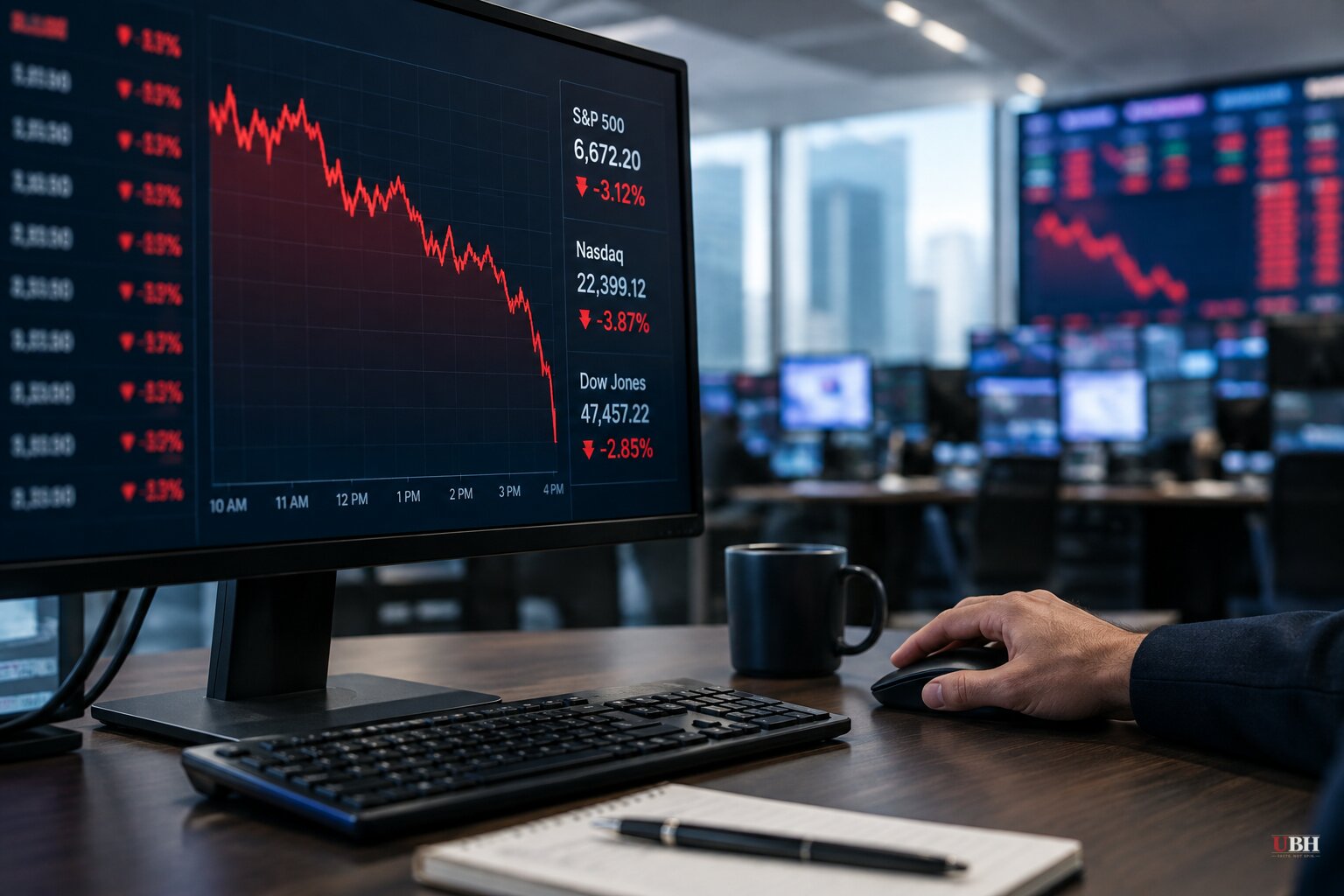
Stocks Post Steepest One-Day Drop in Six Months Two Days After Voters Back Data Center Limits
The AI trade took its worst hit in months this week, and the timing is hard to ignore.
On Thursday, Nov. 5, the S&P 500 fell more than 3 percent in morning trading, part of the steepest one-day drop for stocks in more than six months. The Magnificent 7 lost more than $1 trillion in market value, by Breitbart's count. NPR put the wipeout across AI-linked shares at more than $2 trillion. AI shares bounced back Friday, but NPR's Rafael Nam said investors are still shaken.
What voters did on Nov. 3
The selloff came two days after a midterm election in which data centers were a real ballot issue. An NBC exit poll found that 56% of voters called AI and data centers a "crucial or major factor" in their vote for Congress.
Democrats spent more than $100 million on broadcast ads portraying Republican opponents as too cozy with Big Tech and data centers, according to TIME's reporting. They won many of those races, including in Ohio, Kansas and Iowa.
Local measures did even more damage to the industry's plans. NPR's John Ruwitch counted dozens of local measures across 13 states that blocked or restricted future data center development. Counties from Edgewater, Fla., to Bloomington, Ill., passed bans or moratoriums. The mayors of Piqua, Ohio, and Yukon, Okla., were recalled over their support for data center projects.
In South Carolina, Annie Andrews beat Darline Graham, whom she had nicknamed "Data Center Darline," after calling for a two-year moratorium on new projects. Super PACs backing the accelerationist side of the industry failed to move races in a major way.
Republicans are on the losing end here. Alliance for a Better Future CEO Janet Kelly warned Friday that the GOP must rebuild public trust on AI before the 2028 presidential election.
Why residents are pushing back
The complaints are concrete. NPR's Ruwitch cited worries about water use, electricity costs and jobs. At a San Jose town hall, where as many as 13 new data centers are planned, resident Justin Brown said things are moving "way too fast" and asked for a real debate so residents "can get something out of this."
Blue Rose Research, a progressive polling firm, found Americans would rather live near a prison, a methadone clinic or a nuclear plant than an AI data center. The firm's research director, Ali Mortell, said higher energy bills, noise and environmental concerns resonated far more than abstract fears about AI.
A University of Michigan survey released Friday, as reported by The Washington Post, found Americans increasingly worried about what happens if the AI boom goes bust.
The money at stake
The industry's counterargument is about scale and return. Nvidia CEO Jensen Huang, touring Europe, said a gigawatt-scale data center costs about $50 billion and can generate tens of billions of dollars in annual revenue. He put the potential at roughly $40 billion a year.
President Trump has taken the industry's side. According to TIME, he has said opponents of data centers "want to end up being backwards and poor."
The market's reaction cannot be pinned on one cause. Alphabet shares plunged the week before the election after lower-than-expected profits wiped more than $500 billion from its value, according to The Guardian. Tech stocks had also fallen sharply at the end of October. The cyclically adjusted price-to-earnings ratio on U.S. stocks had climbed to its highest level since 2000.
Some analysts see the election as a trigger, not the underlying problem. Quilter Cheviot's Ben Barringer said "it is too easy to say that the Democrats will be bad for datacentres." He expects a pause in the build-out and slower approvals, but said Texas governor-elect Gina Hinojosa's words suggest her side will be "more pragmatic and ensure resources are more fairly allocated."
The exposure reaches well beyond Silicon Valley. The Magnificent 7 (Nvidia, Apple, Google, Microsoft, Meta, Amazon and Tesla) make up more than a third of the S&P 500, so any fund tracking the index is tied to them.
What Washington can actually do
Don't expect a federal crackdown soon. TIME reports Democrats would need substantial Republican support to overcome a presidential veto.
Oversight is more likely. Congress could call AI executives before committees and undo Republican efforts to block state-level AI laws, according to TIME. Brendan Steinhauser, a Republican strategist who runs the Alliance for Secure AI, said the industry should expect "a big deluge of bills at the state and federal level."
There is also a simple local-control point that cuts across party lines. Communities that bear the power, water and land costs are now using their own ballots to decide whether a data center gets built next door. That is democracy working, whatever it does to a stock price.
It is unclear whether the Nov. 3 moratoriums will hold and spread. If they do, the trillions of dollars committed to data center construction will have to be spent somewhere other than the places that just voted no.
Sources used for this briefing
5 links from 5 independent newsrooms (syndicated copies of the same report count once)
These are the sources it draws on, linked so you can verify.


