
Unbiased headlines. Facts, not spin.
Unbiased Headlines is an independently owned news organization. We bring you the facts, not opinions, written fresh from 110+ named sources. Sources linked so you can verify it yourself.
 energy
Notable (6/10)
energy
Notable (6/10)
Berkeley Lab Team Finds Metal Foils Boost Fusion Rates at Ultra-Low Energies, Still Nowhere Near Power Generation
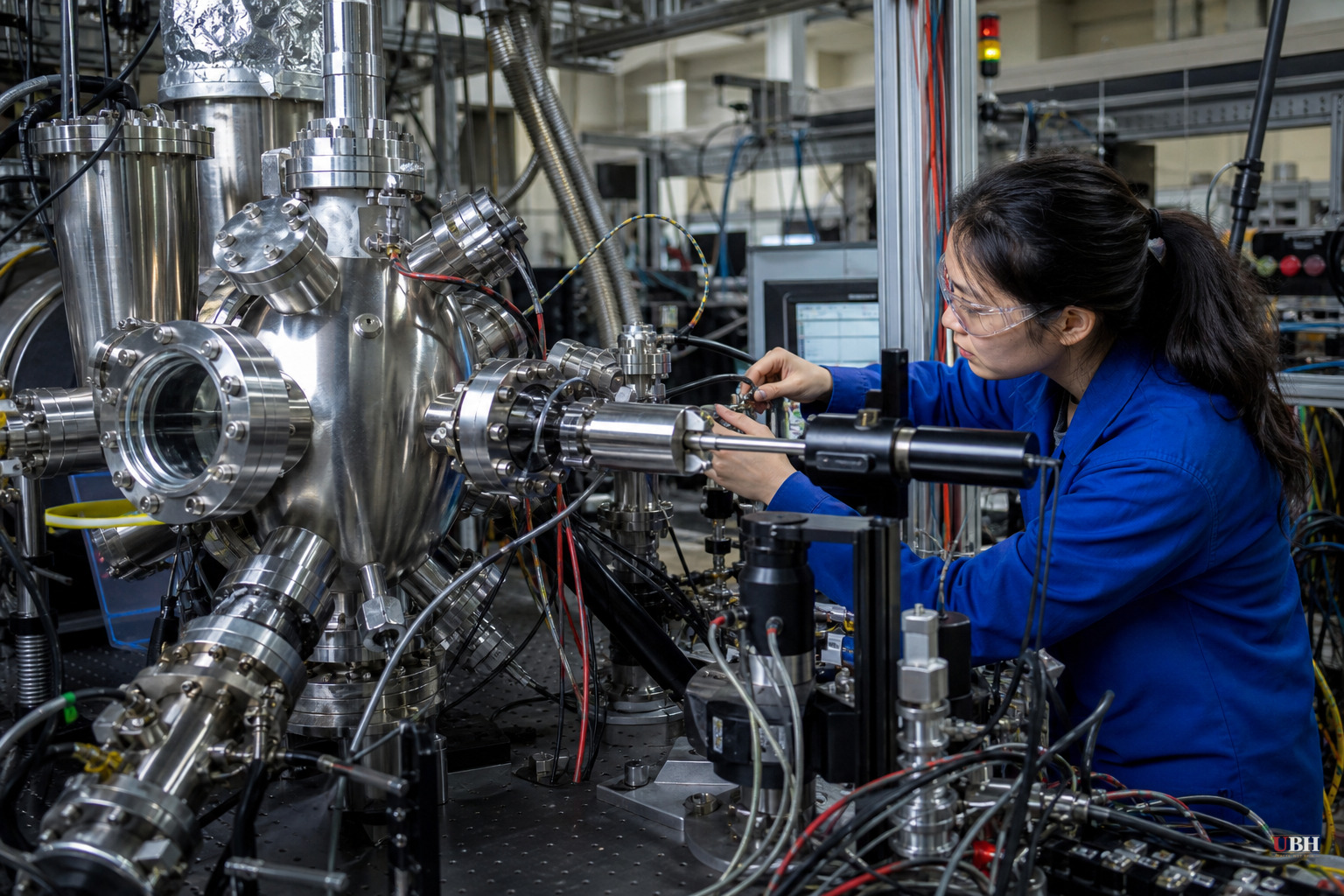
Scientists at UC Davis and Lawrence Berkeley National Laboratory published a study on July 18 in Nature Communications showing something physicists did not expect: fusion reactions inside metal foils keep happening even when the energy driving them drops to levels where the reaction should essentially stop.
The team, working with researchers including Thomas Schenkel and Arun Persaud at Berkeley Lab and Jeremy Munday and Micah Karahadian at UC Davis, fired beams of deuterium ions, a heavy form of hydrogen, into thin foils of palladium and titanium. They packed the foils with additional deuterium first, using two different loading methods, then measured how often fusion occurred as they lowered the beam energy.
Normal fusion physics says that below about 5 kiloelectronvolts, reaction rates fall off a cliff. Positive nuclei repel each other, and at low energies there simply is not enough kinetic force to overcome that repulsion except through the rare quantum trick of tunneling through the barrier, according to Physics World. Below 2.5 keV, theory predicts the rate should drop off sharply.
That is not what happened. Instead of the expected collapse, the researchers found a plateau. Fusion kept occurring, and in some samples the rate was roughly a quintillion times higher than what bare, isolated nuclei would produce at the same energy, according to Berkeley Lab's news center. A quintillion is a 1 followed by 18 zeros.
Why a solid metal matters
The explanation the team is working with involves the metal itself acting almost like a catalyst. Metal lattices are full of electrons, structural defects, and locally concentrated deuterium, none of which exist in the hot plasma environments where conventional fusion research happens.
The leading theory is that the metal's electron cloud partially shields the electrostatic repulsion between deuterium nuclei, letting them get closer together than they otherwise could, Munday told Physics World. This "screening effect" has been studied since the 1990s and researchers still do not fully understand it.
Berkeley Lab's press release framed the discovery as opening up a new research area the team is calling "materials-driven fusion." The pitch: instead of just building materials tough enough to survive a fusion reactor's brutal heat, scientists could design materials that actively boost fusion under specific conditions, the way a catalyst speeds up a chemical reaction. "It gives you a new knob to turn that you didn't have before," Persaud said in the release.
The cold fusion shadow
Any claim about enhanced fusion happening inside a solid at low energy is going to draw comparisons to the 1989 cold fusion controversy, when researchers claimed to have achieved fusion at room temperature in a tabletop experiment. Those results could never be reliably reproduced and the episode became a cautionary tale in physics.
Schenkel and Munday are aware of that history. They came into this specific line of research in the 2010s through a Google-funded program that revisited the 1989 claims and found no evidence for room-temperature fusion, according to Physics World. That earlier effort is what seeded their current collaboration.
That backstory matters here because it provides the honest, skeptical caveat this result needs. The team is not claiming a cold fusion breakthrough, and Physics World is explicit that "the enhanced fusion rates remain far too small for energy generation." This is not a path to a power plant. It is a measurable, reproducible physics effect that nobody has fully explained yet.
What this could actually be good for
Fusion reactions of any kind produce neutrons, which have real uses well outside of power generation. Persaud pointed to cargo screening, planetary science research, and medical therapy and imaging as areas where more compact, more efficient neutron generators could make a practical difference, according to the Berkeley Lab release.
OilPrice.com connected the discovery to a broader trend of artificial intelligence tools being deployed to search for fusion-relevant materials. Ames National Laboratory in Iowa is building a tool called DuctGPT that combines large language models with physics modeling to hunt for materials suited to fusion reactor environments. New experimental data, like the deuterium-loading results from the UC Davis and Berkeley Lab team, could theoretically feed into and refine those AI models, though no formal collaboration between the two teams has been announced in the available reporting.
What is still unresolved
The researchers themselves say they do not know exactly why the plateau effect happens. Schenkel said the priority now is "better understanding the mechanism so that we can try to enhance it." That means more experiments testing different metals, different deuterium-loading techniques, and different defect structures to isolate what is actually driving the screening effect.
Until that mechanism is nailed down and reproduced further, this remains a materials science finding with implications for neutron generation, not a step toward commercial fusion power. Nobody on the research team is claiming otherwise.
Sources used for this briefing
3 links from 3 independent newsrooms (syndicated copies of the same report count once)
These are the sources it draws on, linked so you can verify.


