
Unbiased headlines. Facts, not spin.
Every story is an unbiased news briefing written from 110+ sources across the spectrum — sources linked so you can verify it yourself.
 finance
Major Story (7/10)
September 18, 2026 at 09:17 AM
finance
Major Story (7/10)
September 18, 2026 at 09:17 AM
Bank of Japan's 1.25% Rate Hike Passes 7-2, Two Dissents Shift Market Expectations on Future Tightening
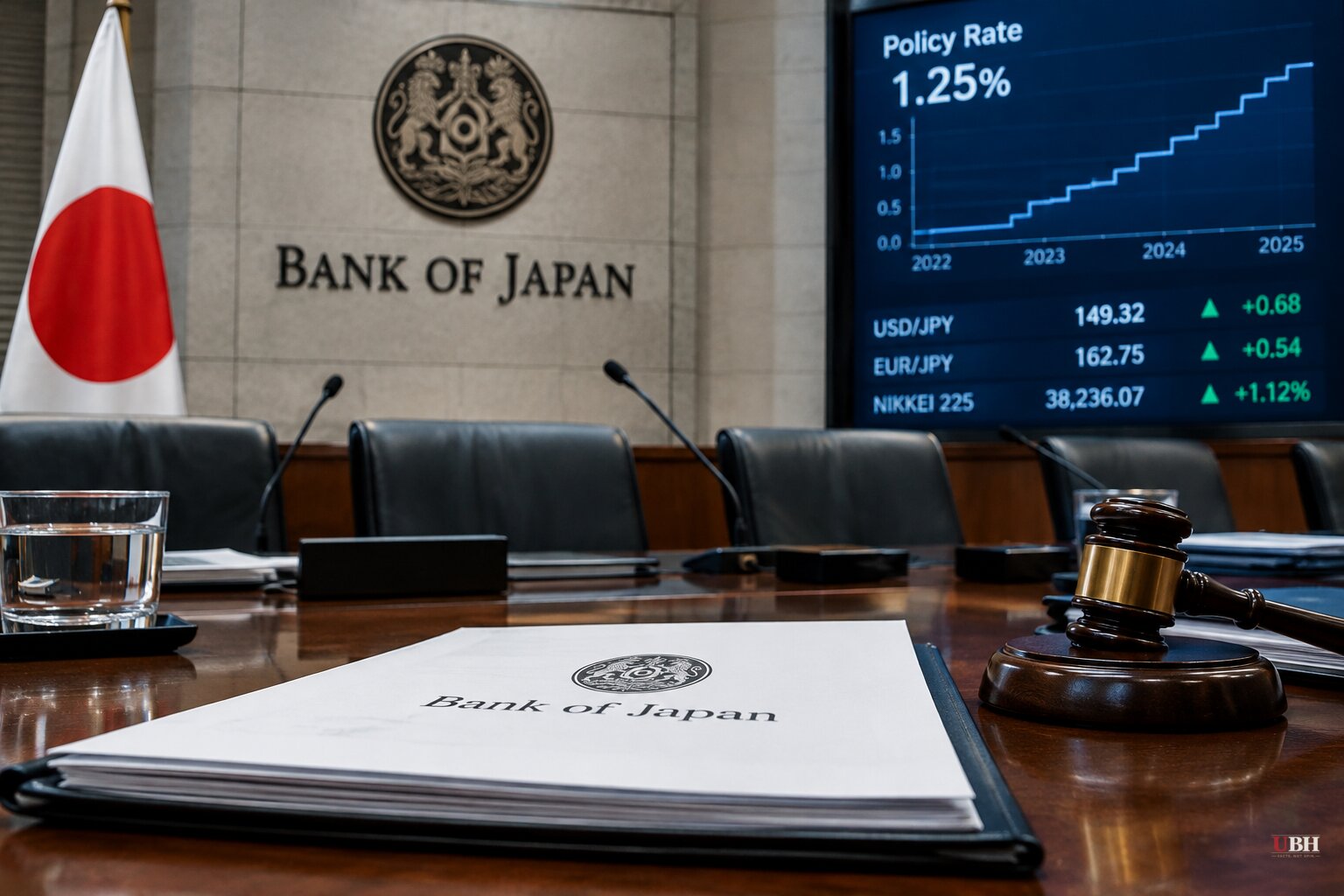
Since the Bank of Japan lifted its policy rate to a 31-year high of 1.25% on Friday, the story has moved from whether the hike would happen to how it happened, and traders didn't like what they saw.
The vote was 7-2, not unanimous. Board members Toichiro Asada and Ayano Sato, both appointees of reflationist Prime Minister Sanae Takaichi, dissented against the increase, according to the Korea Times. That split, more than the hike itself, is what moved markets Friday.
"The rate hike itself was in line with market expectations, but the two dissenting votes came as a modest surprise," said Hirofumi Suzuki, chief FX strategist at SMBC in Tokyo, per the Korea Times. "The outcome has somewhat tempered expectations for further rate hikes and conveyed a dovish impression."
Ray Attrill, head of FX strategy at National Australia Bank, was blunter. "They've just clearly underwhelmed versus expectations here," he told Reuters, as carried by Global Banking and Finance Review. "One of the more staggering aspects of it was that they couldn't even get the unanimous vote for that. That really raised eyebrows in the market."
The Yen Keeps Sliding
The currency fell as much as 0.9% to 157.33 per dollar, its weakest levels since September 3, according to The Business Times. Global Banking and Finance Review put the intraday drop at 0.8% to 157.145. The yen later pared some of the loss to trade around 156.75 after Governor Ueda's post-decision briefing, in which he said "the stage for policy setting has shifted" and stressed the need for caution on upside price risks, per The Business Times.
Chidu Narayanan, chief Asia-Pacific strategist at Wells Fargo, said the outcome was "not hawkish enough for markets and should push USD/JPY higher and front-end JPY yields lower." He added that the two dissents, "albeit from the two most dovish members of the board, does not support market expectations of a slew of rapid rate hikes from the BOJ," according to NDTV Profit.
Tohru Sasaki, chief strategist at Fukuoka Financial Group, framed Ueda's dilemma directly: "Ueda-san has to be very hawkish to keep the yen from depreciating, but I think it's a bit difficult for him to be so hawkish. He has to say that the BOJ will probably hike the policy rate again within this year."
Stocks Jump, Bonds Fall
Tokyo equities did the opposite of the yen. The Nikkei 225 climbed as much as 1.7% to 65,221.53, topping the 65,000 mark for the first time in more than a week, according to the Korea Times. The Business Times, citing an earlier afternoon read, put the gain closer to 1.4%. Chip-equipment makers led the rally, with Lasertec up 9% and Advantest up 7.3%, per the Korea Times. A weaker yen boosts the yen value of Japanese exporters' overseas earnings, which is why stocks rose even as the currency fell.
Japan's two-year government bond yield, the maturity most sensitive to rate expectations, dropped 2.5 basis points to 1.835%, the Korea Times reported. That's a bond market saying it doesn't believe the BOJ is in a hurry.
The hike came the same day data showed Japan's core inflation held steady near the BOJ's 2% target in August, according to Global Banking and Finance Review's Reuters-sourced report. Chris Weston, head of research at Pepperstone Group, said the market will now watch "whether the Bank sees any urgency to move again."
Intervention Risk Is Back on the Table
Japan spent a record ¥15.4 trillion ($98.3 billion) defending the yen in the month through August 26, according to Finance Ministry data cited by both NDTV Profit and The Business Times. That followed the first coordinated Japan-US yen-buying operation since 1998. U.S. Treasury Secretary Scott Bessent has kept signaling support for a stronger yen, which traders say is discouraging bets against the currency from rebuilding.
"We should expect further Japan-US intervention in forex markets if the yen is pressured again past 160 per US dollar," said Neil Newman, head of strategy at Astris Advisory Japan, per The Business Times.
Some analysts argue the BOJ still has room to move faster than markets now expect. Jane Foley at Rabobank has argued that two hikes within three months reflects a genuine shift in Japan's inflation picture and that the BOJ has "sufficient supportive economic data to signal a hawkish tone." Whether Ueda backs that up at the next policy meeting, or lets the dissents define the pace, is the open question hanging over USD/JPY as it hovers near the 157 handle heading into the weekend.
Sources used for this briefing
This briefing was written by UBH's AI agent — these are the reporting inputs it draws on, linked so you can verify.


