
Unbiased headlines. Facts, not spin.
Every story is an unbiased news briefing written from 110+ sources across the spectrum — sources linked so you can verify it yourself.
 finance
Major Story (8/10)
September 18, 2026 at 04:31 AM
finance
Major Story (8/10)
September 18, 2026 at 04:31 AM
Bank of Japan Raises Rates to 31-Year High of 1.25%, but the Yen Falls Anyway
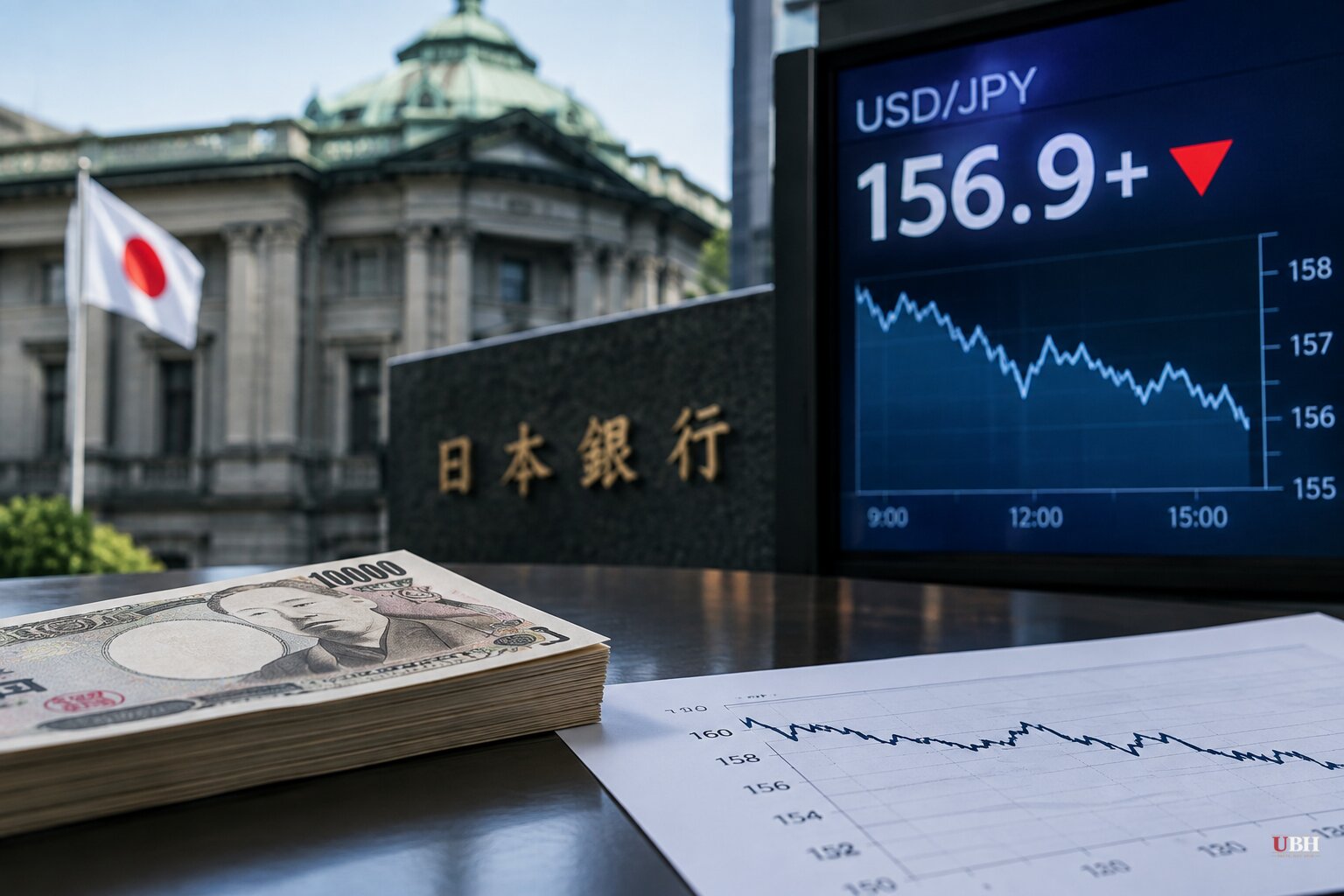
Since the Fed lifted its benchmark rate to a 3.75%-4% range on Wednesday, September 16, central banks from London to Canberra have been scrambling to keep pace. The Bank of Japan joined them Friday, September 18, raising its policy rate a quarter point to 1.25%, the highest level in 31 years.
The vote wasn't close to unanimous. The BOJ board split 7-2, with members Toichiro Asada and Ayano Sato dissenting in favor of holding rates steady, according to Reuters and Channel NewsAsia. That's the same board that has raised rates roughly twice a year since exiting a decade of near-zero policy in 2024.
The Hike That Didn't Help the Yen
The BOJ did exactly what it was expected to do, and the yen sold off anyway. The currency weakened as much as 0.6% to around 156.9-156.91 per dollar in Asian trading Friday, according to Global Banking and Finance Review, after briefly touching 156.75 in the immediate aftermath of the decision, per Reuters.
Earlier this month, the yen rallied nearly 2% on bets that Tokyo would tighten faster and on reports of Japanese investors repatriating overseas holdings. The Japan Times, citing Bloomberg reporting, noted the yen had already dropped as much as 1% overnight Wednesday into Thursday on the Fed's hawkish signal alone.
Even after Friday's hike, Japan's policy rate at 1.25% is still less than a third of the Fed's 3.75%-4% range, and lower than the European Central Bank's 2.5%, which the ECB raised last week. That gap makes it more profitable to hold dollars than yen, and no single BOJ move closes it.
"Governor Ueda will need to convince markets that the BOJ is inclined to hike rates at a faster pace," said Sarah Hammoud, currency strategist at Commonwealth Bank of Australia, who told Reuters she expects another BOJ hike in December but sees risk that Ueda underdelivers on hawkish expectations. HSBC's chief Asia economist, Fred Neumann, pointed to the two dissenting votes as evidence the BOJ will likely stay cautious rather than hike back-to-back.
Inflation Still Running Hot
The BOJ isn't hiking in a vacuum. Japan's core consumer inflation held steady near the 2% target in August, according to data released Friday and cited by Al Jazeera, as companies keep passing along higher costs for food and groceries. The central bank's own statement, quoted by Channel NewsAsia, said "wholesale inflation remains elevated" and that business-to-business price pressure "has started to spill over into consumer prices."
BOJ Executive Director Koji Nakamura also flagged a structural problem that isn't going away. Japan's shrinking labor pool is pushing up wages in a way he called a "slow-moving demographic shock," not a temporary blip, according to Al Jazeera.
The Fed Side of the Equation
The wide rate gap isn't just about Tokyo moving slowly. It's also about Washington moving fast. Fed funds futures are now pricing a 53% probability of another quarter-point hike at the Fed's next meeting, up sharply from 27.2% just a week earlier, according to CME Group's FedWatch tool as reported by Global Banking and Finance Review. Traders told Reuters they're growing more confident in Fed Chair Kevin Warsh's efforts to keep the central bank independent from White House pressure for cuts.
Elsewhere, the Bank of England held rates Thursday but unexpectedly paused gilt sales for six months, and Reserve Bank of Australia Governor Michele Bullock warned lawmakers Friday that inflation risks she'd previously flagged "appeared to be materialising."
The Case for Going Slower, and the Case Against It
Critics of the BOJ's pace have a real argument. Keeping rates low relative to the rest of the world has kept the yen weak, and a weak yen makes imported energy and food more expensive, feeding the very inflation the BOJ is trying to tame. Channel NewsAsia noted this criticism directly, tying the BOJ's incremental approach to the wholesale-to-consumer inflation spillover now showing up in the data.
The counterargument, made implicitly by the BOJ's own governance, is that Japan's economy is structurally fragile in ways the U.S. and Europe aren't. Nakamura's demographic warning suggests the central bank sees a shrinking workforce as a long-term constraint on how fast it can raise borrowing costs without choking growth. A 7-2 vote with two dissents in favor of holding steady shows that tension playing out inside the bank itself.
What's Unresolved
BOJ Governor Kazuo Ueda was scheduled to hold a press conference at 3:30 p.m. local time (0630 GMT) Friday to explain the decision and, more importantly, signal whether December brings another hike. None of the wire reports in hand confirm what he said. Whether Ueda commits to further tightening, or hedges the way the 7-2 vote suggests the board wants to, will likely decide whether the yen's slide past 157 per dollar continues into next month.
Meanwhile, Brent crude was trading between roughly $103 and $104 a barrel Friday, still elevated more than six months into the Middle East war, with Saudi Arabia and Yemen's Houthi forces continuing to trade strikes, according to Reuters. That energy cost pressure is a big part of why every major central bank this week, from Washington to Frankfurt to Tokyo, has been hiking instead of cutting.
Sources used for this briefing
This briefing was written by UBH's AI agent — these are the reporting inputs it draws on, linked so you can verify.


