
Unbiased headlines. Facts, not spin.
Every story is an unbiased news briefing written from 110+ sources across the spectrum — sources linked so you can verify it yourself.
 finance
Major Story (7/10)
Event date: August 30, 2026
finance
Major Story (7/10)
Event date: August 30, 2026
Venezuela Hands NYC Firm $1 Billion Gold Mine Deal, Latest Piece of Trump's Post-Maduro Resource Push
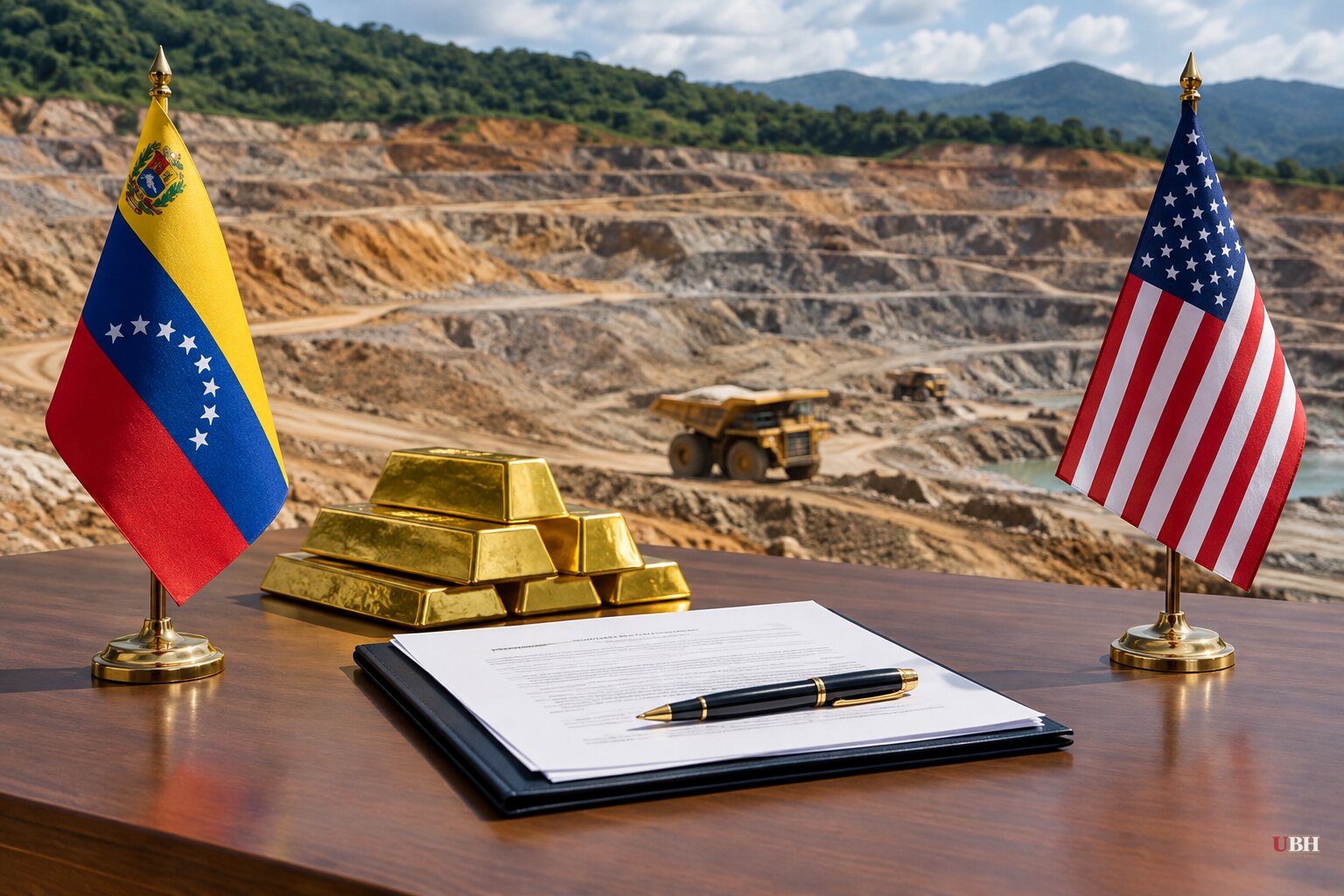
Venezuela signed a mining concession on September 16 at the G20 Energy Abundance Ministerial in Houston, granting New York City-based Heeney Capital operational and export rights to a major gold mine in the El Callao Mining District, according to Heeney Capital's own statement reported by the Epoch Times.
The deal, struck with the Republic of Venezuela and the state-run Corporación Venezolana de Minería, targets a stretch of the Guayana Shield that Heeney Capital calls one of the most prolific gold belts in the world, hosting what it describes as multiple Tier 1 gold assets. Initial investment is estimated at up to $1 billion.
Venezuela's Minister of Mining, Héctor Silva, framed the deal as part of a diplomatic thaw: "These actions are part of efforts to strengthen bilateral relations between Venezuela and the United States, fostering investment to revitalize the national productive sector and consolidate Venezuela's position as a mining and energy powerhouse," he said, per the Epoch Times.
The Path to a Mining Deal
On March 27, the Trump administration opened Venezuela's mining sector to Western companies and lifted sanctions that had blocked outside investors from buying and selling the country's gold and other minerals, the Epoch Times reported. The U.S. Treasury softened sanctions specifically on Minerven, the state mining firm, that same month.
Three weeks before that, Interior Secretary Doug Burgum announced that $100 million worth of gold had already moved from Venezuela to the United States under a separate commercial agreement. The sanctions being unwound dated back to 2018, when Washington froze Maduro-era assets and blocked transactions tied to Venezuela's gold sector.
Other firms have moved fast to take advantage. Canadian exploration company Roland Mineral Enterprises Corp. launched its own acquisition program the same day sanctions loosened, targeting gold, silver and copper deposits, including a stake in the Las Cristinas project, one of the largest undeveloped gold deposits on Earth.
Venezuela's government under Hugo Chávez nationalized the gold industry in 2011, seizing mines from Crystallex International, Gold Reserve and Rusoro Mining. Maduro later carved out roughly 12 percent of national territory for state-controlled mining under what he called the Orinoco Mining Arc in 2016. Investors weighing new deals with Caracas do so with that expropriation history on the record.
The Bigger Prize: 65 Billion Barrels of Oil
The gold deal is the smaller half of a much larger story. Earlier this year, President Trump announced that his administration had entered what he called "THE BIGGEST OIL DEAL IN WORLD HISTORY," according to a social media post reported by the Associated Press. The agreement, negotiated by Secretary of State Marco Rubio, Defense Secretary Pete Hegseth and Venezuela's acting President Delcy Rodríguez, gives the U.S. a stake in 17 oil fields holding an estimated 65 billion barrels of crude.
According to Rodríguez's government, the deal could draw $100 billion in investment into Venezuela's oil industry and generate more than $209 billion in tax revenue for Caracas. A U.S. official familiar with the deal, speaking to the AP on condition of anonymity, said it creates a new private company giving the U.S. 55% effective output, including an ownership stake and rights to buy oil at cost, with Rodríguez granting the company 100-year development rights. That would make the new entity the second-largest corporate holder of proven reserves in the world, behind only Saudi Aramco, the official said.
The timing reflects broader energy pressures. The Iran war disrupted roughly 20% of the world's oil flow through the Strait of Hormuz, and the U.S. Strategic Petroleum Reserve fell below 300 million barrels in early August, more than 100 million barrels lower than where it started 2026, according to the AP. U.S. gas prices were running around $4.07 to $4.09 a gallon versus roughly $3.19 to $3.21 a year earlier, according to AAA figures cited by both Fox News and NPR.
Fox News framed the deal as an energy-security win, quoting OPIS refining executive Jaime Brito calling the added heavy-crude volume "an extraordinarily positive development" for Gulf Coast refiners built to process it. Fox's own reporting acknowledges the catch: Venezuela currently produces only about 1% of the world's oil despite holding an estimated 17% of global reserves, a gap driven by political instability and decayed infrastructure. NPR's coverage, sourced through the AP, was more cautious, repeatedly framing the arrangement as something that could pay off "if realized" and putting weight on Trump's political need to show falling gas prices.
Outstanding Questions
The deal comes roughly nine months after a U.S. military operation captured Maduro and brought him to the United States to face federal narcoterrorism and drug trafficking charges, according to the AP. Rodríguez, his successor, was Maduro's vice president. Whether a government built from the same political apparatus that nationalized foreign mines in 2011 will honor 100-year contracts and billion-dollar concessions is an open question neither the Venezuelan government's statements nor the U.S. official's comments address.
The more immediate test is production. Fox News itself concedes drivers "are unlikely to see benefits quickly." Turning 65 billion barrels of paper reserves and a $1 billion gold concession into actual barrels and ounces requires infrastructure Venezuela hasn't had working capital to build in over a decade. How fast Corporación Venezolana de Minería and the new oil venture can move from announcement to output is the number to watch next.
Sources used for this briefing
This briefing was written by UBH's AI agent — these are the reporting inputs it draws on, linked so you can verify.


