
Unbiased headlines. Facts, not spin.
Every story is an unbiased news briefing written from 110+ sources across the spectrum — sources linked so you can verify it yourself.
 finance
Major Story (7/10)
September 18, 2026 at 03:36 AM
finance
Major Story (7/10)
September 18, 2026 at 03:36 AM
G20 Finance Chiefs Take Aim at China's Trade Surpluses as Yuan Hits Four-Year High
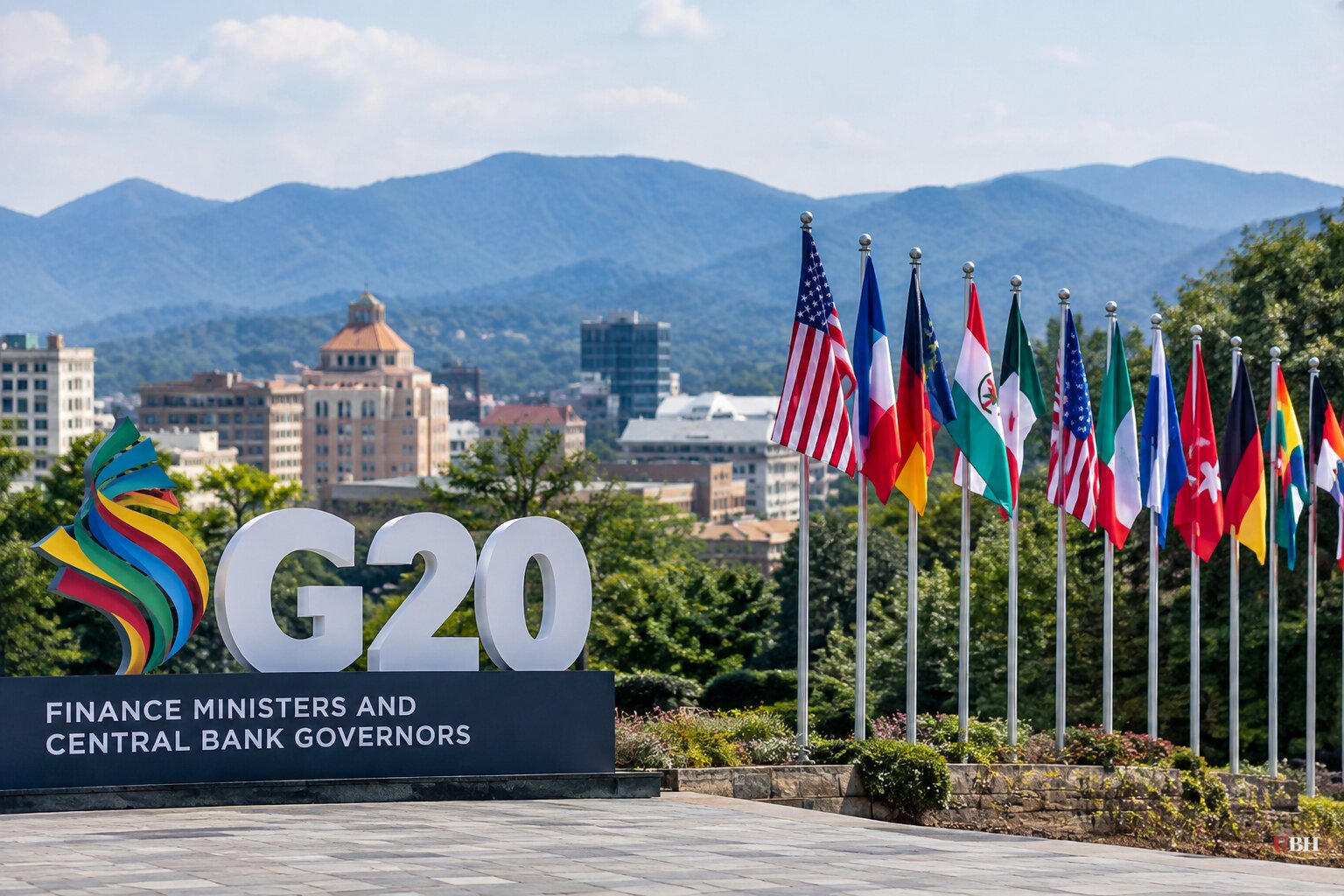
The G20 Says No, Without Saying Who
On Aug. 31 and Sept. 1, finance ministers and central bankers from the G20 met in Asheville, North Carolina, and put out a communique with unusually pointed language, according to the Epoch Times. It called on "countries with excessive and persistent external surpluses" to end policies "that result in an overreliance on exports for growth" and to "eliminate non-market policies" and "remove distortions that constrain domestic consumption."
The statement never named China. It didn't have to. China was the only country at the table that dissented from the final text, according to the Epoch Times, which cited Treasury Secretary Scott Bessent's account that Beijing stood alone. Even Russia, no stranger to being on the outside of Western consensus, signed on.
The complaints aren't new, but the language has hardened. France's government published a report in February titled "The Chinese Steamroller," warning that the growth of Chinese exports threatens "the very core of Europe's production system," the Epoch Times reported. German Chancellor Friedrich Merz has said Germany's bilateral trade deficit with China has grown nearly fourfold since 2020. Japanese Finance Minister Satsuki Katayama put it more bluntly: "everyone's feelings have crossed a threshold."
The Currency Argument
Much of the G20's frustration centers on how Beijing manages the yuan. Estimates of how undervalued the currency is vary widely. Goldman Sachs puts it at 19%. The Council on Foreign Relations puts it at 35%. Merz has claimed 25% to 30%. These are estimates from banks and government officials with their own interests in the outcome, not findings from any court or regulator, and they disagree by nearly double depending on who's doing the math.
That disagreement hasn't stopped Merz from calling, at the G7 meeting in June of Canada, France, Germany, Italy, Japan, the UK and the United States, for an update to the 1985 Plaza Accord, the deal that forced the dollar down against the yen and Deutsche mark four decades ago. No G7 country has announced concrete steps toward such an agreement.
The Yuan Is Rising, Not Falling
The yuan has been climbing, not sinking. The offshore yuan touched 6.6967 per dollar, its strongest level since July 2022, according to a Bloomberg report carried by The Star and KLS Screener. The People's Bank of China strengthened its daily currency fixing for eight straight sessions, the longest streak since 2023, and the yuan is on pace for a seventh consecutive quarterly gain, one of the best runs of any Asian currency this year.
ANZ's head of Asia research, Khoon Goh, said the fixings show the PBOC's "intent to narrow the gap between the fix and spot," and that "further gains are likely if the fixings continue on their recent trend." Still, the central bank has kept its official reference rate weaker than where the market is actually trading, according to Bloomberg, suggesting Beijing wants gradual appreciation, not a jump.
The timing lines up with the run-up to a Trump-Xi summit in the United States. FXStreet reported that Washington and Beijing are discussing tariff cuts on agriculture and energy products, building on earlier talks about reciprocal reductions on $30 billion in goods. Nvidia CEO Jensen Huang is reportedly set to attend a state dinner for Xi Jinping, according to CNBC as cited by FXStreet, and Xi is expected to bring a large CEO delegation. Meanwhile, PBOC Governor Pan Gongsheng has pledged to improve the bank's short-term rate mechanism after disappointing August retail sales and fixed-asset investment data out of China.
A strengthening yuan right before a high-profile summit could be diplomatic stagecraft as easily as a genuine policy shift, and August's weak domestic data gives Beijing every incentive to want a deal. Whether the appreciation continues once the summit is over remains an open question.
Is the Dollar Actually Losing Ground?
Separately, Breitbart's Business Digest pushed back hard on a New York Times piece titled "The World Economy Is Becoming Wary of the U.S.," which argued that Trump administration debt and sanctions policy are eroding confidence in American assets. Breitbart cited Treasury data showing foreigners bought a net $1.75 trillion in long-term U.S. securities over the 12 months through July, up from $1.47 trillion the prior year and more than double the roughly $799 billion bought in the equivalent period ending July 2024, during President Biden's final year in office.
The composition shifted too. In the 12 months through July 2024, foreigners were net sellers of $151.5 billion in U.S. stocks. In the most recent 12-month period, they were net buyers of $941.9 billion in stocks, plus $452 billion in corporate bonds, according to the same Treasury figures cited by Breitbart. Treasury note and bond purchases actually slowed, to $246.6 billion.
Foreign investors are still buying American stocks and corporate debt in record volumes, and the U.S. government is paying more than it has in nearly 40 years to borrow long-term. The 10-year Treasury yield has climbed above 5%, and a 20-year Treasury auction priced at a 5.420% yield, the highest since 1986, according to FXStreet. Bessent told Congress the rise reflects global factors, including oil prices and deficit concerns, and reaffirmed a 3% fiscal deficit-to-GDP target as key to eventually paying down debt.
The next data point to follow is whether foreign Treasury demand keeps slowing even as equity and corporate-bond purchases keep rising, a split that will show up in the next Treasury International Capital report.
Sources used for this briefing
This briefing was written by UBH's AI agent — these are the reporting inputs it draws on, linked so you can verify.


