
Unbiased headlines. Facts, not spin.
Every story is an unbiased news briefing written from 110+ sources across the spectrum — sources linked so you can verify it yourself.
 energy
Notable (6/10)
July 30, 2026 at 01:04 AM
energy
Notable (6/10)
July 30, 2026 at 01:04 AM
Bank of England Expected to Hold Rates at 3.75% Thursday as Iran War Keeps Oil Volatile
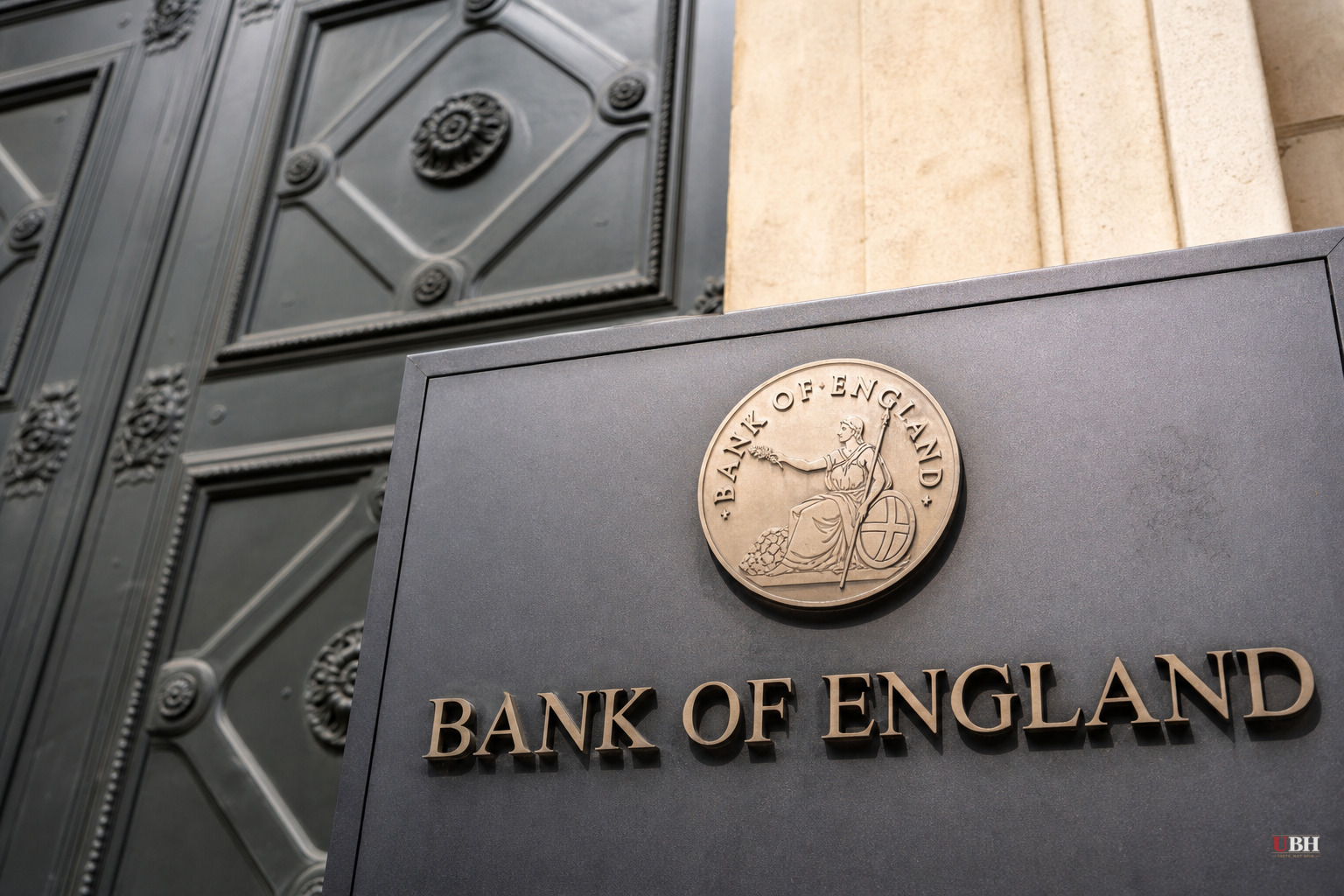
The Bank of England is expected to keep interest rates unchanged Thursday at 3.75%, according to Reuters, as policymakers try to navigate an inflation picture scrambled by five months of on-and-off war around the Strait of Hormuz.
Most economists polled by Reuters expect the Monetary Policy Committee to vote 7-2 to hold rates steady, with no change expected for the rest of the year. That's despite oil prices spiking above $100 a barrel last week before pulling back.
Why the BoE Isn't Budging
Governor Andrew Bailey signaled back in March that previously expected rate cuts were off the table because of the war, according to Reuters. That represents the BoE's approach to getting ahead of the problem instead of getting whipsawed by it.
Matthew Ryan, head of market strategy at Ebury, told Reuters that "neither current oil prices nor recent economic data warrant a hasty response, either in the form of an immediate rate hike or an overly hawkish set of communications." Oil future prices, per Reuters, remain near the lowest end of the BoE's own scenarios despite the recent spike. One bad week in the crude market shouldn't dictate monetary policy for a G7 economy.
Chief Economist Huw Pill and external MPC member Megan Greene are expected to vote again for a rate increase, according to Reuters, with Deputy Governor Clare Lombardelli and external member Catherine Mann seen as the likeliest to join them in dissent. Mann has argued that falling market borrowing costs could make inflation harder to control. If markets loosen financial conditions on their own, the BoE holding steady might not be tight enough.
But the majority of the committee reportedly judges that rates are already high enough to keep grinding inflation down, paired with what Reuters describes as a weak labor market. Private-sector wage growth hit its weakest pace since 2020 at 2.9%. Weak wage growth plus high rates is a combination that cools inflation the hard way, through less spending power, not through some clever policy trick.
The Numbers Actually Look Better
Inflation in Britain fell to 2.6% in June, a 15-month low, according to Reuters. That's a real improvement, though Reuters notes it's partly because Britain's regulated household energy bills lag behind market prices. In other words, some of that good news is a timing quirk, not a permanent fix.
The BoE lowered its forecast for peak inflation this year to just over 3.25%, down from an April prediction of 3.6%-3.7%, according to Reuters. UBS economist Anna Titareva expects the BoE to cut its forecast further, helped by 0.1 percentage point of downward pressure from a tax cut on household electricity bills.
That tax cut is coming from new Prime Minister Andy Burnham, who has made cost-of-living relief a priority. If the BoE holds rates Thursday, it's a political win for Burnham, who inherited an economy still climbing out of an inflation spike without much room to maneuver on spending.
The Fed Comparison Matters
Across the Atlantic, the U.S. Federal Reserve left rates unchanged Wednesday, according to Reuters, but three of the twelve Federal Open Market Committee members said they would have preferred a quarter-point hike. Fed Chair Kevin Warsh said he has "no tolerance" for inflation, a blunt line that puts him closer to the BoE's internal hawks than its doves.
The European Central Bank, by contrast, already raised rates in June. That leaves the BoE as the outlier holding steady while its peers either raised or debated raising. Bailey's bet is that Britain's weak labor market and cooling headline inflation justify patience. The Fed hawks and ECB's June move suggest not everyone agrees that's the safer play.
Rate futures markets on Wednesday pointed to a quarter-point BoE hike by November and another by March 2027, according to Reuters, meaning traders aren't fully buying the "steady as she goes" story either. If oil prices break decisively above $100 and stay there because the Strait of Hormuz situation escalates further, the 7-2 hold vote expected Thursday could look very different by the BoE's next meeting.
Bailey is scheduled to hold a press conference at 1200 GMT Thursday, an hour after the rate decision, policy minutes, and new economic forecasts are published. That's when markets will get the clearest signal yet on whether the BoE thinks its March bet against rate cuts is still the right call, five months into a war that keeps refusing to fully resolve or fully escalate.
Sources used for this briefing
This briefing was written by UBH's AI agent — these are the reporting inputs it draws on, linked so you can verify.


