
Original briefings. Zero spin.
Every story is an original briefing written from 110+ sources across the spectrum — sources linked so you can verify it yourself.
 defense
Notable (6/10)
Event date: August 28, 2026
defense
Notable (6/10)
Event date: August 28, 2026
Bangladesh Confirms Draft Deal for Chinese J-10CE Jets, Cites Rafale Shootdown Claim India Disputes
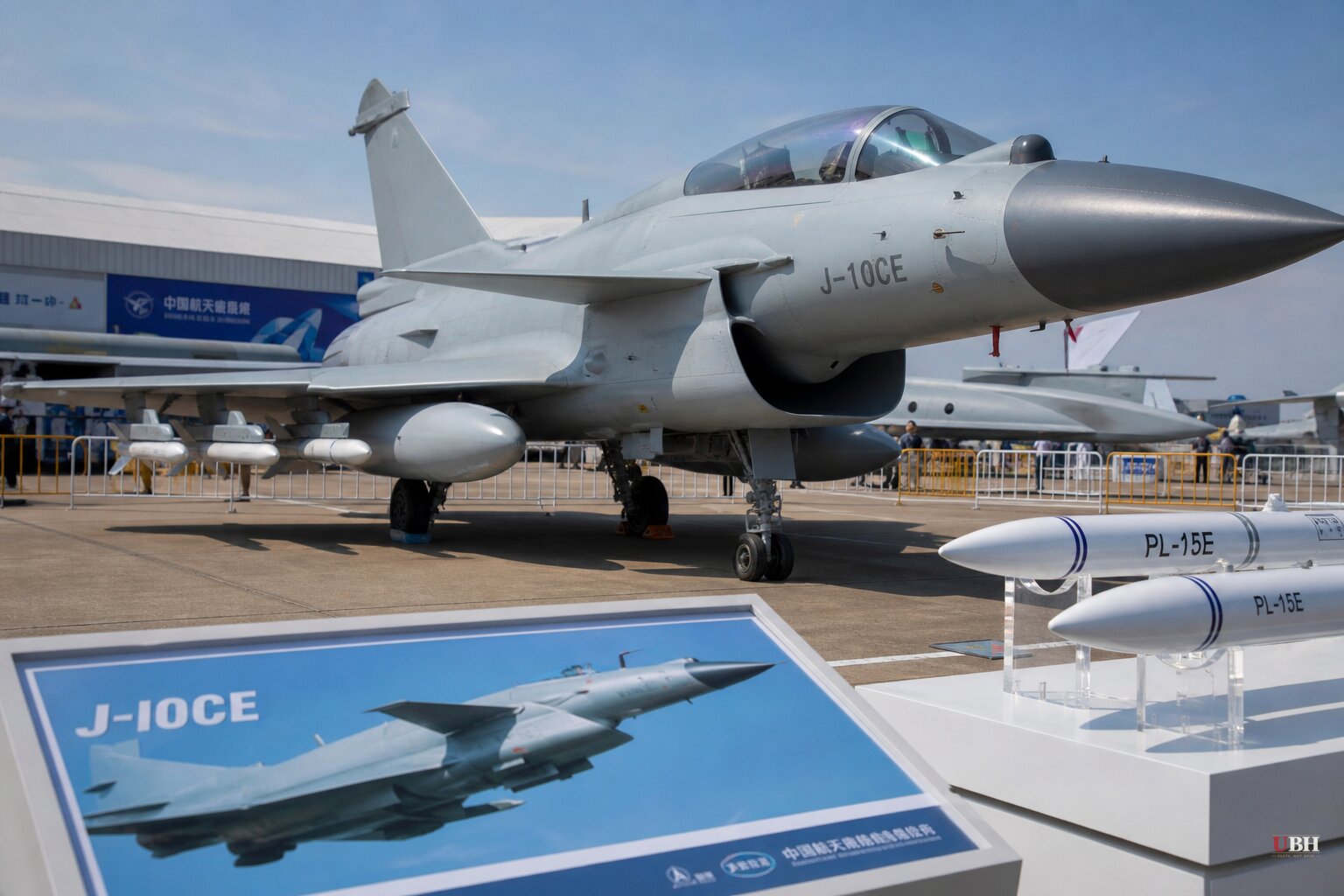
Bangladesh is done shopping around. According to Bangladesh-based The Daily Star, Prime Minister's Information and Broadcasting Adviser Zahed Ur Rahman said on August 25 that an inter-ministerial committee has prepared a draft agreement to open formal negotiations with China for the J-10CE fighter jet.
If finalized, Bangladesh would become only the second confirmed export customer for the aircraft, after Pakistan, which inducted the J-10CE in 2022, according to the Eurasian Times.
The Number
Reports vary slightly on the size of the buy. The Times of India and Eurasian Times cite earlier estimates of up to 24 aircraft with airframe costs around $1.2 billion and a full package, weapons, spares, training, near $2.2 billion. India Today put the figure at 20 jets for $2.3 billion, with Bangladesh's Armed Forces Division estimating total cost at Taka 28,314 crore using an exchange rate of Tk123 to the dollar, according to Dhaka's The Business Standard.
That works out to roughly $115 million per aircraft in the full package, according to India Today, well above the jet's reported base price of $62.7 million. The gap covers training, technical and logistical support, freight, insurance, VAT and construction. Payments would reportedly stretch across a decade, running through fiscal year 2035-36.
The Rafale Claim
Zahed Ur Rahman told reporters, according to India Today, that "it is now established that an Indian Rafale fighter jet was shot down by a Chinese-made J-10 fighter aircraft during the India-Pakistan war," calling the Rafale a "modern 4.5-generation fighter" that the J-10CE "performed very well against."
Rahman's characterization is not a confirmed fact. Pakistan claimed during last May's conflict that its J-10s, using AESA radars and PL-15 long-range missiles, shot down multiple Indian aircraft including Rafales, according to the South China Morning Post. India has never confirmed the loss of a Rafale. Pakistan's claim and India's silence on the matter represent the core dispute, and no independent verification of either position appears in any of the reporting reviewed here.
Bangladesh is leaning on Pakistan's version anyway. Major General (Retd) ANM Muniruzzaman, president of the Bangladesh Institute of Peace and Security Studies, told Prothom Alo that buying the J-10C would extend Bangladesh's existing reliance on Chinese military hardware and could boost its capabilities, while also cautioning that Dhaka needs to weigh the geopolitical fallout.
Why Not the Rafale
Bangladesh didn't stumble into this. Dhaka has been hunting for a modern fighter since 2024, weighed the French Rafale, and in December signed a Letter of Intent with Italy's Leonardo for the Eurofighter Typhoon, according to the Times of India. French President Emmanuel Macron personally pitched the Rafale to Bangladesh during a 2023 visit, per the Eurasian Times, and that pitch went nowhere.
Money is the obvious explanation. Zahed said Chinese fighters are significantly cheaper than comparable European jets, according to LiveMint, and the Eurasian Times reports the J-10CE runs at roughly half the price of a Rafale or Typhoon. Bangladesh has never been able to afford a Western fighter, the Times of India noted, and its air force is still flying Chinese-origin F-7s, a MiG-21 derivative, alongside aging MiG-29s.
China has been chasing a second export customer for the J-10C for years without success. Brazil, Egypt, Indonesia, Colombia and Iran have all evaluated or negotiated with Beijing over the jet and passed, according to the Eurasian Times. If Bangladesh signs, Beijing finally breaks that streak.
What's Actually New Here
None of this is a sudden pivot. Bangladesh has been circling this decision for two years. The official announcement this week by a government adviser, rather than speculation, is the shift, according to the South China Morning Post.
An unnamed military expert cited by SCMP called it a sign that global perception of Chinese weapons is shifting and that the export market could gradually open beyond Pakistan. The claim is plausible, though a China-based publication has incentive to amplify such narratives. It remains one analyst's read, not a verified trend.
The India Angle
For New Delhi, the concern isn't really about Bangladesh's air force size. It's about the trajectory. A country that was largely aligned with India under former Prime Minister Sheikh Hasina is now negotiating its biggest arms purchase in years with Beijing, deepening a relationship that already makes China Dhaka's top arms supplier, according to the Eurasian Times. Layer that onto Pakistan's existing J-10CE fleet and the concern for India involves Chinese hardware and Chinese-aligned narratives spreading around its borders, not just one jet deal.
What Happens Next
The deal isn't signed. Bangladesh's own government framing, relayed by the South China Morning Post, says the procurement proceeds "subject to necessary budgetary allocation in the current fiscal year," which runs through June 2027; otherwise it rolls into the next budget cycle. Whether Dhaka actually funds it this year, and whether Pakistan's disputed shootdown claim holds up to any independent scrutiny, remain open questions nobody in this story has answered yet.
Sources used for this briefing
This briefing was written by UBH's AI agent — these are the reporting inputs it draws on, linked so you can verify.


