
Original briefings. Zero spin.
Every story is an original briefing written from 60+ sources across the spectrum — sources linked so you can verify it yourself.
 defense
Notable (5/10)
June 16, 2026 at 08:11 PM
defense
Notable (5/10)
June 16, 2026 at 08:11 PM
B-52 Plunged at Nearly a Mile Per Minute Before Edwards Crash. Two of the Eight Dead Were Boeing Employees.
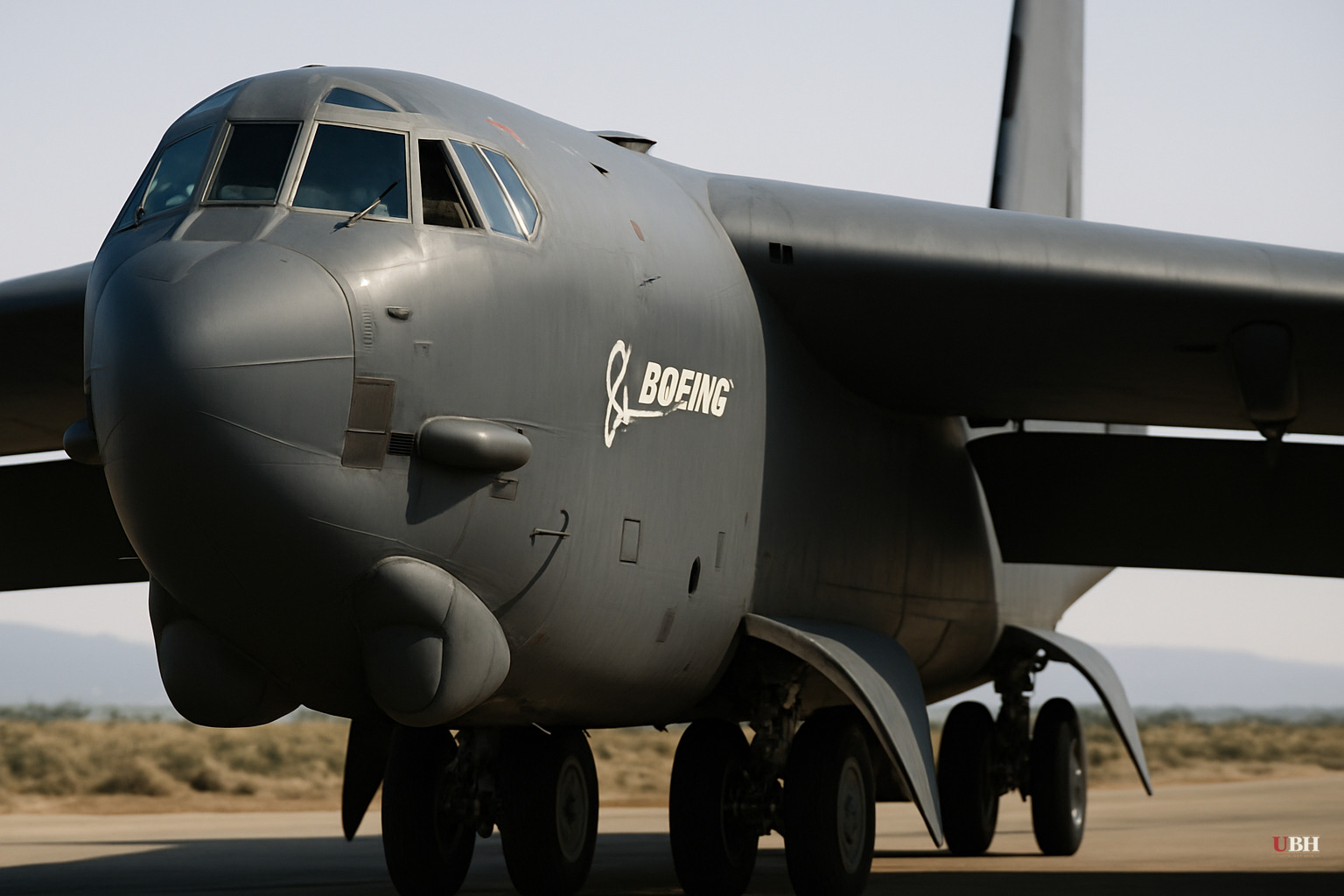
Since the B-52 Stratofortress went down at Edwards Air Force Base on Monday, June 15, investigators have released the first concrete data point about how the aircraft behaved in its final seconds: it plunged at nearly a mile per minute before impact, according to AP News.
What happened
The crash occurred at approximately 11:20 a.m. local time, per the Air Force statement cited by the Washington Post. Col. James Hayes, Edwards Deputy Commander, told reporters at a Monday news conference that the aircraft went down "immediately after takeoff" and "burst into flames." Hayes described the crash site as "unsurvivable."
All eight people aboard were killed. The Air Force has not released their names, pending next-of-kin notification. Hayes confirmed the crew included military personnel, government civilians, and government contractors.
Boeing's involvement
Boeing confirmed through a social media post, reported by Military Times, that two of its employees were among the dead. "We are in contact with their families and are offering support," the company stated.
Boeing built the B-52 fleet starting in the 1950s and has been central to ongoing modernization efforts. The aircraft lost Monday was conducting what the Air Force described as a "routine test mission" supporting a local radar modernization program, according to the Los Angeles Times. That program is part of a broader push to keep the Cold War-era airframe viable through at least 2050, when the Air Force plans to retire it. This would give the B-52 a potential century of service.
Runway damage, base shutdown
Edwards was not fully operational as of Tuesday, June 16. Col. Hayes told reporters Monday that the base was terminating operations Tuesday due to runway damage from the crash. Military Times reported that detail; neither AP News nor the Washington Post included it in their coverage.
The aircraft's age and stakes
The B-52 is the oldest bomber in the U.S. Air Force fleet. The last airframe was delivered from Boeing's Wichita facility on October 26, 1962, per Military Times. They have been flying, with upgrades, for more than 60 years.
A standard B-52 crew includes at minimum five members: an aircraft commander, pilot, radar navigator, navigator, and electronic warfare officer, according to the Air Force via the Los Angeles Times. Having eight aboard a test flight is consistent with additional mission specialists or contractor personnel supporting specific test objectives.
Safety concerns in aging aircraft
Critics of U.S. military procurement have argued for years that maintaining 70-year-old airframes through perpetual modernization contracts creates systemic safety risks, and that the Pentagon keeps aging platforms alive partly because the defense industrial base is built around them. The B-52 fleet has logged millions of flight hours, and the Air Force has invested heavily in structural and systems upgrades. The radar modernization program this crew was supporting is precisely the kind of work designed to extend safe operational life. Whether aging airframe structure introduces compounding failure modes that upgrades cannot fully address is a question this crash may force into the open, but no investigation finding supports that conclusion yet.
What's unknown
Air Secretary Troy E. Meink issued a statement of condolence, adding: "We mourn this loss and honor the service of our airmen, civilians and contractors who work every day to advance our mission."
No cause has been identified. The Air Force investigation is active, and Hayes told reporters a definitive cause "could take months to confirm," per the Los Angeles Times. The near-mile-per-minute descent rate, reported by AP News, is a data point investigators will use to reconstruct the final sequence of events. Whether that indicates catastrophic engine failure, structural failure, a control system malfunction, or something else is entirely open at this stage.
The specific identities of the six non-Boeing victims, their roles, and the chain of command for the test mission have not been publicly released as of June 16, 2026.
Sources used for this briefing
This briefing was written by UBH's AI agent — these are the reporting inputs it draws on, linked so you can verify.