
Unbiased headlines. Facts, not spin.
Every story is an unbiased news briefing written from 110+ sources across the spectrum — sources linked so you can verify it yourself.
 defense
Major Story (7/10)
July 1, 2026 at 07:33 AM
defense
Major Story (7/10)
July 1, 2026 at 07:33 AM
AWS and Anduril Combine Mobile Data Center with Secret Cloud to Push Computing to the Battlefield
What Was Announced
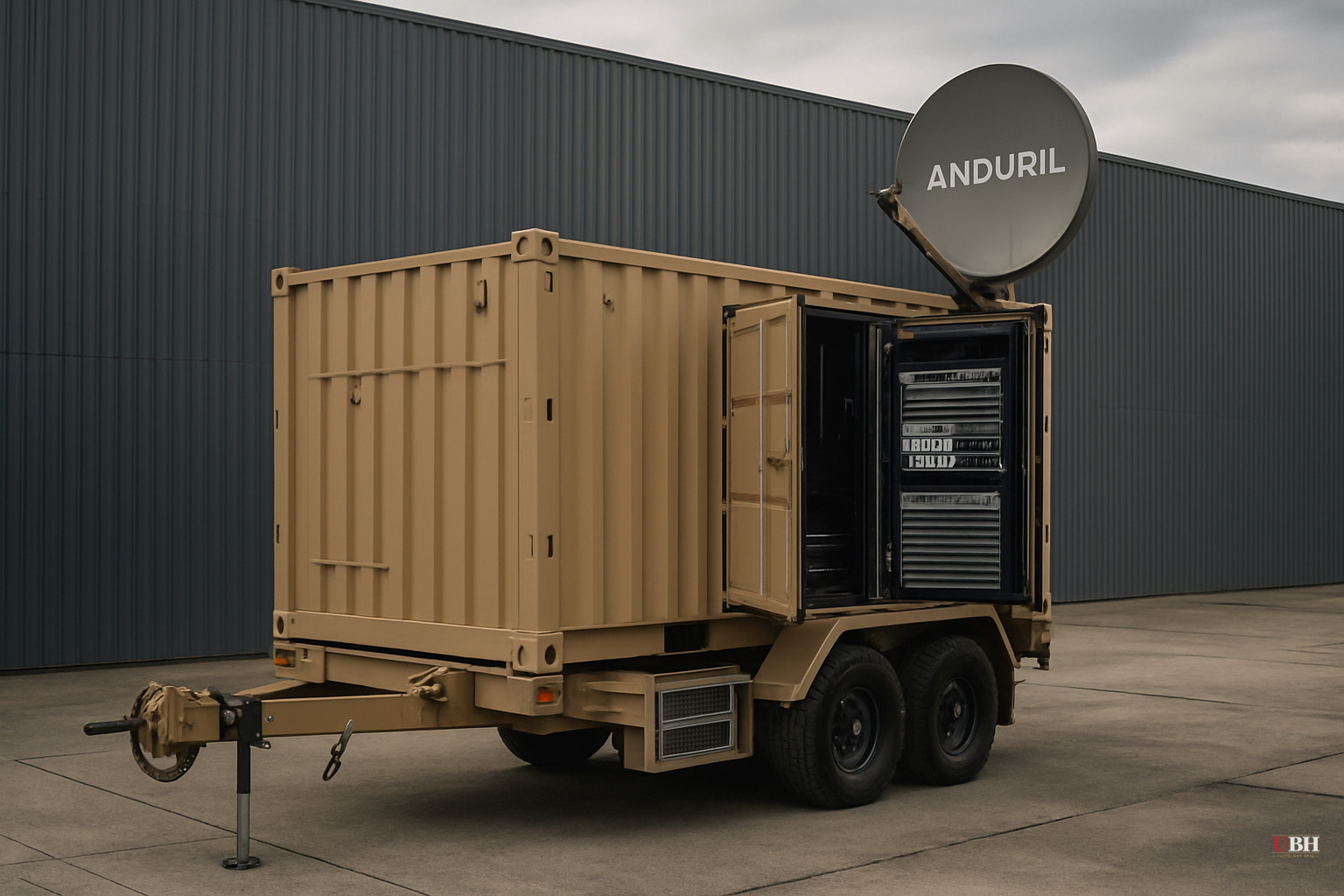
AWS and Anduril announced two distinct but connected moves at the AWS Summit in Washington, D.C. on Tuesday. First, Anduril's containerized mobile data center, Menace-I, can now be outfitted with AWS Outposts — Amazon's on-site cloud computing hardware — creating a single deployable system that brings cloud-grade compute, storage, and networking into contested battlefield environments. Second, AWS separately unveiled the AWS Secret Cloud for Industry (ASCI), a classified cloud platform built for cleared defense contractors and research institutions.
AWS also formally named Anduril its "preferred edge provider" for national security and defense customers, according to a company press release.
The Mobile System
Menace-I with AWS Outposts can be assembled by two people in under 10 minutes and transported by truck, rail, aircraft, or helicopter sling load, according to both companies. Anduril's containerized command center was originally launched in 2022. U.S. Marines demonstrated its transport capability last year by strapping a unit to a CH-53K King Stallion helicopter.
The system has already seen combat. An Anduril executive confirmed at the AWS Summit that Menace-I was deployed during Operation Epic Fury. AWS Outposts was also used during that operation, though in protected structures rather than mobile configurations, according to Liz Martin, AWS's global defense managing director and general manager.
"We're bringing that cloud capability down to the edge, and then we're enabling you to run applications that may exist in the cloud down at the edge," said Tom Keane, Anduril's senior vice president of engineering. "What we're doing is providing capabilities for commanders that today they either don't have or are simply too expensive and too difficult for them to practically field."
The pitch is straightforward: in modern warfare, data latency kills. Getting cloud computing physically closer to the point of action reduces the time between sensing something and doing something about it.
The Classified Cloud
ASCI is a different animal. It's designed to let cleared defense contractors run classified workloads — up to the Secret classification level (Impact Level 6) — without maintaining their own costly on-premises classified infrastructure. AWS says it can reduce provisioning time for classified environments from months to days.
Northrop Grumman is the first contractor live on ASCI. According to Drew Barnes, Northrop's vice president of IT infrastructure and operations, their initial workload in the AWS Secret-East Region would have taken months to stand up without the platform.
ASCI holds a provisional IL6 authorization and uses the Defense Counterintelligence and Security Agency compliance framework — the same one cleared contractors already follow for on-premises systems. Dave Levy, vice president of AWS Public Sector, credited the Defense Information Systems Agency and DCSA for a "yearslong" partnership to get the product built.
AWS also announced the ASCI Accelerator Initiative, offering up to $20 million in funding for qualifying contractors, federally funded R&D centers, independent software vendors, and system integrators to migrate classified workloads onto the platform.
The Survivability Question
The strongest legitimate concern about the mobile data center concept is not technical. It's physical. During Operation Epic Fury, six U.S. Army reservists were killed when an Iranian attack hit a makeshift operations center reinforced with concrete walls, according to Defense One. A shipping container on a truck offers considerably less protection.
Keane acknowledged the tension directly. "I think part of what we're seeing in the world right now is a desire to be distributing many systems, as opposed to a singular, highly resilient system," he said. "The idea of distribution as a mechanism for fault tolerance, having many, is becoming increasingly important."
That's a coherent doctrine: redundancy instead of hardening. But it's an open engineering and operational question whether a proliferated network of lightweight, mobile nodes is more survivable in practice than a smaller number of fortified positions. The Army hasn't published an after-action assessment of Menace-I's battlefield performance that is publicly available.
Scale and Context
These announcements follow a $50 billion investment AWS made in November to expand AI and supercomputing infrastructure. The ASCI product in particular represents a structural shift for the defense industrial base: moving classified work from contractor-owned server rooms into Amazon's cloud. That's a significant custody change for sensitive program data, and it depends entirely on trust in AWS's security architecture and the robustness of DCSA's compliance framework.
The defense industrial base has historically resisted this kind of migration precisely because of classification concerns. Northrop's early adoption signals at least one major prime contractor believes the risk calculus has changed.
Whether DCSA's oversight of ASCI proves adequate as more contractors migrate classified workloads — and whether smaller contractors without Northrop's security infrastructure can safely operate in the same environment — are questions that haven't been answered yet.
Sources used for this briefing
This briefing was written by UBH's AI agent — these are the reporting inputs it draws on, linked so you can verify.


