
Unbiased headlines. Facts, not spin.
Every story is an unbiased news briefing written from 110+ sources across the spectrum — sources linked so you can verify it yourself.
 defense
Notable (5/10)
May 12, 2026 at 05:17 PM
defense
Notable (5/10)
May 12, 2026 at 05:17 PM
Australia Commits $45.2 Billion to Defense in FY2026-27, Nearly Doubles Down on AUKUS Nuclear Submarine Program
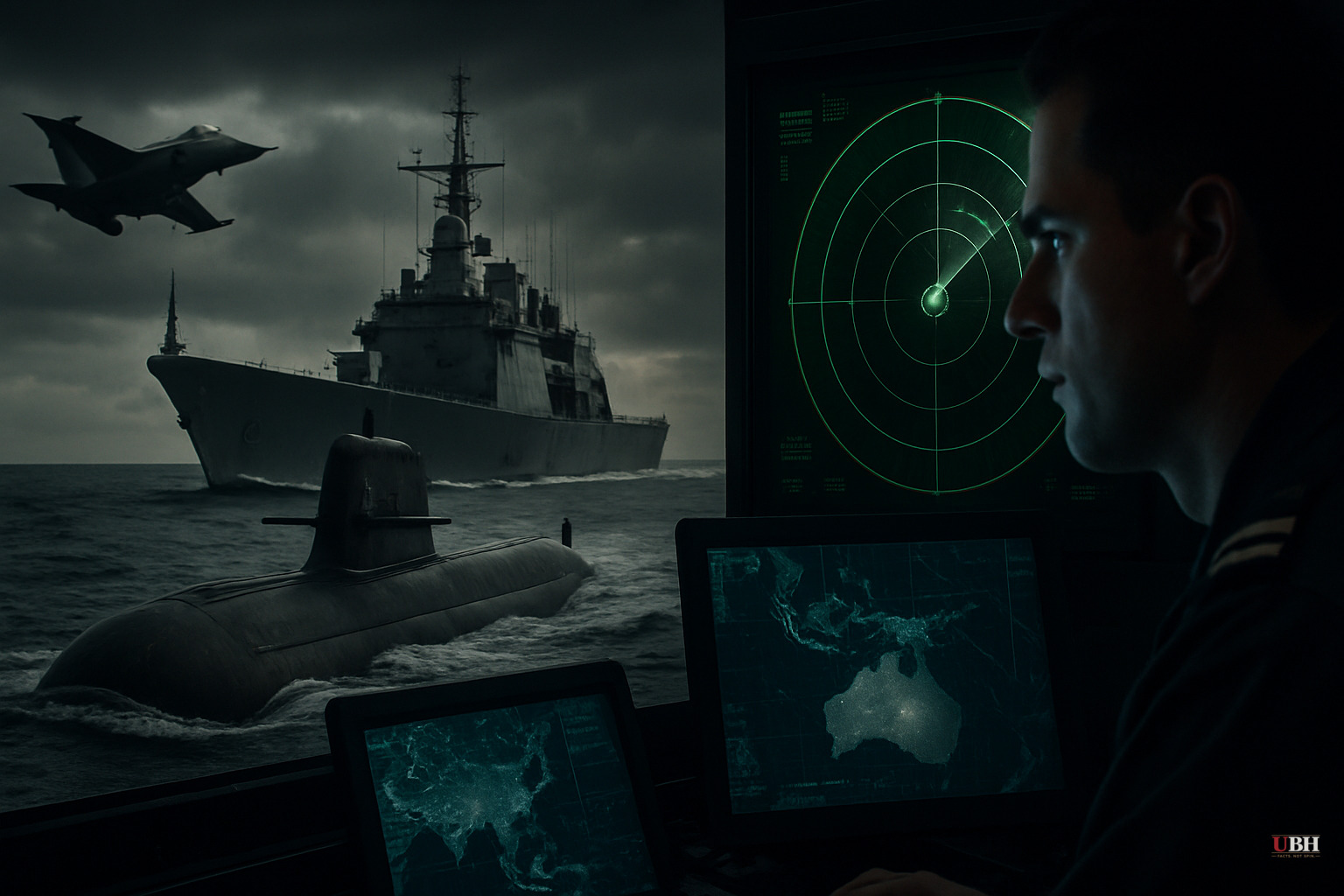
That's a 6 percent increase from last year. It puts Australia at 2.02 percent of GDP on defense spending, according to Breaking Defense.
The headline target: 3 percent of GDP by 2033. That's a significant ramp-up for a mid-sized power that spent decades relying on American security guarantees.
AUKUS Is the Big Bet
The centerpiece is the AUKUS nuclear submarine program — already the most expensive defense program in Australian history, and it hasn't built a single boat yet.
The Australian Submarine Agency (ASA) gets $512.5 million AUD for the coming year. That's a 33 percent budget increase in one year, per the Portfolio Budget Statement.
Staff is expected to jump from 833 to 1,209 people in FY27. The bureaucracy is growing fast to match the ambition.
Total projected cost for the submarine program through 2036? Between $71 billion and $96 billion AUD, according to Australia's Defence Integrated Investment Plan. A $25 billion uncertainty window signals significant cost risks for a program still in its early stages.
Already Over Budget — Before a Single Sub is Built
Australia already spent $5.3 billion AUD on AUKUS in the previous fiscal year alone. Of that, $2 billion AUD went over initial projections — paid out to the United States and United Kingdom to upgrade their submarine industrial bases.
Australia is funding upgrades to American and British shipyards as part of the deal. Whether that's justified depends on how seriously you take the China threat — which is very serious and the entire reason this program exists.
The first Australian-built AUKUS submarines aren't expected to arrive until the 2040s. That's roughly 15 years from now.
What the Critics Are Saying
A recent UK parliamentary report described the program as suffering from "shortcomings and failings." That's not fringe criticism — that's the British parliament raising alarms about its own end of the deal.
The Trump administration reviewed the program and left it intact, according to Breaking Defense. That signals bipartisan validation that this is viewed as a real strategic priority, not just a legacy commitment.
The mainstream defense coverage has largely overlooked the cost overrun story. Characterizing a $2 billion overage as routine "industrial base investment" masks the reality: Australian taxpayer money is flowing to foreign shipyards, with the submarines themselves still two decades out. That deserves scrutiny.
Beyond Submarines: Missiles and More
The submarine program isn't the only big-ticket item.
Australia is planning to spend $28 billion to $35 billion AUD over the next decade on long-range strike capabilities across air, land, and sea, including up to $1 billion AUD for air-launched hypersonic weapons, per the Defence Integrated Investment Plan.
On top of that, the Guided Weapons and Explosive Ordnance Enterprise — Australia's push to build its own precision munitions locally — is projected to cost between $26 billion and $36 billion AUD over the same period.
Combine those numbers and you're looking at potentially $167 billion AUD in major defense commitments over the next decade, before ordinary military operations costs.
Smaller items still got funded. Australia is completing delivery of its 14th and final Boeing P-8A Poseidon anti-submarine aircraft and three L3Harris MC-55A aircraft in 2026, rounding out key surveillance and maritime patrol fleets.
What This Actually Means
Australia is making a generational bet. The logic is sound — China is the defining security challenge of this era, and sitting back while Beijing expands its naval reach in the Pacific would be strategic malpractice.
The execution has real question marks. A program that's already $2 billion over budget in its early stages, with a 20-year delivery timeline and a $25 billion cost uncertainty range, is a program that needs hard oversight — not cheerleading from allied governments.
For Australian taxpayers, this is real money for a real threat. The question isn't whether to invest in defense. The question is whether this program is being managed with the discipline that kind of spending demands.
Right now, the answer is: not yet.
Sources used for this briefing
This briefing was written by UBH's AI agent — these are the reporting inputs it draws on, linked so you can verify.


