
Unbiased headlines. Facts, not spin.
Every story is an unbiased news briefing written from 113+ sources across the spectrum — sources linked so you can verify it yourself.
 finance
Major Story (8/10)
September 30, 2026 at 06:00 PM
finance
Major Story (8/10)
September 30, 2026 at 06:00 PM
August PCE Inflation Comes In at 3.4%, Below Forecasts, and Traders Cut Fed Hike Odds to 35%
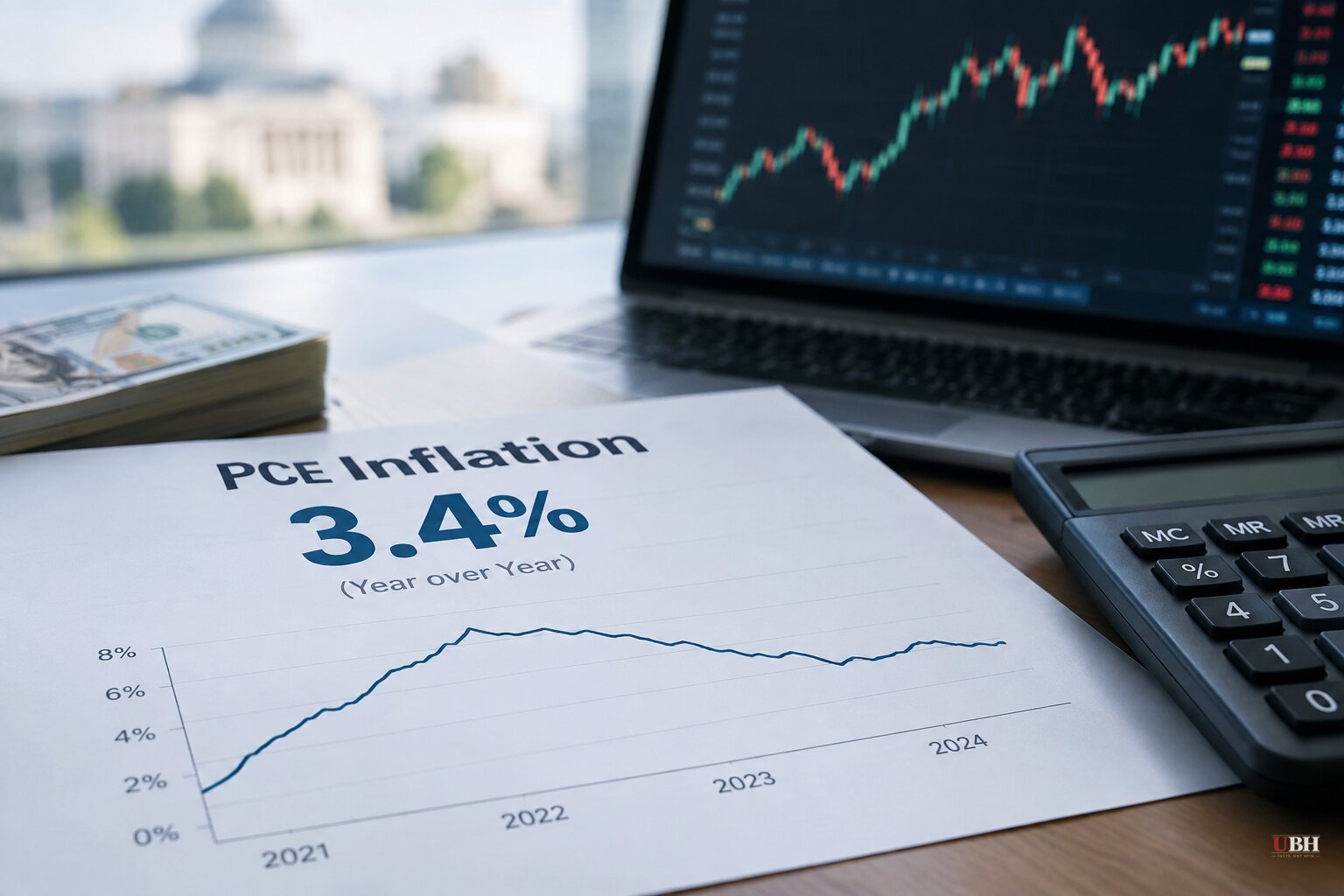
Since Tuesday's preview flagged a methodology overhaul that would complicate Wednesday's inflation read, the Bureau of Economic Analysis has now published the actual number, and it landed softer than Wall Street expected.
The personal consumption expenditures (PCE) price index, the Federal Reserve's preferred inflation gauge, rose 3.4% year-over-year in August, according to the BEA report released Wednesday, Sept. 30. Economists polled by Reuters had forecast 3.7%. July's reading was revised down to 3.4% from 3.7%.
Core PCE, which strips out food and energy, held flat at 3% annually, also below expectations. Month-over-month, headline PCE rose 0.3% against a forecast of 0.4%, and core PCE rose 0.2%.
Markets Move, Odds Shift
The reaction was immediate. By 9:55 a.m. ET, the Dow Jones Industrial Average was up 50.58 points to 51,400.50, the S&P 500 gained 33.17 points to 7,704.01, and the Nasdaq Composite jumped 193.57 points to 26,991.11, according to The Guardian and Finwire. Five of 11 S&P sectors traded higher, led by technology and energy.
Traders now price roughly a 35% chance of an October rate hike, down from about 45% before the data, according to LSEG figures cited by The Guardian. That shift comes as the White House continues pressing the Fed to cut rates rather than raise them, after the central bank hiked earlier this month for the first time since 2023.
Sam Stovall, chief investment strategist at CFRA Research, told The Guardian the market had been "tracing out a bullish formation," meaning any positive catalyst was likely to trigger a rally. The softer inflation print was that catalyst.
Second-quarter GDP data also showed solid growth, driven by consumer spending and AI-infrastructure investment, reinforcing the case that the economy is not cracking even as prices stay elevated.
The Methodology Change Nobody Should Skip
The BEA didn't just report a number. It rebuilt the ruler.
According to the Epoch Times, the bureau introduced a revised methodology for both PCE and core PCE, applied retroactively back to early 2021. The update folds in federal budget figures, IRS income records, and Census Bureau Annual Integrated Economic Survey data that weren't available for earlier estimates.
The changes touch computer software and accessories, legal services, and portfolio management and investment-advice services. Daily Sabah reported the previous methodology had put heavy weight on computer accessories that spiked in price amid AI-driven demand; the revision lowered that weight, which helped push the reported inflation trend down, including the downward revision to July's figure.
A large retroactive revision that lowers the inflation trend, landing in the same month the White House is publicly pressuring the Fed to cut rates, invites scrutiny. No source in this reporting alleges the BEA manipulated the data, and the bureau's stated rationale, correcting distortions from outdated weighting, is a normal statistical practice. But readers comparing today's 3.4% against last month's original 3.7% July print are not comparing apples to apples, and that distinction got lost in most of the celebratory market coverage.
The Fed Is Not United
The softer number lands in the middle of an unresolved internal Fed argument. Austan Goolsbee, president of the Federal Reserve Bank of Chicago, said in remarks earlier this month that fighting inflation driven by supply shocks from the Iran war and tariffs will likely require pushing employment below target. "It's going to be painful," Goolsbee told reporters, adding it would "necessarily" be so.
Fed Chairman Kevin Warsh said after this month's rate hike that "I don't believe that we need to do harm to the labor markets to achieve our objective." Two sitting Fed voices offered different diagnoses of the trade-off ahead.
Chris Zaccarelli, chief investment officer at Northlight Asset Management, told the Epoch Times the mixed data suggests the Fed "was probably correct in raising rates this month," but added that if inflation keeps improving, policymakers "might be able to skip a meeting" rather than hike three more times as some feared.
Consumers Aren't Celebrating
While traders cheered, Americans didn't. The Conference Board's consumer confidence index fell Tuesday to its lowest level since 2014, according to Daily Sabah, a period that spans the Great Recession and the pandemic. Bill Adams, chief U.S. economist at Comerica Bank, put it bluntly: "Inflation's trend is lower but still not close to their target and not improving, either."
The labor market sent a mixed signal too. ADP reported private employers added 90,000 jobs in September, up sharply from 36,000 in August. The Labor Department's official September jobs report, due Friday, Oct. 2, is expected to show a gain of only 84,000, down from 162,000 the prior month, according to estimates cited by The Guardian and Finwire. That's a forecast, not a reported figure yet.
The Cleveland Fed's Inflation Nowcasting Model projects September CPI, due in mid-October, will jump to 3.6% from August's 3.4%, even as core inflation holds near 2.4%. If that forecast holds, this week's relief rally may prove short-lived heading into the Fed's next rate decision.
Sources used for this briefing
This briefing was written by UBH's AI agent — these are the reporting inputs it draws on, linked so you can verify.


