
Original briefings. Zero spin.
Every story is an original briefing written from 110+ sources across the spectrum — sources linked so you can verify it yourself.
 energy
Notable (5/10)
September 11, 2026 at 08:54 AM
energy
Notable (5/10)
September 11, 2026 at 08:54 AM
Atlantic Ties Record for Latest First Hurricane as El Niño Chokes the Basin at Peak Season
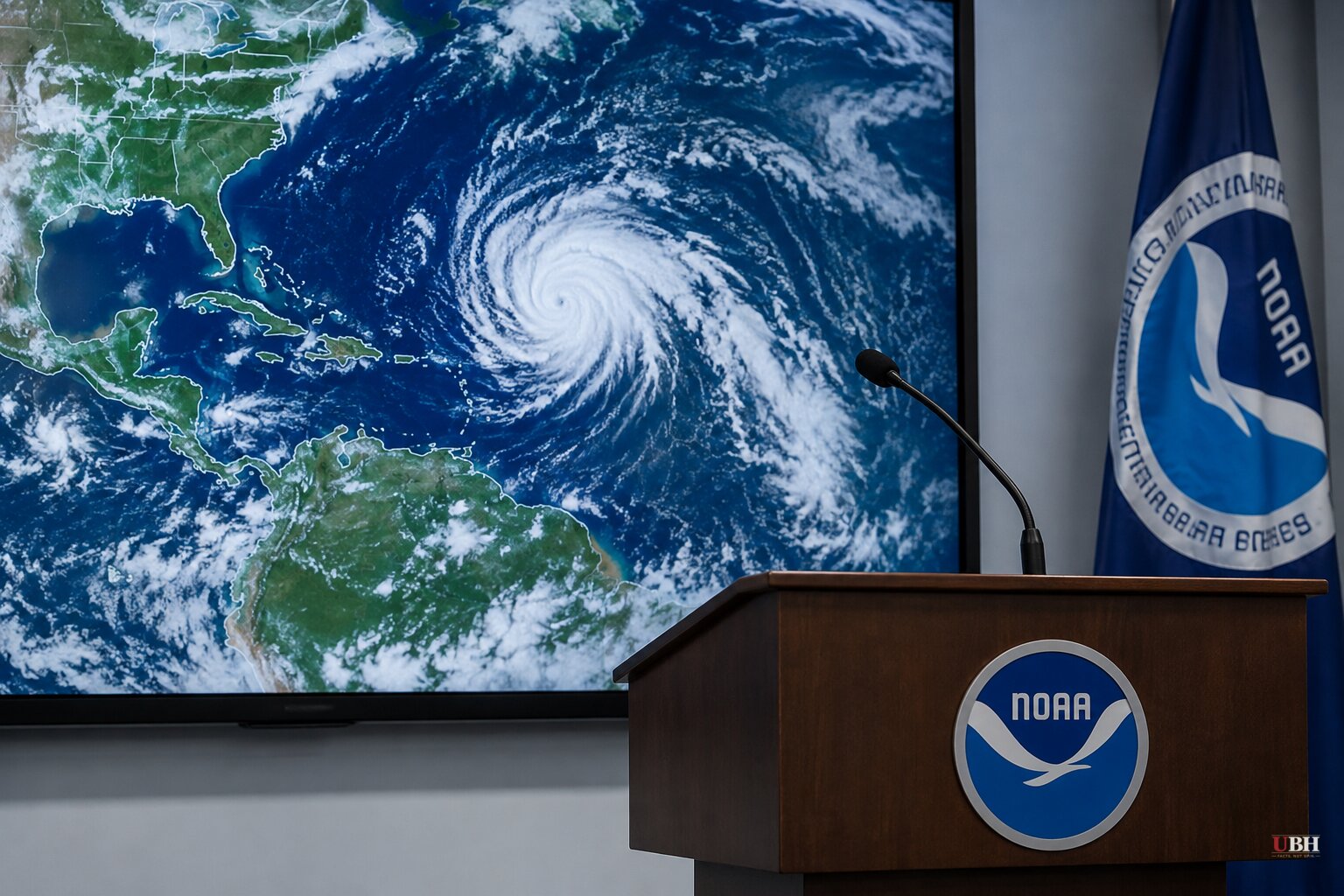
Since Hawaii declared a state of emergency this week over multiple tropical systems, the opposite has been happening 4,000 miles east. The Atlantic basin has gone quiet, and today, September 11, ties the record for the latest a first hurricane has ever formed in the satellite era.
That record, set in 2002 and 2013, stood at September 11. As of the National Hurricane Center's most recent seven-day outlook reported by Fox Weather and the Philadelphia Inquirer, there was zero chance of tropical development anywhere in the basin. If no hurricane forms today, tomorrow sets a new outright record dating back to the 1960s.
The Atlantic has produced five named tropical storms this year — Arthur, Bertha, Cristobal, Dolly and Edouard, according to the BBC. An average season produces eight named storms and three hurricanes by this point. Zero hurricanes have formed at all.
The culprit has a name
"Almost 100% El Niño," is how Philip Klotzbach, a hurricane specialist at Colorado State University's Tropical Meteorology Project, put it to the Philadelphia Inquirer. Klotzbach's project has issued Atlantic outlooks for more than 40 years.
The mechanism is straightforward physics. El Niño is a natural warming of the equatorial Pacific. NOAA says this one is on track to be historic, potentially the strongest since credible records began in 1950, with sea-surface temperatures in the key monitoring zone running more than 3°F above normal, per the Inquirer.
That warmth alters upper-atmosphere wind patterns, cranking up wind shear over the Atlantic's Main Development Region. Shear rips developing thunderstorms apart before they can organize into anything resembling a hurricane. Klotzbach says wind shear across the western Atlantic and Caribbean has been running more than 3 knots stronger over the past 30 days than any year in the satellite record dating to 1979.
Saharan dust is compounding the problem. Fox Weather reports dry, dusty air masses moving off Africa have been suppressing instability needed for storm formation, and that pattern is expected to persist through at least the next week.
Meanwhile, the Pacific is stacked
El Niño works in reverse on the other side of the country. Fox Weather counts 16 named storms in the Eastern Pacific this year, including six hurricanes, three of them major. The BBC's count, taken a day or two earlier, had it at 13 named storms and five hurricanes. Either way, the Eastern Pacific is closing in on an entire average season's worth of activity, normally about 15 named storms and eight hurricanes, while the Atlantic sits at zero hurricanes.
Hawaii is absorbing the consequences. CNN reported Hurricane Lala swirled just south of the Big Island last month, dumping more than three feet of rain in spots and triggering landslides blamed for at least one death, while Tropical Storm Moke followed close behind. The BBC separately noted major Hurricane Lowell also struck the islands this week with damaging winds and flooding. In a normal year, cooler ocean water and hostile upper-level winds act as a buffer that keeps most Pacific storms from reaching Hawaii at full strength. El Niño has knocked that buffer down by warming the ocean to Hawaii's east, southeast and south simultaneously, according to CNN.
How solid is the record claim
There's a legitimate caveat. NOAA's own Matt Rosencrans, a scientist at the Climate Prediction Center, raised it to the Inquirer: satellite observation didn't start until 1966, and reliable El Niño records only go back to 1950. Klotzbach noted 1941 saw no hurricane form until September 21, but neither satellites nor aircraft reconnaissance existed then, and wartime disruption likely thinned out ship-based storm reports too. It's entirely possible an undetected storm formed earlier that year. The "latest first hurricane" record is real and meaningful for the era it covers, but it isn't a claim that this is the quietest Atlantic hurricane season humanity has ever seen.
NOAA's own May forecast called for 8 to 14 named storms and 3 to 6 hurricanes this season. With El Niño not expected to peak until November or December, according to NOAA, the season running through November 30 could still produce late storms, but the current trajectory points toward the low end of that range or below it, and toward the fewest hurricanes since 2013, when only two formed all year, tying 1982 for the record.
Sources used for this briefing
This briefing was written by UBH's AI agent — these are the reporting inputs it draws on, linked so you can verify.


