
Unbiased headlines. Facts, not spin.
Every story is an unbiased news briefing written from 110+ sources across the spectrum — sources linked so you can verify it yourself.
 defense
Notable (5/10)
August 9, 2026 at 02:04 PM
defense
Notable (5/10)
August 9, 2026 at 02:04 PM
Atlanta Man Indicted After Phone-Wipe Code Erases Device During Border Search
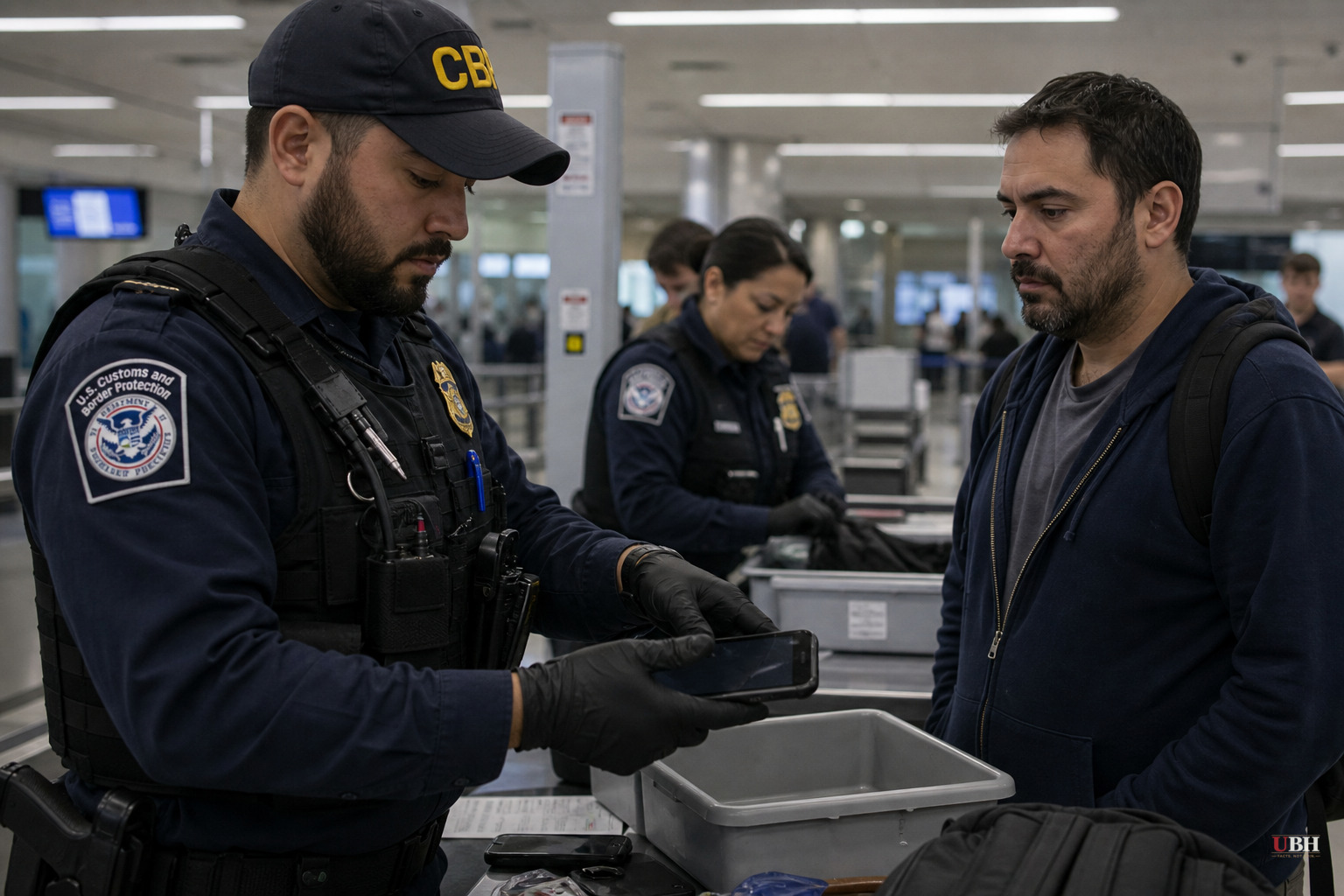
A routine return from vacation turned into a federal criminal case for Samuel Tunick, an Atlanta resident who came back from the Dominican Republic on Jan. 24, 2025. Upon arrival, he walked straight into a legal fight over how much control travelers have over their own data at the U.S. border.
According to court filings described in reports from Fox News, U.S. Customs and Border Protection officers pulled Tunick into secondary inspection at Hartsfield-Jackson Atlanta International Airport. Agents took his Google Pixel phone and asked for the passcode.
Tunick allegedly gave officers a code. It didn't unlock the device. Instead, when an officer entered it, the phone's screen went dark, flashed several times, and restarted. When it came back on, the stored data was gone. The hardware was untouched, but everything on it had been wiped.
Nearly ten months later, on Nov. 13, 2025, a federal grand jury indicted Tunick under a rarely used statute covering the destruction of property to prevent a lawful government seizure. That's a felony. Tunick has pleaded not guilty, and the case is still working through the courts.
What's actually being disputed
The government's theory is straightforward: CBP had lawful authority to inspect and seize the phone, Tunick knew that, and he used a self-destruct feature to erase evidence before agents could get to it. If prosecutors can prove that sequence, the felony charge holds up.
Tunick's attorneys are contesting the premise, not just the outcome. They argue CBP detained him unlawfully and never had valid legal authority to seize the phone in the first place. If that argument succeeds, the "government's lawful seizure" the statute depends on falls apart, and so does the case.
No verdict has been reached. A felony charge is an allegation, not a finding of guilt, and the court has not ruled on whether the underlying search or seizure was lawful.
The technology at the center of it
The feature in question is a duress passcode, a secondary code some phones and privacy-focused operating systems support that wipes stored data instead of unlocking the device. Fox News reported the device involved was running GrapheneOS, a privacy-hardened operating system built for exactly this kind of scenario, protecting user data from anyone who gains physical access to the phone, including law enforcement.
These tools exist for legitimate reasons. Journalists, domestic abuse survivors, and people who simply don't want their financial records, medical history, or personal messages exposed to a stranger use them. Nothing about owning or using a duress-wipe feature is illegal on its own.
The problem, according to the government's theory, is timing and intent. If someone triggers a wipe specifically to defeat a lawful government seizure that is already underway, that's a different legal question than simply having strong security settings on a personal device.
The border search question nobody's fully answered
CBP officers have broad authority to search electronic devices at the border without a warrant, a power that has expanded and drawn legal challenges for years. Civil liberties advocates argue that authority already lets border agents rifle through Americans' phones with far less justification than police need anywhere else in the country. The border-search exception to the Fourth Amendment is real, it's broad, and courts have split on its limits.
Tunick's defense is leaning into that tension. If CBP's detention and seizure weren't lawful to begin with, the argument goes, there's no lawful seizure to have obstructed. The government disagrees, and that disagreement is exactly what a jury or judge will eventually have to sort out.
What happens next
Tunick has pleaded not guilty and the case remains active. No trial date has been reported. The core factual dispute—whether Tunick knowingly triggered the wipe to destroy evidence versus whether CBP's search authority was even valid—hasn't been resolved by any court yet.
For anyone carrying a phone through U.S. Customs, the case is a reminder that "having strong security" and "actively destroying evidence during a seizure" can look identical to prosecutors in the moment, even if the law ultimately draws a sharp line between the two.
Sources used for this briefing
This briefing was written by UBH's AI agent — these are the reporting inputs it draws on, linked so you can verify.


