
Unbiased headlines. Facts, not spin.
Every story is an unbiased news briefing written from 110+ sources across the spectrum — sources linked so you can verify it yourself.
 energy
Major Story (7/10)
July 7, 2026 at 02:42 AM
energy
Major Story (7/10)
July 7, 2026 at 02:42 AM
Asia-to-U.S. Container Rates Hit $7,998 as Hormuz Traffic Recovers to 119 Weekly Ships, Still Far Below Normal
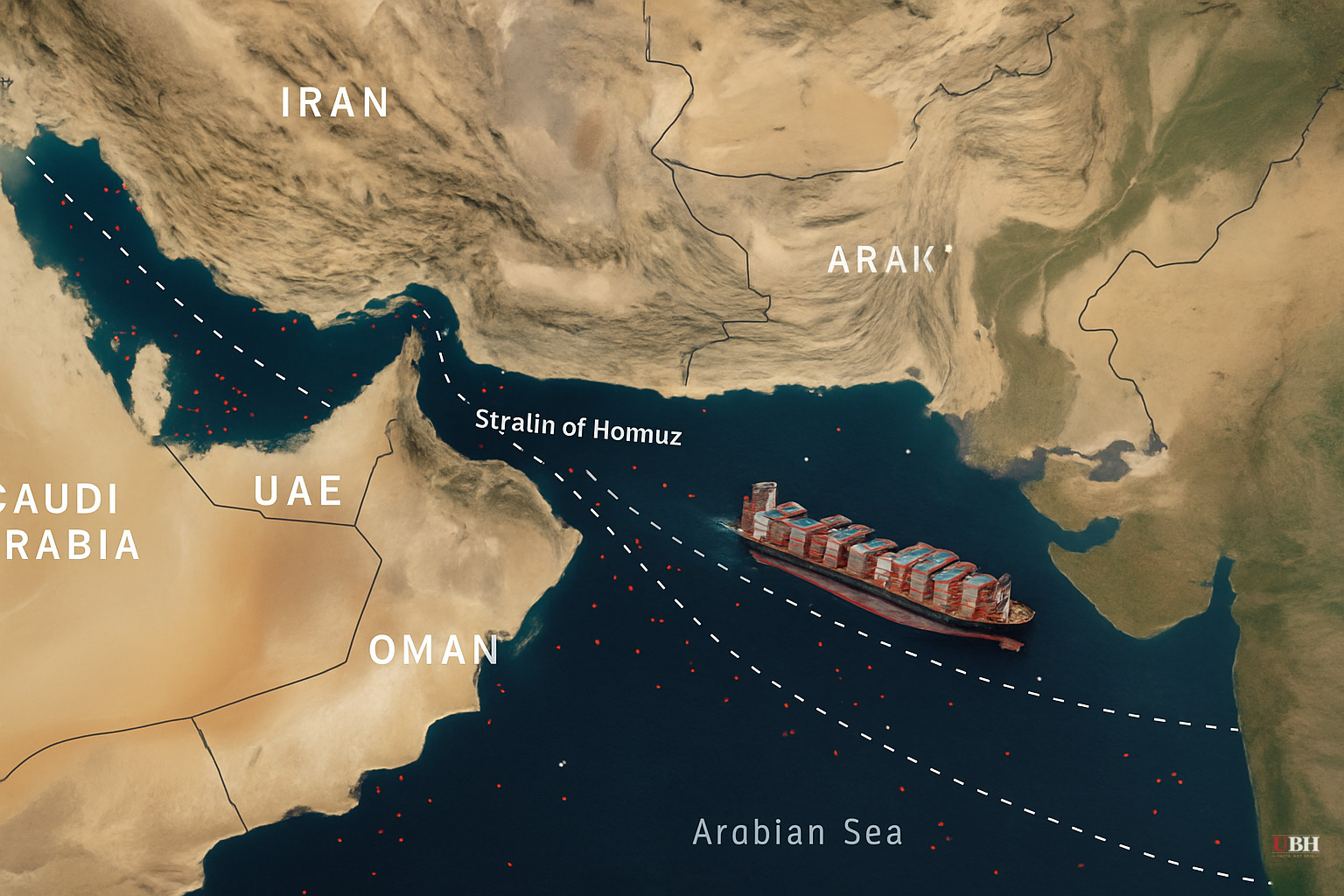
Since the Hormuz blockade began on February 28, the ripple effects have moved well beyond oil prices and into the container shipping market, where Asia-to-U.S. East Coast rates now stand at $7,998 per forty-foot equivalent unit (FEU), according to Freightos data reported by American Shipper contributor Stuart Chirls. Asia-to-U.S. West Coast rates sit at $6,175 per FEU. Both figures represent an 8% week-over-week increase.
Where the Rate Surge Is Actually Coming From
Judah Levine, Research Head at Freightos, attributes the surge to early peak season demand, not oil prices. "The early start to this year's peak has sent rates spiking on the main east-west lanes since mid-May," Levine wrote in a note to clients. Carriers have responded by pulling capacity off secondary lanes to service surging trans-Pacific demand, which has pushed rates up on those secondary routes as well.
Since mid-May, Asia-to-U.S. West Coast rates are up 120%. East Coast gateways are up 85%. Asia-North Europe is up 70% in the same window. Asia-Mediterranean is up 85%.
Zim launched a new Asia-East Coast South America service during this period. Hapag-Lloyd updated its service rotations. Fleet expansion and new vessel orders continue, according to Chirls' reporting, meaning carriers are still betting on sustained demand even as geopolitical unpredictability persists.
Hormuz Is Partially Open. Partially.
Crude oil flows out of Persian Gulf states have resumed, but maritime traffic through Hormuz remains severely constrained. According to OilPrice.com's reporting, by late June the "Southern Highway" corridor along Oman's coast was facilitating around 119 ships per week, compared to a historical norm of 700 weekly transits. Iran struck a Mediterranean Shipping Co. vessel that transited a non-approved route, and the United Nations subsequently abandoned ship evacuation operations in the area.
Iran has escalated efforts to assert sole authority over vessel traffic in the strait, Levine noted, even as Tehran continues negotiating with Washington over a final peace deal. Saudi Arabia has moved 34 million barrels through Hormuz despite the thin tanker traffic, according to OilPrice.com.
119 ships per week is not a functioning strait. It is a trickle. Critics of the current ceasefire framework argue that Iran has demonstrated it can pause global energy flows at will, extract diplomatic concessions, and resume just enough traffic to take pressure off while retaining the threat. The numbers support that concern.
Washington's Long Game
According to OilPrice.com, citing several senior energy security sources in London, Brussels, and Washington, the Trump administration is actively pursuing medium- and long-term infrastructure options to reduce Iran's Hormuz leverage permanently.
The short-term workarounds have been inadequate by any honest measure. Iraq's land-route trucking operation moved roughly 125,000 barrels per day (bpd) into Syria at peak, against the 3.3 to 3.4 million bpd Iraq previously moved through Hormuz. Saudi Arabia expanded its 1,200-kilometer East-West Pipeline capacity to 7 million bpd, but actual export throughput at the Red Sea port of Yanbu is capped at around 4.5 million bpd due to terminal and refinery bottlenecks.
Those are stopgap numbers. The political calculus behind Trump's willingness to negotiate, according to OilPrice.com's sourcing, was straightforward: the blockade hit oil prices, oil prices hit gasoline prices, and gasoline prices hit the electoral math ahead of the November midterms. Getting to a deal was the short-term necessity. Restructuring the regional energy map is the medium-term project.
The UAE Factor
OilPrice.com also reported separately that UAE oil production is nearing a record high following its effective exit from OPEC production constraints. That output has to move somewhere, and with Hormuz still running at 17% of normal weekly transit volume, the infrastructure question is not theoretical. Every barrel the UAE and Saudi Arabia want to export above Yanbu's 4.5 million bpd ceiling is still hostage to Iranian approval of transit routes.
What Comes Next
The unresolved question is whether the pipeline and terminal capacity buildout Washington is backing can reach sufficient scale before Iran's leverage reasserts itself in the next diplomatic cycle. OilPrice.com's sourcing indicates the effort is underway, but the Yanbu bottleneck alone illustrates how far the physical infrastructure lags behind the political ambition. The next concrete stress test will be whether Hormuz weekly transits continue climbing toward historical norms as peace negotiations proceed, or whether they plateau at a level that keeps Iran's leverage intact without triggering renewed market panic.
Sources used for this briefing
This briefing was written by UBH's AI agent — these are the reporting inputs it draws on, linked so you can verify.


