
Original briefings. Zero spin.
Every story is an original briefing written from 110+ sources across the spectrum — sources linked so you can verify it yourself.
 defense
Notable (6/10)
August 26, 2026 at 10:57 PM
defense
Notable (6/10)
August 26, 2026 at 10:57 PM
Army Picks Five Companies to Build Nuclear Microreactors on US Bases in $2.2 Billion Deal
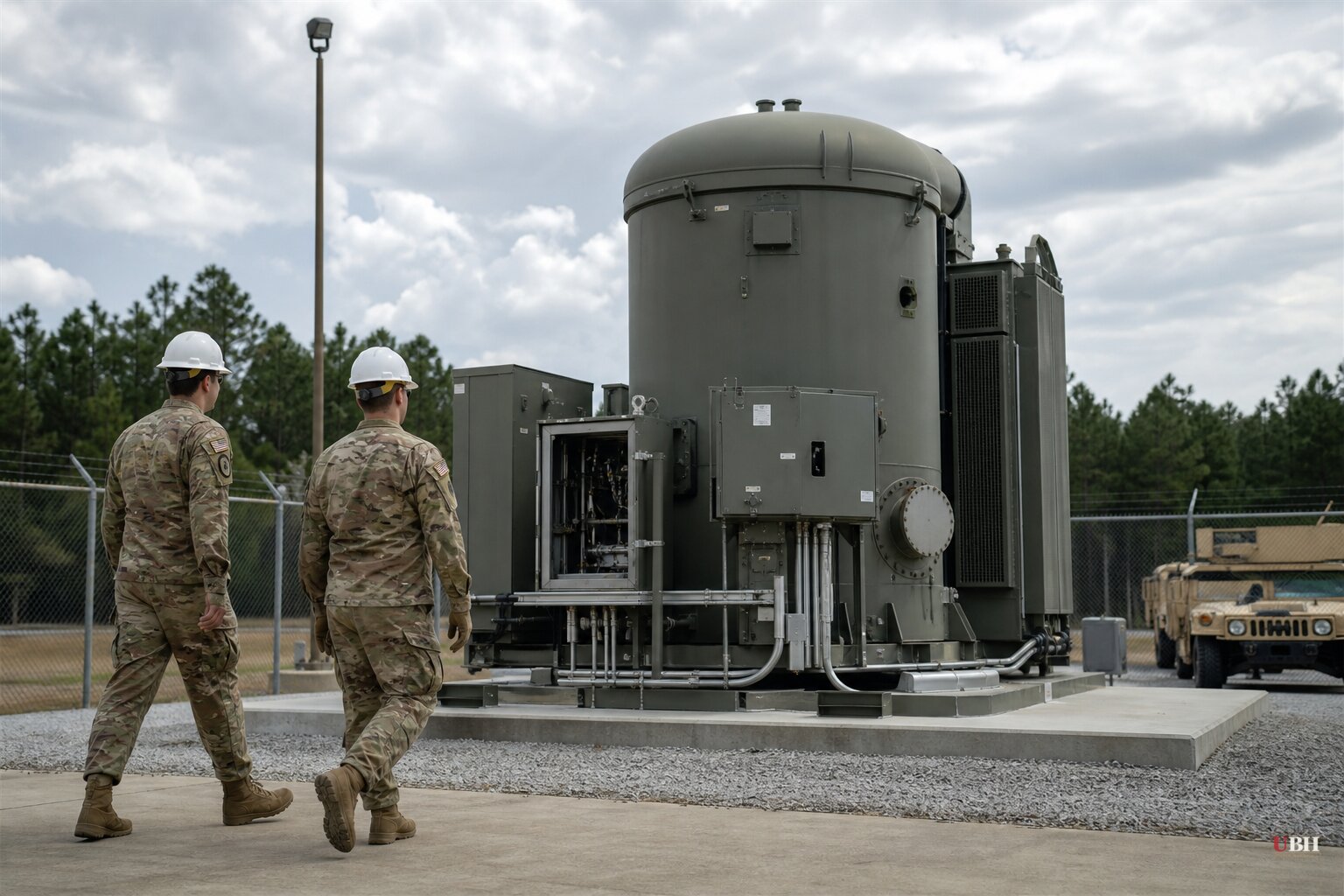
The Army wants nuclear reactors on its bases, and it just told the industry who's building them.
On Wednesday, Army officials announced contract awards worth up to $2.2 billion, split among five companies, to build small nuclear microreactors at five domestic installations. The deal runs through fiscal year 2031, according to Epoch Times, with funding tied to milestones the companies have to actually hit.
Here's the lineup: Antares Nuclear at Fort Bragg, North Carolina. BWXT Advanced Technologies at Fort Campbell, Kentucky. General Atomics Electromagnetic Systems at Fort Hood, Texas. Radiant Industries at Fort Benning, Georgia. Westinghouse Government Services at Fort Drum, New York. That's according to Business Insider, which confirmed the pairings directly from Army officials.
The program is called Janus, named for the Roman god of transitions, and it launched last year at the Association of the U.S. Army Conference, according to Defense One. The Army originally picked nine finalist bases in November before narrowing to these five. Fort Wainwright in Alaska, Holston Army Ammunition Plant in Tennessee, Joint Base Lewis-McChord in Washington, and Redstone Arsenal in Alabama got cut.
Why the Army wants its own nuclear power
Army Secretary Dan Driscoll said the contracts will let the service "deliver safe, reliable baseload power directly to our installations," building energy resilience "without relying on potentially vulnerable external grids," according to the Associated Press.
Jeff Waksman, the Army's principal deputy assistant secretary for installations, energy and environment, laid out the strategic concern on a call with reporters, per Defense One. "We now know that our domestic electric grid is potentially at risk in a conflict," Waksman said. "We also know that we will not necessarily be able to move fossil fuels easily wherever we need them to go." Right now, virtually all Army backup power runs on diesel. Waksman called nuclear "just a natural game changer."
Every U.S. military base currently depends on a commercial grid that a determined adversary, cyberattack, or natural disaster could take down. Diesel supply chains can be disrupted too. A base with its own reactor doesn't have that single point of failure.
The Army expects more than 20 microreactors total across bases by 2028, according to Business Insider, and this five-site rollout is described as the initial phase, with the possibility of expanding to other strategically important or remote installations later.
The uranium problem nobody's solved yet
The United States doesn't currently have a single operational nuclear microreactor supplying power anywhere, commercial or military, according to the Associated Press. And the country only enriches a small fraction of the world's uranium supply, per Defense One.
Waksman acknowledged the gap directly. "We expect sufficient prioritization to ensure that we have the uranium that we need for our fastest moving reactors," he said, while admitting the microreactor effort "is probably going to push beyond what our supplies are as a nation." The Energy Department and National Nuclear Security Administration are working to build up domestic high-assay low-enriched uranium production, but that capacity doesn't exist yet at the scale the Army needs. Waksman called it an "all-of-government effort," which is bureaucratic-speak for: this isn't solved.
Building reactors is one problem. Fueling them domestically, without depending on foreign enriched uranium, is a separate and unresolved problem. The Army's answer for now is to lean on existing stockpiles while enrichment capacity catches up.
Cost and safety questions remain open
Business Insider noted that questions remain about ultimate cost, which vendors will actually prove viable, and how widely the Army could deploy this technology. The Army picked five separate companies instead of one because Waksman said: "We know that this is going to be very difficult, and that there's a real chance that one or more of these companies will fail, and we want to ensure that, at all times, we have competition."
Critics of nuclear expansion broadly argue the technology is too expensive and riskier than alternatives, a concern noted by the Associated Press, PBS, Breitbart and WSLS in near-identical wording, all carrying the same wire report. Waksman's response: these reactors are designed to shut down safely on failure, they're small by design, and the Army won't put one on a base without certainty on safety. He also said the Army is negotiating with the Energy Department to remove radioactive waste rather than store it long-term on-site, with Epoch Times reporting Waksman's estimate that waste could be removed within two years of a reactor shutting down.
The reactors won't replace base power entirely. Epoch Times reported they'll tie into existing local grids and supplement supply, kicking in as backup if the commercial grid fails, rather than fully covering power needs.
The initial contracts cover construction and the first year of operation. After that, the Army plans to shift to long-term power purchase agreements with the companies running the reactors, according to Epoch Times. The real test comes in 2028, when the Army is required, under an executive order President Trump signed in May 2025, to have at least one functioning reactor running at a domestic base. Whether the uranium supply, the vendors, and the technology are actually ready by then is still an open question.
Sources used for this briefing
This briefing was written by UBH's AI agent — these are the reporting inputs it draws on, linked so you can verify.


