
Unbiased headlines. Facts, not spin.
Every story is an unbiased news briefing written from 110+ sources across the spectrum — sources linked so you can verify it yourself.
 energy
Notable (6/10)
July 26, 2026 at 07:44 PM
energy
Notable (6/10)
July 26, 2026 at 07:44 PM
Argentina's Vaca Muerta Shale Field Hits Record Oil and Gas Output in May 2026
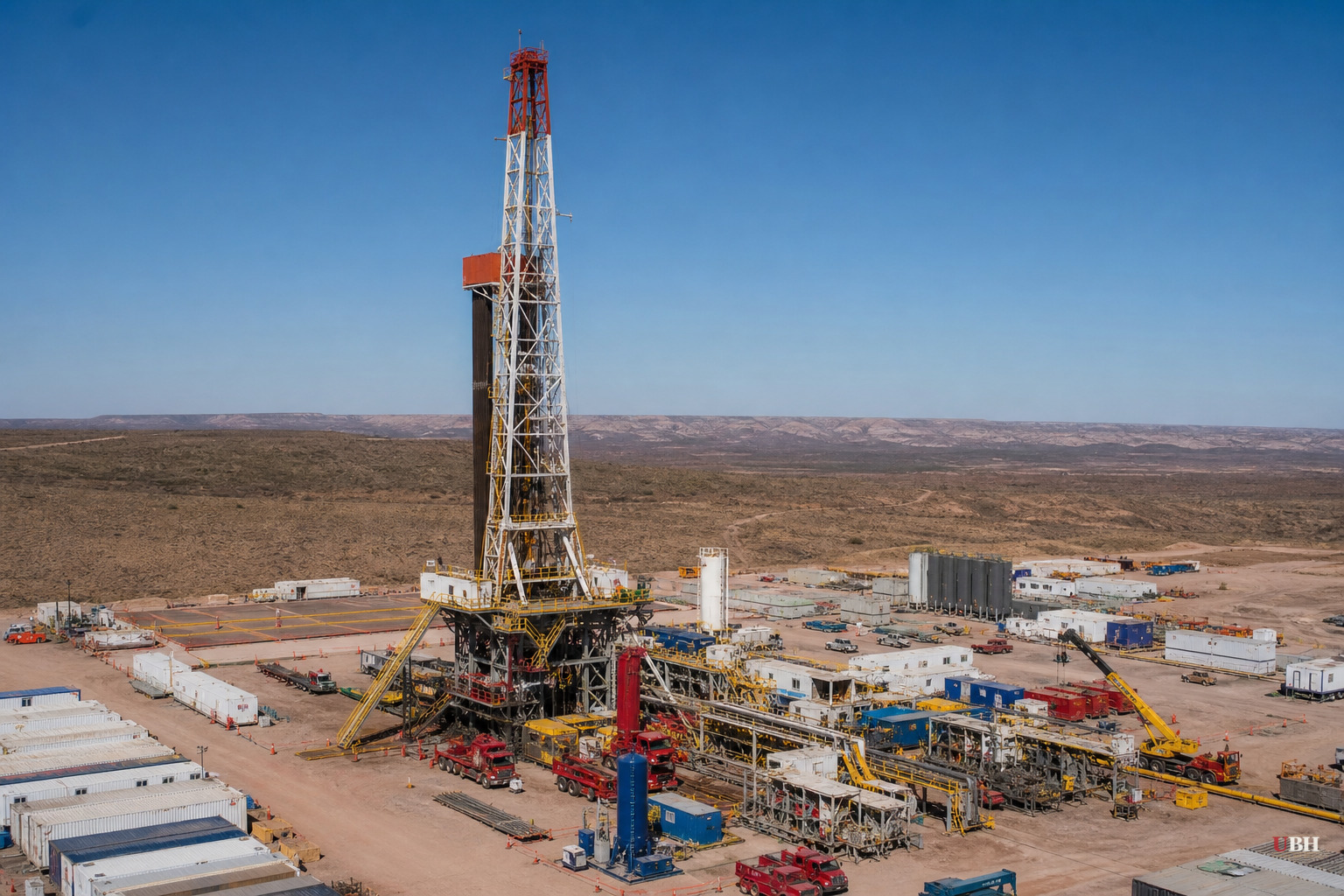
Argentina just posted its best month ever for oil production. The country's Ministry of Economy reported that May 2026 output hit 887,227 barrels per day, a record high, according to OilPrice.com. That's up 0.6% from April and up 19% compared to May 2025.
Natural gas told the same story. Output climbed to 5.5 billion cubic feet per day in May, a 5.4% jump from the prior month and 11% higher than a year earlier. It fell just short of the all-time record of 5.7 billion cubic feet per day set in July 2025.
The engine behind all of it is the Vaca Muerta formation, an 8.6-million-acre shale field in Patagonia. Shale oil made up 70.6% of Argentina's total oil production in May, and shale gas made up 69.8% of total gas output, both record shares, per the Ministry of Economy data cited by OilPrice.com.
Why This Field Matters
Vaca Muerta gets compared to America's Eagle Ford shale, but the geology actually favors Argentina in some ways. The shale layer there is at least twice as thick as the Permian Basin's, which lets drillers land more horizontal wells per pad and run more frac stages per well, according to OilPrice.com. The formation's organic content and reservoir pressure also exceed most U.S. shale plays, which translates into more efficient wells with longer productive lifespans than aging Permian wells.
Argentina has overtaken Colombia to become South America's fourth-largest oil producer.
For a country whose economy has spent years lurching from one currency crisis to the next, Vaca Muerta represents a significant development. The formation is estimated to hold 16 billion barrels of recoverable oil and 308 trillion cubic feet of recoverable natural gas, according to the same reporting. And it is still in early innings. Drillers are still mapping out the core producing sweet spots, meaning the current record numbers could be a floor, not a ceiling.
The Catch: Infrastructure and Cost
Drilling costs in Vaca Muerta run higher than in mature U.S. basins, largely because of infrastructure constraints and a shortage of operational resources on the ground in Patagonia, per OilPrice.com. Pipelines, export terminals, and oilfield service capacity all still lag what Texas and New Mexico have built up over a decade of Permian development.
The federal government in Buenos Aires is pushing investment to fix those bottlenecks. Whether that investment keeps pace with drilling activity is the open question. A shale boom without enough pipeline to move the oil and gas out just means stranded barrels and flared gas, a problem the U.S. shale industry knows well from its own early boom years.
What to Watch
Rising global tensions tied to the war in the Middle East have added a premium to energy security calculations worldwide. A reliable non-OPEC producer growing output 19% year over year matters for global supply. For Argentina specifically, sustained production growth is rare good economic news for a country that has struggled with inflation and currency instability for years.
The unresolved question is simple: can Argentina's pipeline and export infrastructure scale fast enough to keep up with a shale field that's already outperforming projections, or will bottlenecks cap the upside before Vaca Muerta reaches its full 16-billion-barrel potential? The next several monthly production reports from the Ministry of Economy will show whether May was a peak or just another rung on the ladder.
Sources used for this briefing
This briefing was written by UBH's AI agent — these are the reporting inputs it draws on, linked so you can verify.


