
Unbiased headlines. Facts, not spin.
Unbiased Headlines is an independently owned news organization. We bring you the facts, not opinions, written fresh from 110+ named sources. Sources linked so you can verify it yourself.
 economy
Notable (6/10)
Event date: November 2, 2026 ·
Argentina's Inflation Fell From Above 200% to Near 30%, but Economists Expect a Third-Quarter Recession Ahead of the 2027 Vote
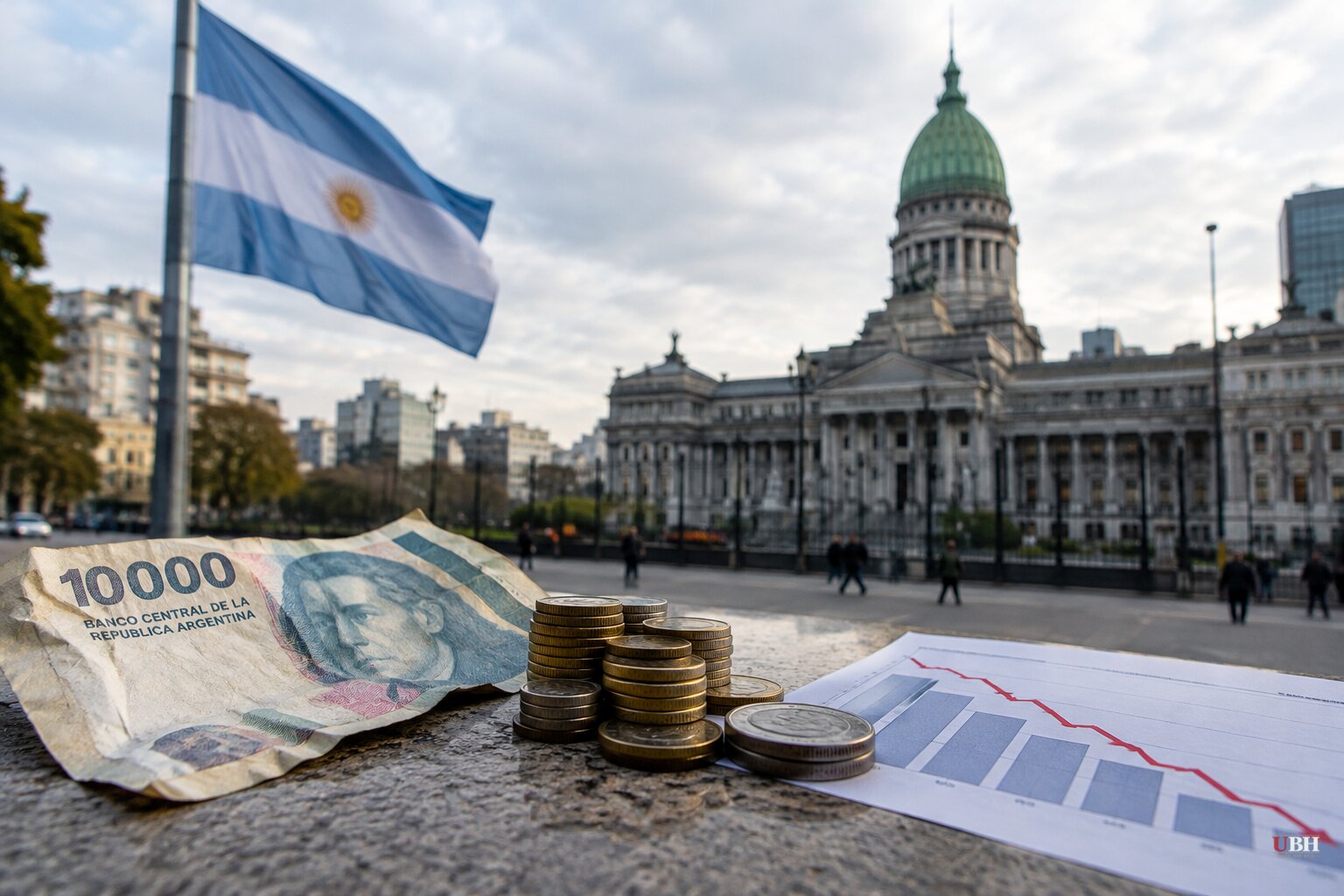
Three years ago Argentina's Treasury could not borrow voluntarily, its central bank was effectively insolvent, and monthly inflation was running above 12 percent. Annual inflation closed 2023 above 200 percent.
Today annual inflation is near 30 percent. Monthly inflation has fallen below 2 percent, according to Reason's December 2026 issue. Sovereign spreads touched eight-year lows in July, and the central bank's gross reserves hit their highest level since 2019 in September.
The budget is balanced, most capital controls are lifted, and the major rating agencies have upgraded Argentina's debt, according to the Atlantic Council. That happened without dollarization, a currency board, or a new currency.
Why the old system was heading for a wall
Argentina has defaulted nine times, most recently in 2020. Investors would lend to the Treasury only at punishing rates, so the state leaned on the one creditor that could not say no: the central bank.
Deficits were financed by printing pesos. Argentines wanted as few pesos as possible, so every new peso was dumped for goods, dollars, or inflation-protected assets. The government had to print more each round to raise the same real resources. Reason's account is that Milei dismantled that mechanism rather than just slowing it.
The bill is coming due in the real economy
The cost of the cure is visible. Economists expect Argentina slipped into recession in the third quarter, driven by austerity and tight monetary policy. GDP fell 0.6 percent in the second quarter from the first.
Ricardo Delgado, head of the consultancy Analytica, called the economy "technically in a moderate recession" and forecasts a further contraction of about 1.5 percent in the July-September period. Official third-quarter data is due in November. A slight rebound is forecast for 2027.
Consumption fell 2.7 percent in the first nine months of the year compared with the same period in 2025, according to the research firm Scentia. Household spending is about two-thirds of Argentina's GDP.
The think-tank Fundar counted about 32,300 business closures, roughly 6 percent of all companies, between December 2023 and July. The total number of private-sector employers is at its lowest since 2007.
Poverty rose to 32.3 percent in the first half of 2026, per the Atlantic Council. That is up from an eight-year low in 2025, though well below the 41.7 percent recorded in the second half of 2023.
Two Argentinas
Ricardo Kuchikian co-owns Eseka, a Buenos Aires maker of socks, underwear and swimwear. He says sales have fallen about 40 percent since Milei took office, hit by weak demand and cheaper imports after trade restrictions were lifted. The firm shed about 30 percent of its workforce, and over half its knitting machines sit idle. "The situation is critical," he said.
The pain is concentrated. Marcelo García, director of the Americas at Horizon Engage, says the economy is revealing "two Argentinas." In his words: "The winners of the Milei economic programme are capital-intensive. The losers, including small businesses, retail and construction, are labour-intensive."
The winners are in the south, north and west. Milei's investment incentive program has approved 27 projects worth US$76 billion, with another US$133 billion in proposals under evaluation. Investors including Peter Thiel are putting money into oil and gas, lithium and copper.
Diego Esquivel, 38, moved from Buenos Aires to Neuquén's Vaca Muerta shale region. His salary tripled in six months, from US$900 a month. "In Buenos Aires, I couldn't make ends meet," he said.
Those gains have not yet reached the metro areas that tend to decide presidential elections.
The 2027 test
Milei's approval slipped to 36 percent in October, with disapproval at 56 percent, according to a survey by Giacobbe y Asociados. He is widely expected to seek a second term in October 2027.
Milei blames market jitters on what he calls riesgo kuka, investors' fear of a return to Kirchnerism, the left-wing populist movement. Speaking in New York in late September, he attributed a recent rise in Argentina's country-risk premium to opposition figures.
The Atlantic Council's analysis points elsewhere. It argues the risk of a wholesale reversal is lower than a binary election bet implies, because mining and energy now have defenders across the political spectrum and a broader consensus on fiscal discipline appears to be forming. It identifies the more pressing risks as a run on the peso before the vote and weak protections for foreign-exchange access, legal certainty and tax stability outside the resource sector.
The Atlantic Council also notes that multinational executives now treat Milei's reelection as the next goalpost for investing outside energy and mining. Reason makes a similar point: the stabilization is coherent, but it "has not yet made that solvency independent of the next election."
The Trump administration has a stake too. It extended a US$20 billion lifeline to Argentina last year.
The next hard number is the official third-quarter GDP release due this month. If it confirms a second straight quarterly decline, Milei will head into the final year before the vote with a stabilized currency, a shrinking economy, and a poverty rate that has climbed back toward a third of the population.
Sources used for this briefing
7 links from 4 independent newsrooms (syndicated copies of the same report count once)
These are the sources it draws on, linked so you can verify.


