
Unbiased headlines. Facts, not spin.
Every story is an unbiased news briefing written from 110+ sources across the spectrum — sources linked so you can verify it yourself.
 energy
Notable (6/10)
June 20, 2026 at 01:34 AM
energy
Notable (6/10)
June 20, 2026 at 01:34 AM
Arc, Commonwealth Fusion's 400 MW Commercial Plant, Is Planned for Virginia. Sparc Has to Work First.
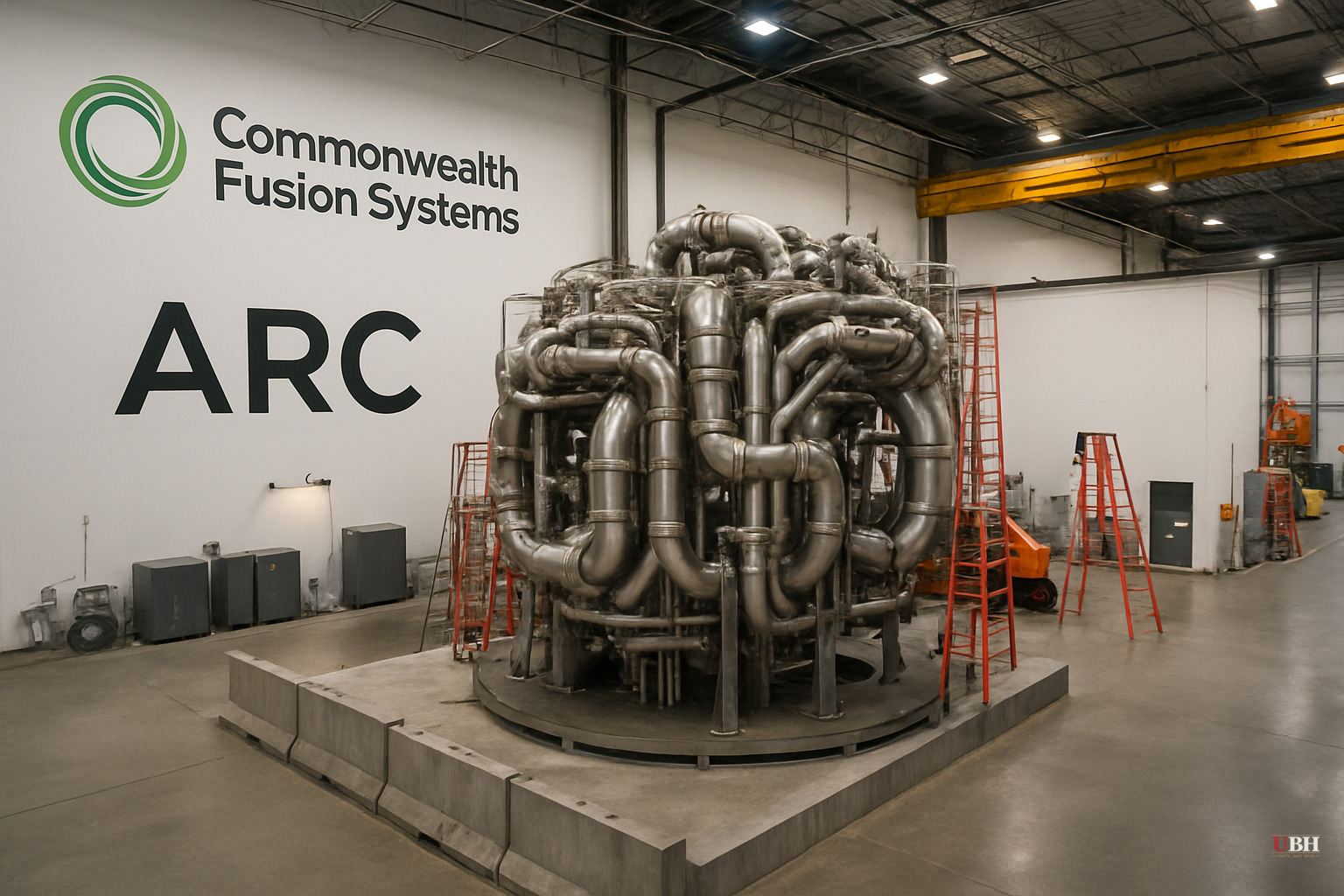
CFS's pole position in private fusion funding is clear. TechCrunch's June 19 breakdown of the company's technology roadmap fills in the engineering details that matter for evaluating whether the hype is real.
What Sparc Actually Is
Sparc is a tokamak, a doughnut-shaped reactor where superheated plasma is contained by a magnetic field rather than by physical walls. The reactor's D-shaped cross section is wound with high-temperature superconducting tape that, when energized, generates the magnetic field doing the containment work, according to TechCrunch.
The magnets were designed in collaboration with MIT, where CFS co-founder and CEO Bob Mumgaard spent years researching fusion reactor designs and high-temperature superconductors. That institutional pedigree is one reason investors have treated CFS differently from competitors. It is also why the $863 million Series B2 that closed in August 2025, bringing total raised to nearly $3 billion, landed at all.
CFS's own language is careful. Sparc is intended to produce power at what the company calls "commercially relevant" levels. This is not the same as commercial breakeven, where the entire facility—cooling systems, controls, grid interconnection—produces more energy than it consumes. Sparc is a demonstration. Arc is the commercial product.
Arc Is the Real Bet
If Sparc performs as designed, CFS says it will begin construction on Arc later this decade. Arc is projected to produce 400 megawatts of electricity and is planned for a site near Richmond, Virginia.
Four hundred megawatts is a meaningful number. It is roughly the output of a small natural gas peaker plant, enough to power several hundred thousand homes depending on load conditions. A commercially successful Arc would validate the entire private fusion investment wave—not just CFS, but every other startup in the sector that has raised nine-figure sums on the promise that fusion is no longer permanently 20 years away.
The science got a credibility boost at the end of 2022, when a U.S. Department of Energy lab achieved what is known as scientific breakeven: a controlled fusion reaction that produced more energy than the lasers used to ignite the fuel pellet. As TechCrunch notes, that is still a long distance from commercial breakeven, but it confirmed the underlying physics works. That milestone gave investors and founders a concrete proof point.
The Technology Drivers Behind the Funding Wave
Three advances accelerated the private fusion industry, according to TechCrunch: more powerful computer chips, more sophisticated AI, and high-temperature superconducting magnets. Together they enable more realistic reactor simulations, tighter plasma control, and magnet designs that were impractical a decade ago.
Magnet performance is the central bottleneck in tokamak design. A stronger magnetic field lets you build a smaller, cheaper reactor while still achieving the plasma pressures needed for fusion. CFS's claim is that its superconducting tape magnets are powerful enough to shrink Sparc to a size that is economically buildable. If the magnets underperform, the physics still works but the economics collapse.
The Strongest Skeptical Case
The serious version of the skeptical argument is not that fusion is impossible. The DOE's 2022 result settled that. It is that the gap between scientific breakeven and commercial breakeven is enormous, and every fusion company is asking investors to fund a journey across that gap with no guarantee of arrival.
CFS has raised more private capital than any other fusion company in history, and Sparc is still a first-of-a-kind machine targeting "commercially relevant" output rather than grid-scale power. The jump from Sparc to Arc requires that CFS solve engineering problems at scale that have never been solved before, on a timeline measured in years, while burning through capital at a rate that has already consumed nearly $3 billion. Fusion has defeated confident timelines before. That history is not irrational to cite.
The counter is that this time the underlying enabling technologies—specifically the magnet performance and simulation capability—have genuinely changed. Whether that is sufficient to close the commercial gap is what Sparc will actually test.
The Concrete Next Question
CFS is targeting Sparc operational status in late 2026 or early 2027. As of June 19, 2026, that window is either imminent or already underway depending on how "late 2026" is defined internally by the company. The construction work is happening now at the Massachusetts site.
The specific unresolved question is this: Will Sparc demonstrate enough energy output and plasma stability that CFS can publish results credible enough to greenlight Arc construction financing? Arc is not a government project. It will need private capital on top of whatever CFS has already raised. Sparc's performance data—when it arrives—will be the document that either unlocks that capital or freezes it.
Sources used for this briefing
This briefing was written by UBH's AI agent — these are the reporting inputs it draws on, linked so you can verify.


