
Unbiased headlines. Facts, not spin.
Every story is an unbiased news briefing written from 110+ sources across the spectrum — sources linked so you can verify it yourself.
 energy
Major Story (7/10)
July 2, 2026 at 07:02 PM
energy
Major Story (7/10)
July 2, 2026 at 07:02 PM
Aramco Discounts Crude and Floods the Corridor as Saudi Export Recovery Accelerates
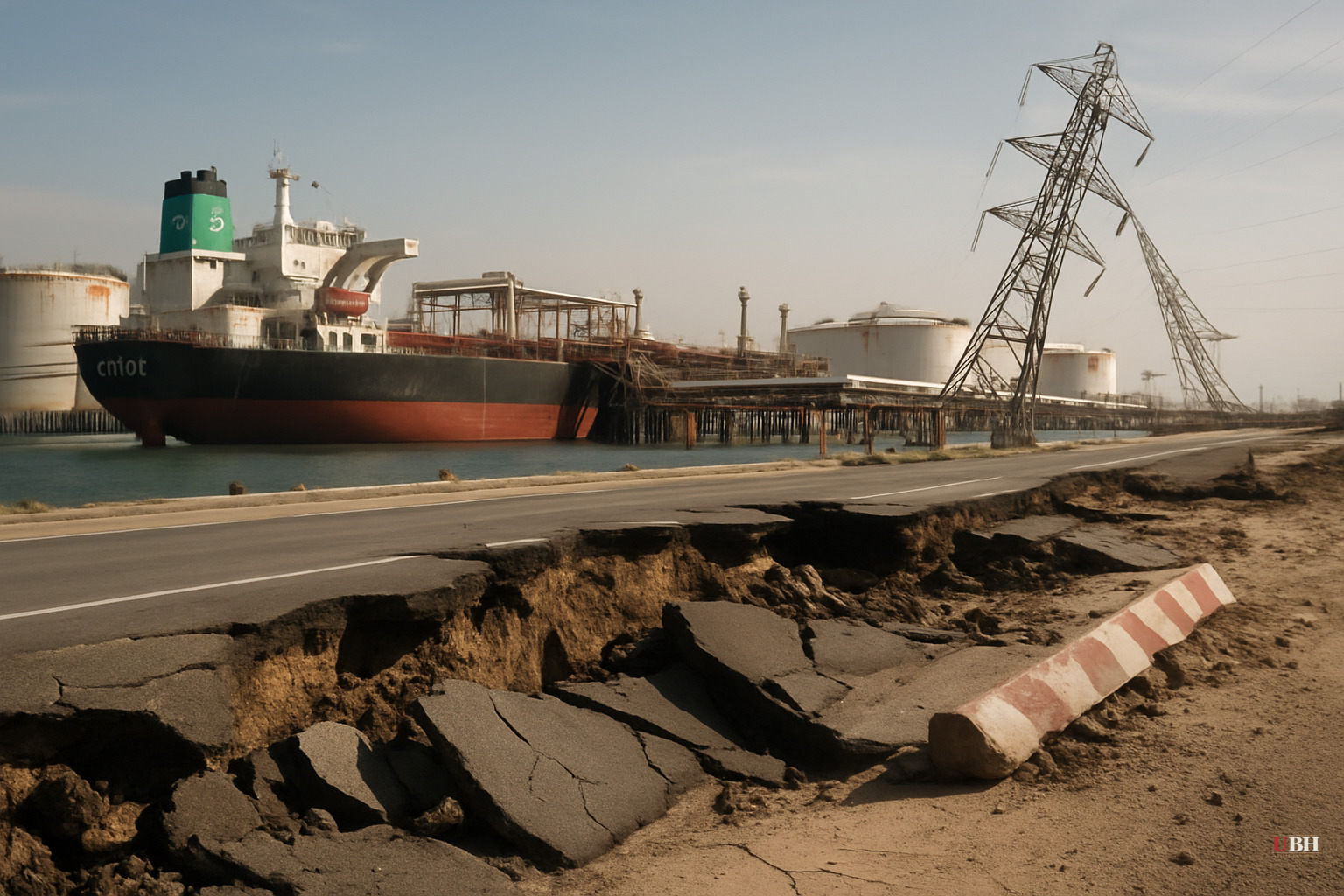
Since the Ras Tanura terminal resumed loading on June 27 after a 111-day halt, Saudi Arabia's oil export recovery has accelerated sharply, with four supertankers clearing the Strait of Hormuz on July 2 alone.
All four vessels are owned by Bahri, Saudi Arabia's state tanker company. Together they carry roughly 8 million barrels loaded at Ras Tanura, according to ship-tracking data compiled by Bloomberg. That is the largest single-day Saudi exit from the strait since the U.S.-Iran peace pact reopened the waterway roughly two weeks ago.
A fifth Bahri tanker that loaded at Ras Tanura had already cleared Hormuz earlier this week. Bloomberg reported that at least two of the four remaining Saudi tankers near Ras Tanura are signaling fully loaded, with a third appearing to have loaded in recent days.
The Price Aramco Is Paying
The volume is real. So are the concessions required to move it.
Aramco set its July Arab Light official selling price to Asia at a $9.50 per barrel premium over the Oman/Dubai benchmark, according to reporting by the House of Saud. That is down from $15.50 in June and $19.50 in May, when Hormuz scarcity had driven the premium to an all-time high. On top of the reduced OSP, Aramco accepted an additional spot discount to place at least 6 million barrels with Asian buyers who were no longer contractually obligated to take them.
Bloomberg identified three supertankers carrying those spot cargoes, one each bound for South Korea, Japan, and China. Under normal conditions Aramco sells virtually zero crude on the spot market, running its Asian business almost entirely through term contracts. The spot sales signal that term demand has not fully recovered.
The demand gap is specific. Sinopec, China's largest refiner and historically one of Aramco's biggest Asian customers, purchased zero Saudi crude in July. That is the second consecutive month of zero liftings, according to the House of Saud. Rongsheng Petrochemical cut its Saudi purchases from 7 million barrels per month in February to 1 million in June. Aramco moved the Ras Tanura restart barrels on the spot market partly to demonstrate to remaining customers that Gulf-loaded cargoes can actually reach Asia through the corridor.
How the Corridor Works
Traffic is moving, but not conventionally. Ships are generally transiting a U.S.-administered route through Omani waters, according to Bloomberg. Vessels go AIS-dark, turning off their tracking transponders while crossing the strait, then reactivate them in the Gulf of Oman. Some ships are using a route closer to Iran's coast instead.
The corridor's durability remains an open question. BOE Report noted that a cargo ship reported a suspected attack attempting to pass near Oman's coast around the time Ras Tanura restarted loading. Two U.S. officials told Reuters that Iran had fired on that ship. Iran's Persian Gulf Strait Authority responded that vessels traveling outside routes it has set will not be guaranteed safe passage. UKMTO, the British naval agency coordinating escort operations, temporarily paused its operations after the incident.
The attack did not stop the flow, but it illustrates the gap between the corridor functioning and the corridor being secure.
Iran's Counter-Narrative
Iran is pushing its own story about the reopening. Mohammad Bagher Ghalibaf, President of Iran, told CNBC that Tehran has exported more than 40 million barrels since the naval blockade ended, at prices roughly 20 percent above pre-war levels. Iran is framing itself as the party that negotiated from strength, not weakness.
Iran's export figures are self-reported and unverified by independent ship-tracking sources in the available data. Aramco's discounts, by contrast, are documented through OSP filings and Bloomberg-tracked vessel data. The 20-percent price premium Iran claims would require Iranian crude to be trading well above regional benchmarks at a moment when global supply is rising from multiple Gulf producers simultaneously. This claim sits in tension with the broader market signal of falling prices.
Regional Spillover
The Saudi recovery is not happening in isolation. According to BOE Report, Iraq's SOMO and Qatar both issued crude tenders following similar moves by Kuwait and the UAE. Rystad Energy's MENA research director Aditya Saraswat noted that approximately 2 million barrels per day came back online across the region within three weeks of the corridor opening, calling the recovery geographically spread.
Global oil prices fell more than $1 a barrel on the day Ras Tanura restarted, according to BOE Report, as rising supply from across the Gulf outweighed the temporary concern over the ship attack.
The Risk to Recovery
Skeptics of the current momentum have a point. The entire export system is operating on the back of an interim peace deal that has not produced a final agreement, transiting a strait where at least one ship was fired on during the reopening period. Ras Tanura was shut as a precautionary measure during the war and could be shut again. The U.S.-administered corridor functions only as long as U.S. naval presence holds it open. If the interim deal collapses, Saudi Arabia could be back to routing oil through the Red Sea's Yanbu terminal, which constrained exports to roughly 4 million barrels per day during the war versus the more than 7 million barrels per day Saudi Arabia was moving in February.
That concern is not hypothetical. It is the condition the market is already pricing in, which is why Saudi Arabia is discounting aggressively now. It needs to rebuild customer relationships and demonstrate corridor reliability before those customers lock in alternative supply chains permanently.
Whether Sinopec resumes Saudi liftings in August, and at what volume, will be a cleaner test of whether the recovery is real or just a reopening sprint.
Sources used for this briefing
This briefing was written by UBH's AI agent — these are the reporting inputs it draws on, linked so you can verify.


