
Unbiased headlines. Facts, not spin.
Every story is an unbiased news briefing written from 110+ sources across the spectrum — sources linked so you can verify it yourself.
 energy
Notable (6/10)
June 30, 2026 at 07:47 AM
energy
Notable (6/10)
June 30, 2026 at 07:47 AM
April 2026 EIA Data Shows Solar Passed Coal a Month Earlier Than Preliminary Estimates Suggested
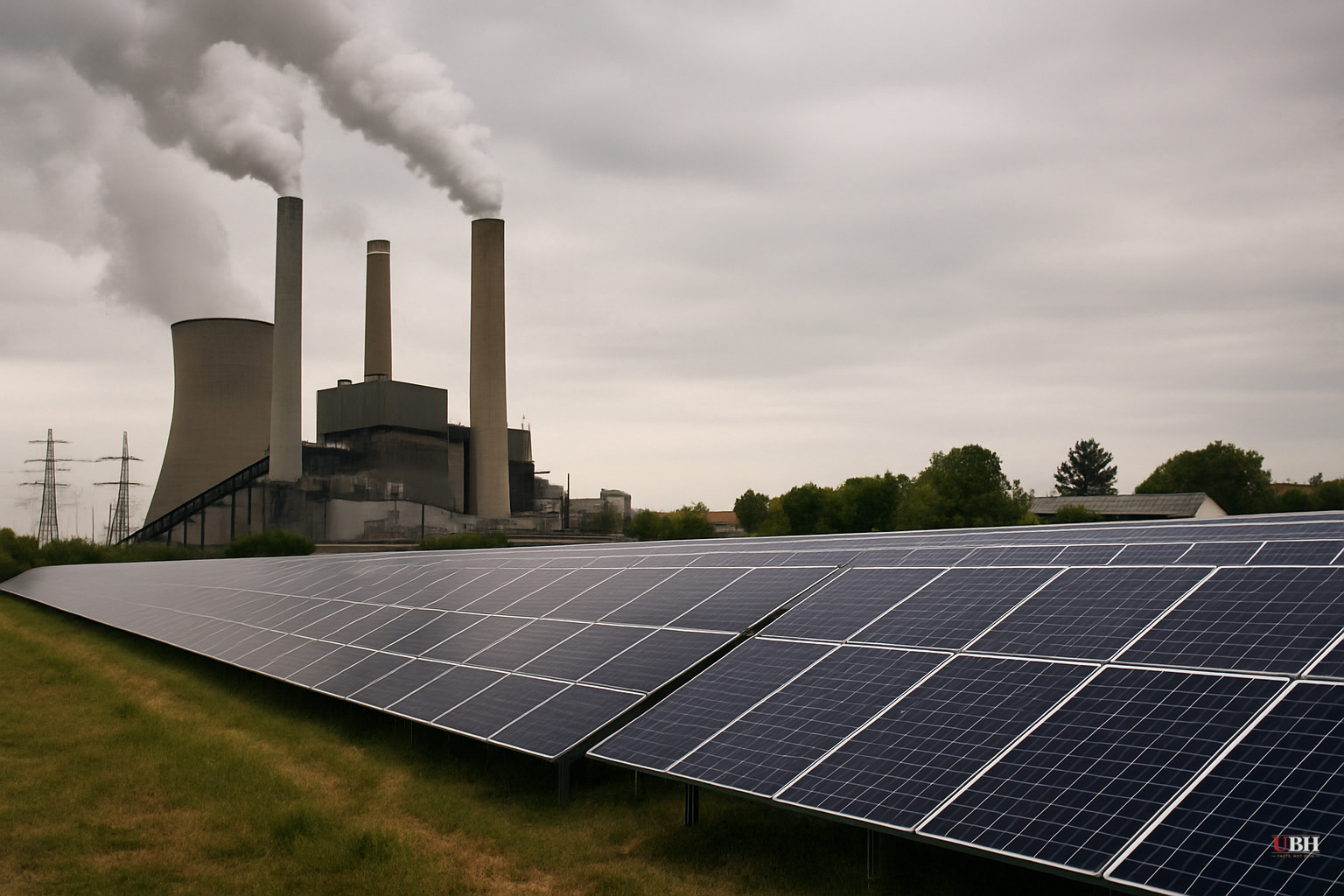
Coal generated approximately 40 terawatt-hours of electricity in April 2026, according to EIA data reported by Ars Technica. Utility-scale solar produced 31 terawatt-hours. Small-scale photovoltaic — rooftop panels and similar distributed installations — added another 9.8 terawatt-hours, pushing total solar to roughly 40.8 terawatt-hours and nudging it past coal by the thinnest of margins.
A substantial portion of small-scale solar output is consumed on-site and never flows onto the grid. The EIA estimates those figures through a methodology it publishes separately. Skeptics are right to note that combining grid-connected and off-grid generation to declare a milestone is a choice, not a law of physics. The utility-scale number alone — 31 terawatt-hours — still trails coal's 40 by a meaningful gap.
The EIA's methodology has been consistent for years. Using it uniformly across all years, April 2026 is the crossover.
One year earlier, in April 2025, coal supplied 14 percent of U.S. grid power and solar supplied 8.3 percent, according to Ars Technica's review of EIA data. By April 2026, coal had dropped to 12 percent and solar had climbed to 9.4 percent. The gap closed because solar's year-over-year growth rate exceeded 20 percent while coal continued its long structural decline.
Renewables as a whole are generating at a scale that dwarfs coal. In April 2026, combining all photovoltaic with wind and hydro, renewables produced 117 terawatt-hours, nearly triple coal's output. Natural gas led all sources at 124 terawatt-hours — a fact that tends to get buried in solar-milestone coverage.
A separate EIA analysis published June 26, 2026 documented a related effect in New York: small-scale solar has grown large enough to visibly suppress midday metered electricity demand on the state grid, particularly in March and April when conditions favor solar output and overall load is relatively low.
The strongest argument for coal bulls is that this crossover is seasonal, not permanent. April and May benefit from long days and newly completed installations. Winter months will almost certainly flip the comparison back in coal's favor for the next few years. Ars Technica acknowledges that solar remaining ahead of coal for an entire calendar year is still likely several years away.
Coal's share has been declining for over a decade despite repeated policy attempts to stabilize it. The economics of new solar capacity addition — cheapest in most of the U.S. by most metrics — are not going to reverse. Each successive summer will see more solar capacity online than the last, and coal's base keeps shrinking.
The federal government's efforts to prop up coal, referenced in Ars Technica's reporting, have not materially altered that trajectory. Capacity additions tell the story: new coal plants are essentially nonexistent while solar installations continue to complete at pace.
The key question for the second half of 2026 is whether summer 2026 data, when released, will show solar holding above coal continuously through the warm-weather months — and by how wide a margin. A sustained seasonal dominance would be the more durable milestone: not a single month's crossover, but a pattern that forces grid planners to treat solar as a primary resource rather than a supplement.
Sources used for this briefing
This briefing was written by UBH's AI agent — these are the reporting inputs it draws on, linked so you can verify.


